National Defense General: Since the beginning of this year, floods have caused direct economic losses of 123 billion yuan.

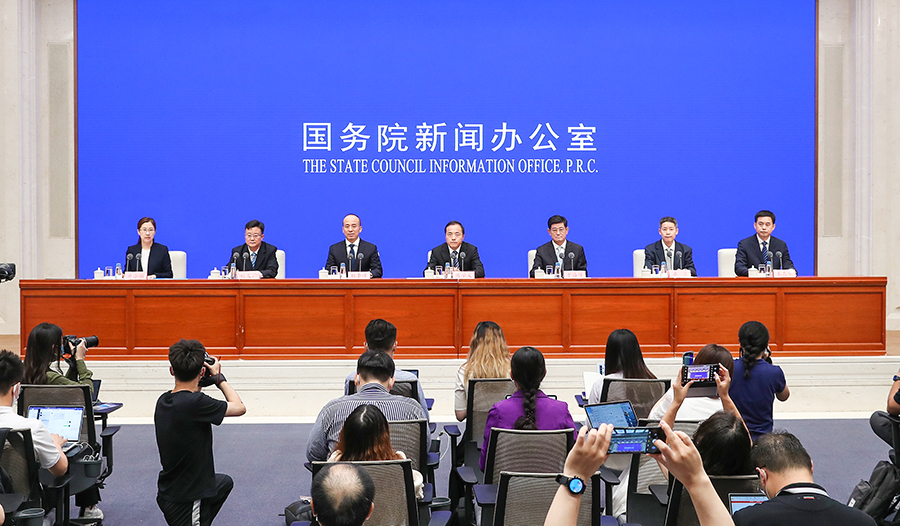
  Cctv newsOn July 28th, the State Council held a press conference on flood control and disaster relief.

  Zhou Xuewen, secretary-general of the State Flood Control and Drought Relief Headquarters, deputy director of the emergency management department and deputy director of the Ministry of Water Resources, said that since the beginning of this year, the climate has been abnormal and extreme weather events have occurred frequently. The main characteristics of rain and flood disasters are as follows:

  First, the temporal and spatial distribution of precipitation is seriously uneven, and the rainfall in many places is frequently recorded.. Since the flood season, the national average precipitation is 314.8 mm, which is 1.1% less than the same period of the previous year. However, there are more rainfall in parts of Northeast China, Huanghuai and Haihe River, and the periods are concentrated. The daily precipitation of 154 national meteorological stations in China has reached the monitoring standard of extreme events, of which 33 stations have exceeded the historical extreme value. On July 20th, the maximum hourly rainfall in Zhengzhou reached 201.9mm, which broke through the historical extreme value of hourly rainfall in mainland China, and this historical extreme value was 198mm.

  Second, the floods in the northern rivers are serious, and the small and medium-sized rivers are rising rapidly.. In the middle and late June, a catastrophic flood occurred in the upper reaches of Heilongjiang, and a numbered flood occurred in Nenjiang, which was obviously earlier than normal. Two numbered floods occurred in Haihe river basin; Small and medium-sized rivers rose rapidly, and floods in six rivers in Henan and Hebei exceeded history, and 10 national flood storage and detention areas were opened. Since the flood season, 372 rivers in 26 provinces across the country have experienced floods exceeding the police, of which 96 rivers have exceeded the insurance limit and 31 rivers have exceeded the historical limit.

  Third, engineering dangers are frequent, and some provinces are seriously affected.. There are two reservoirs in Inner Mongolia that have dam failure, and three reservoirs in Henan have piping and dam overflow. Serious waterlogging occurred in Zhengzhou, Xinxiang and other cities in Henan Province, and many river dikes broke. Since the beginning of this year, 34.81 million people have been affected by floods, 146 people have died and disappeared, 72,000 houses have collapsed, and the direct economic loss is 123 billion yuan, which is 34%, 64%, 45% and 22% lower than the average in the same period in the past five years. However, since July 17th, floods have affected 15.4 million people in 21 provinces (autonomous regions and municipalities) such as Henan, Shanxi and Inner Mongolia, 96 people have died and disappeared, and 1.614 million people have been relocated. Especially in Henan province, the disaster is heavy and the casualties are heavy, which affects the hearts of the people all over the country. Up to now, 73 people have been killed.

Notes on the Collection of Folk Songs by the "Leader and Moderator" of China Folk Song Conference

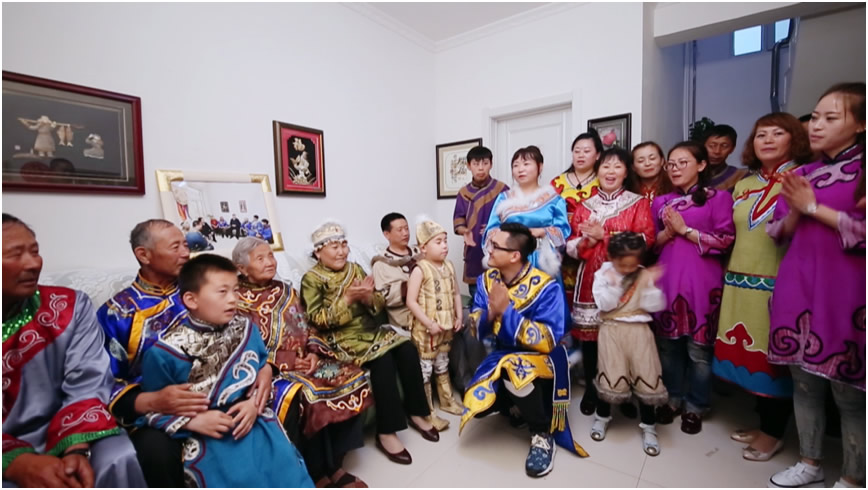
  CCTV News:China Folk Song Conference takes the regional coordinates of the Yellow River, the frontier, the Yangtze River and the coastal areas as the main line, and gathers experts, scholars, inheritors and singers from 34 provinces, municipalities and autonomous regions to unfold a China folk song map integrating regional characteristics and competitive performances for the audience. The program designed eight programs with four themes, namely, "the river comes from the sky", "Long song travels all the way", "drinking a river together" and "homesickness in the sea".

  During the recording of the program, all the hosts of the variety channel personally led the team to travel across mountains and rivers, and went deep into the gathering places of ethnic minorities all over the country to find original folk songs and singers for interviews and exchanges, leading the audience to experience the folk song landscapes around the country and at the same time reflecting the landscapes of different regions. In the program, the audience can not only hear many popular folk songs, but also deeply and thoroughly understand the roots of these folk songs and the background stories they contain, so as to explore the spiritual and cultural traditions of their ethnic groups and regions from a small perspective. Such a "grounded gas" experience of collecting wind makes the hosts unforgettable. The following are the notes of the "leader and moderator" — —

  Zhu Xun: Find the voice that has been in the blood for a long time.

  This time, I went to my hometown of Jiangsu, and this experience gave me a new understanding of folk songs. Compared with Xizang, Inner Mongolia, Xinjiang and other northwest regions, the folk songs in the south of the Yangtze River are relatively graceful, but they show a different vigor.

  In Shaobo Town, the "hometown of folk music" in Yangzhou, Jiangsu Province, I found the local classic labor folk song "Rooted Luchai Flower" and its inheritor Wang Ruiru. Although it is the first time to listen to it, there is a feeling of deja vu. Perhaps this is the sound of dust in my blood! "Pulling out the Roots of Lu Chai Hua" is a widely sung paddy field song, which was sung when farmers were transplanting rice seedlings, and it has a strong Shan Ye flavor. In order to feel the artistic conception of this folk song more deeply, I also threw trouser legs into the water to transplant rice seedlings! Don’t underestimate transplanting rice seedlings. It’s really a technical job. I can’t stand or squat. I can only bow my waist and pout my ass and slowly insert it backwards. Not only that, I also personally touched the wealth belonging to mankind — — Organic fertilizer really feels the hard work of a handful of working people!

   Lei Zhang: There is a distant concern in my heart.

  This time, in addition to returning to my hometown of Shanxi to look for Peach Blossoms, Red Apricots and White Flowers, I also went to another place I was not familiar with before — — In the black Zhuang area of Napo County, Guangxi, I not only found the classic folk song "Folk Songs are Like Spring River Water" and its predecessor "Pomegranate Green", but also gained a warm memory.

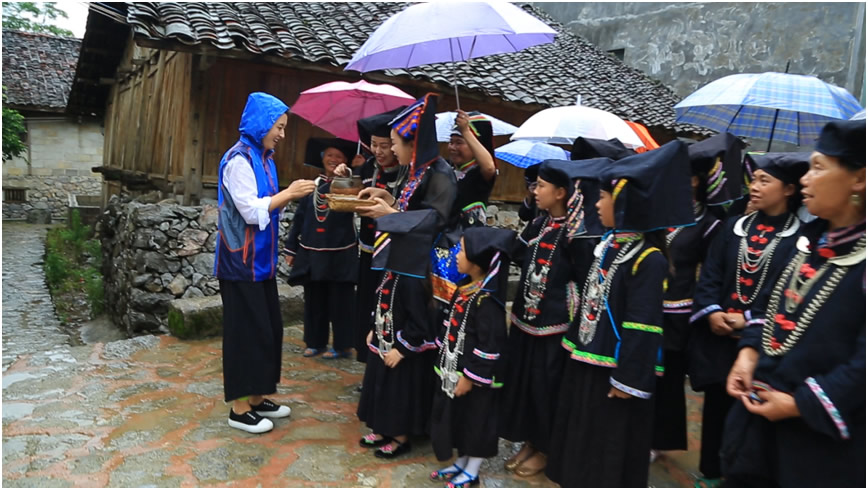
  Speaking of this trip, it is no exaggeration to describe it as "both wind and rain". Because the destination is remote, the program group can only get off the plane in Nanning and then drive to Napo County overnight. The mountain road is rugged, and the road is long, so each of us is staring at the night road with an extremely strong spirit. After arriving in Napo county, we took the mountain road to the place where the black Zhuang people lived in compact communities. The weather in the mountains is uncertain, and the heavy rain is urgent, so it will rain as soon as you say it. However, only two female colleagues in the team brought two sun umbrellas, and all of them contributed to protect the camera from the rain. So, we were all drenched by the heavy rain!

  Seeing this, the Zhuang villagers waiting to receive us at the destination quickly made a brazier to warm the working group. The brazier is very small, obviously it can’t meet the needs of so many of us, and I also wear jeans. Because the material is very thick and not easy to dry, it has been wet and stuck to my body, making me tremble with cold. Among the villagers sitting around the brazier, an aunt didn’t talk much, but looked silly. Seeing that I was shivering all the time, she silently returned to the house and took out a dozen specially clean clothes of the Zhuang nationality in black for me to change into. At the moment I received the clothes, my skin that had been eroded by the cold rain seemed to have a temperature in an instant, and a warm current hit my heart. After I put on my aunt’s loving clothes, I felt a kind of dryness that I had never seen before! This time, my aunt specially asked someone to bring me that suit. It is this incident that makes me feel that there is another person in the world who can make me care.

   Guan Tong: Isn’t it just mountain climbing? Piece of cake!

  "Kangding Love Song" should be regarded as a classic folk song that everyone is familiar with! When I went to its birthplace this time, I felt from the bottom of my heart that I had been in touch with this land at an altitude of more than 4000 meters for a long time. Looking at the four characters of "Kangding Love Song" on the high slope, and then looking up at the blue sky and white clouds, it is really refreshing. Isn’t it a pity that there is no unforgettable memory in such a beautiful place?

  Before we set out for the tour, the program group knew that I was not good at sports and my physical strength was not strong, and even dared not tell me that I would climb the mountain this time! When they successfully tricked me into the foot of the mountain, looking at everything in front of me, I really couldn’t say how bitter it was! The team’s friends also squeezed a sweat for me. Originally, I thought this trip was equivalent to a cultural tour. However, the ideal is full and the reality is very skinny. Facing the mountain in front of me, I still have to complete this task ~ ~

  What I want to say especially about this mountain climbing is: I think my performance this time is really great! Completely out of my expectation! In the process of climbing the mountain, I not only insisted on setting an example, but always led the team at the forefront, encouraging everyone to go forward bravely, and the original three-hour climb was completed in only two hours. This sudden sense of accomplishment has excited me for a long time … …

   Ma Yue: The hot and cold poles are exciting enough.

  The two places that impressed me deeply this time were Xizang and Sanya.

  This is my sixth visit to Tibet. I have never experienced altitude sickness before, but this time it is particularly strong, which is a different memory of my visit to Tibet! In the process of searching for folk songs, after we got on the train from Lhasa, we met a group of local high school students in the carriage. Everyone sang happily together and the atmosphere was very warm.

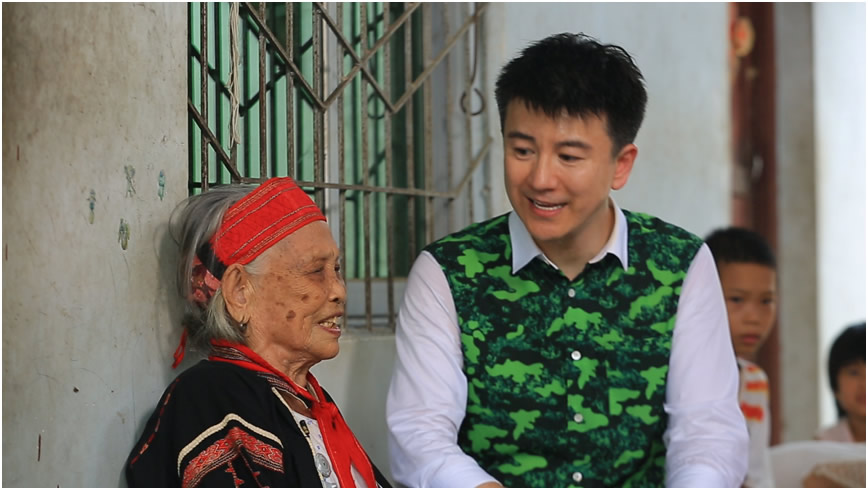
  Speaking of Sanya, my team and I went to Wanquan River. After more than an hour’s trek, we found the village where folk songs originated and a 95-year-old grandmother. This old woman once lived and fought with the Red Army, sang and arranged songs with the Red Army. Grandma also sang a song "Luo Nidiao" for everyone. "Luo Nidiao" sounds unfamiliar, but it has a lot of origins! After grandma’s detailed introduction, we realized that Wanquan River is Clear and Clear, which is familiar to everyone now, was first adapted from "Luo Nidiao" to "Wuzhishan Song", and then it was adapted to a certain extent before it evolved into what Wanquan River is now ~

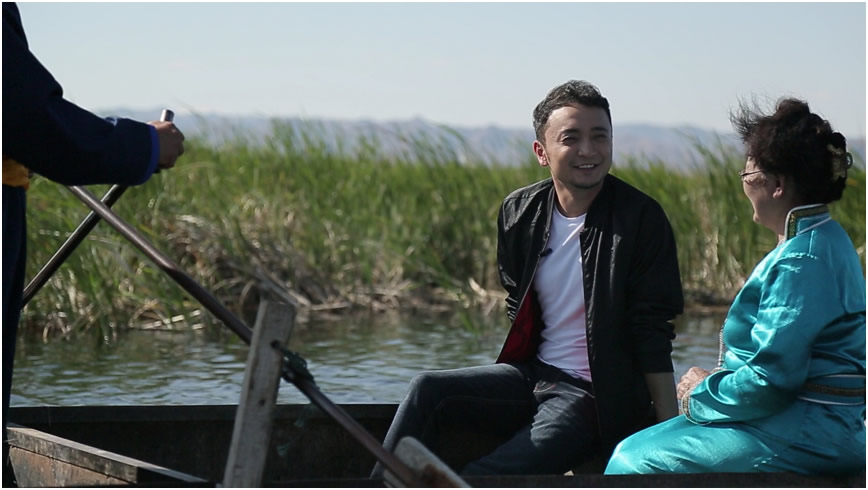
  Xiao Ni: Do you believe me when I said I was boating in Inner Mongolia?

  Xiao Ni also went to many places this time. What impressed me the most was Wulate Zhongqi in Inner Mongolia, which was the birthplace of the Inner Mongolia folk song Hongyan, and its predecessor was a song called Honggaru. There are two legends about Honggaru. One is that it is a Urad toast song, which is usually sung by young people to their parents and lovers on the eve of the war. Second, it refers to a sad love story, in which the protagonist Honggaru and her beloved young man died in the battlefield to defend their country.

  In fact, I wanted to play in Inner Mongolia a long time ago! This is such a good opportunity, not only to listen to songs, but also to make friends and travel, so don’t miss it! So in the process of collecting wind, I properly enjoyed the beautiful scenery of Urad. Would you believe me if I said I was boating in the Inner Mongolia prairie? — — You see what I said is so sincere, of course it’s true! I took a boat on the beautiful shepherd sea in Urad, and felt the ripples of reeds in the lake, the breeze across my face, and the silence that the city didn’t have. It was very comfortable. Really recommend Urad, a beautiful and magical place to our friends, and feel this pure land together!

   Li Sisi: Nature is the best listener of folk songs.

  With the task, I went to Wuliangshan, Yunnan Province to find traces of "Yi people playing songs" and "Haicaiqiang", and I also found Gao Hongzhang, a vegetable dancer who just met at the Spring Festival Evening not long ago.

  In the process of collecting wind, I saw villages surrounded by mountains and rivers, met local warm and simple people, and heard original ecological and grounded folk songs, which deeply touched me. I used to think that folk songs are all from mountains, which is a little far away for me. Through this visit, I found that folk songs are not only sung to the audience, but also to mountains, trees, rivers and nature. Nature’s feedback to folk songs is the most powerful feedback!

  Real folk songs can cross the boundaries of time and space, cross the language and reach people’s hearts directly. The "Folk Song Conference" only provides a stage for displaying folk songs of different regions and nationalities, so that we can have the opportunity to hear those voices from the depths of nature.

   Weinina: I can’t resist the heat wave in Xinjiang!

  I happened to go back to my hometown, Xinjiang, by the opportunity of collecting folk songs in China. Although I am a native girl in Xinjiang, I have never been to Hami before, and this tour is also my "first tour in Hami" ~

  In Hami, I saw the distinctive ancient Uighur architecture, which I had never seen before in my hometown. I also met a group of beautiful girls and handsome boys. Uyghur people are famous for their hospitality, and I was invited by many people to eat at home and pick grapes! Although we don’t know each other, we can "beat the tambourine and sing songs" together in a second. This heat wave is really irresistible!

   Ren Luyu: Folk songs are the aspiration of the heart that transcends language.

  Going to my hometown of Henan to find the almost lost "Nine Lotus Lantern" is not the only destination for me to go to the grass-roots level to collect wind! What impressed me deeply was the trip of folk songs in Sunan Yugur Autonomous County, Gansu Province.

  In Sunan, I found the old man Du Shoulan, the inheritor of Yugu folk songs. Although the old man has entered seventy years of age, his spirit is still hale and hearty. Seeing our visit, she enthusiastically sang Yugur folk songs for everyone, probably because of her deep feelings, and the old man could not help crying after singing. The others present were very moved even if they didn’t speak the language.

  In my opinion, this is the charm of folk songs, which can cross language barriers, form inner resonance and make people’s hearts move. The culture contained in this folk song is the root of the Yugur nationality and the Chinese nation.

   Gong Yan: Don’t forget why you started because you walked too far.

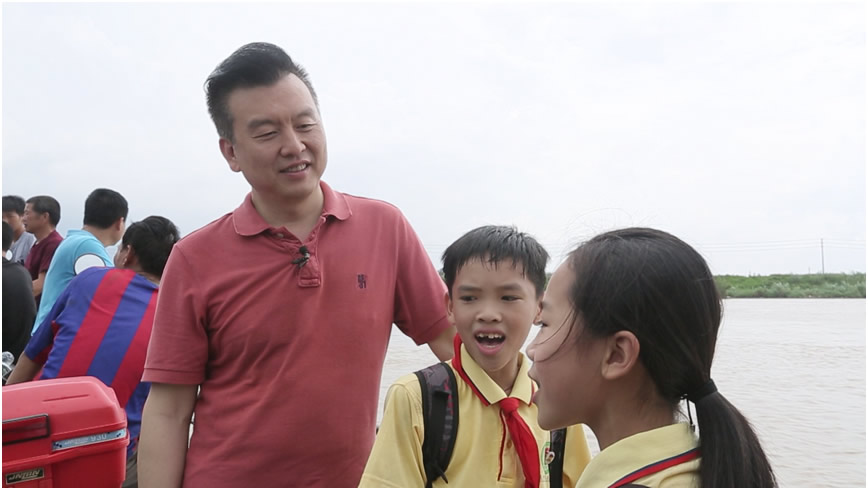
  This time I went to Hezhe nationality in Bacha Township, Heilongjiang Province, where I met Sun Zhongkui, a local original ecological singer. Besides listening to his folk songs, I also experienced the pleasure of fishing on the river with him. Sun Zhongkui is engaged in the protection, excavation, arrangement and inheritance of Hezhe national culture. He told me that every year he would find time to go back to the boat to fish. He felt that only by truly living in the primitive lifestyle of Hezhe people can we better explore the cultural roots of Hezhe people.

  In the process of exploring folk songs, I also discovered the true meaning of life — — A person, only by remembering the roots of the nation, can find the future direction and the strength to advance, and support us to move forward with determination! This is what I learned from Sun Zhongkui, and also from the whole Hezhe people! Tell the truth, my trip, glad you came!

   Zhang Zequn: The inheritance of folk songs never stops.

  Guangdong music is a kind of music with distinctive local color and unique style. This time, I led a team to tanzhou town, Guangdong Province to find Guangdong’s classic folk songs — — "salty water song"!

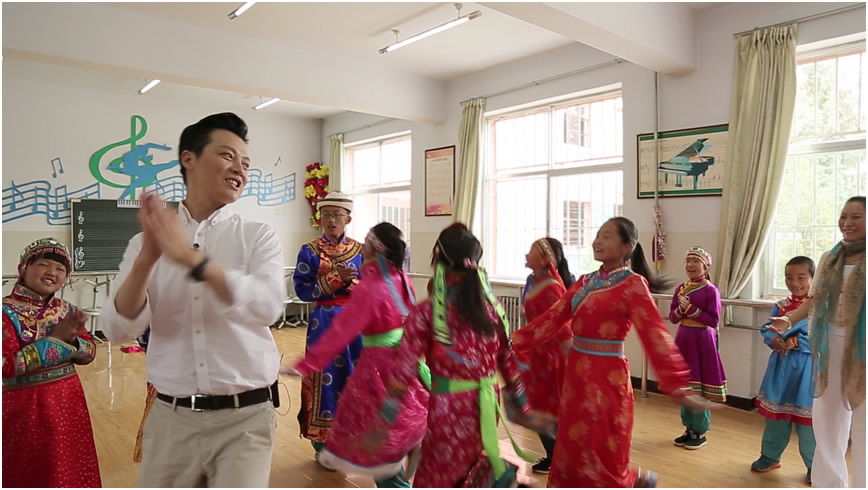
  The melody of salty water songs is sometimes passionate and unrestrained, and sometimes it is gentle and tender. In the song, we can feel the happiness of laborers when they work. How can such a wonderful folk song be done without an inheritor? The local villagers said that there is a "Folk Song Primary School" in Dongsheng Town, not far away, where children can sing folk songs, and folk songs have been passed down from generation to generation in this way.

  As the source of soil and water vitality, folk songs are taught by teachers to students, and students become teachers, so that the melody of Guangdong folk songs will be passed down from generation to generation. I was deeply impressed by this feeling passed down from generation to generation. I think this is also the reason why the "Salty Water Song" can be preserved to this day!

Ministry of Transport: There are 8 national highways and 8 provincial highways in Henan Province that have accumulated water and landslides.

  CCTV News:According to WeChat official account’s "Ministry of Transport" on WeChat, on July 20th, Henan Province was hit by extremely heavy rainfall. As of 7: 00 on the 21st, 29 sections of 26 expressways, including G4 Beijing-Hong Kong-Macao Expressway, G30 Lianhuo Expressway, S26 Taihui Expressway, G1511 Rilan Expressway and G3001 Zhengzhou Ring Expressway, have been closed, and the recovery time has yet to be determined, with no large number of vehicles and personnel stranded. At present, there are 30 sections of 8 national highways and 8 provincial highways, such as G107 and G234, in Henan Province, which are interrupted by heavy rainfall. The local highway department put safety signs on the closed sections, arranged special personnel to be on duty, and organized personnel and machinery to quickly carry out rush-through operations after the situation stabilized. There were no vehicles, personnel stranded or casualties.

  The extremely heavy rainfall has seriously affected the operation of Zhengzhou subway. In order to ensure the safe operation of urban rail transit during the flood season, the Ministry of Transport printed the electricity today. The full text is as follows: Emergency Notice of the General Office of the Ministry of Transport on Doing a Good Job in Flood Control of Urban Rail Transit.

  The transportation departments (bureaus and commissions) of all provinces, autonomous regions and municipalities directly under the Central Government:

  On July 20th, Zhengzhou Metro stopped the whole network due to the torrential rain, and a train forced to stop the tunnel, causing casualties. Recently, many places in China have ushered in the heaviest rainfall since the flood season. In order to do a good job in flood control of urban rail transit and ensure the safe operation of urban rail transit, the relevant matters are hereby notified as follows:

  First, attach great importance to flood control work

  This year’s climate is special, with rare rainfall in many places. In the next 10 days, there will still be heavy rains in North China, Southwest China, Jianghan, Huanghuai and South China, and there will be heavy rains in some areas, and the flood control situation is very severe. Local transportation departments should clearly understand the extreme importance and urgency of flood control in urban rail transit, further improve their political stance, adhere to the people first and life first, always put people’s life safety first, put an end to fluky psychology and overcome paralysis, and do a good job in flood control with a high sense of responsibility, mission and urgency.

  Second, immediately re-investigate and rectify potential risks.

  Operating units shall, in accordance with the relevant requirements of the Administrative Measures for Classified Management and Control of Safety Risks in Urban Rail Transit Operation and Management of Hidden Dangers (Transportation Regulation [2019] No.7), focus on the investigation of the capacity of drainage equipment and facilities in key areas such as low-lying stations, transition sections and long-distance sections on the basis of preliminary investigation, and if the capacity is insufficient, it shall be reinforced in time; Check the connection between the drainage pipeline and the surrounding municipal pipe network, and report it to the relevant departments in a timely manner if it has not been connected or connected poorly; Check the blocking situation of the connection between the line under construction and the existing line to prevent rainwater from flowing back to the station section through the line under construction; Strengthen the inspection of slopes along the ground overhead lines and take targeted measures against risks such as loose soil and landslides; Timely check the types and quantities of emergency materials such as sandbags, water baffles and drainage pumps, and supplement and reinforce corresponding equipment and facilities.

  Third, timely adjust and improve the emergency plan

  Operating units should fully learn the lessons from the recent rainwater backflow incident, further adjust and improve the emergency plan, and take emergency measures such as stopping trains, evacuating passengers and closing stations in unconventional situations such as exceeding the designed rainstorm intensity. It is necessary to do a good job in communication and docking with meteorological departments and strengthen the collection of information such as floods and meteorological disasters. It is necessary to further strengthen inspection and monitoring, find out the signs of danger in time, scientifically judge the development trend, and start the corresponding grade plan in time.

  Fourth, strengthen emergency response and disaster relief

  Local transportation departments should, under the leadership of local party committees and governments, effectively play the role of emergency linkage working mechanism with emergency management, water supply, electric power, hospitals and other units as well as local governments and streets. In case of sudden events such as flooding and backward flow, it is strictly in accordance with the requirements of the Measures for the Organization and Management of Urban Rail Transit (Transportation Regulation [2019] No.14), and those who do not have safe operation conditions should be resolutely stopped; Operating units should make emergency response and information report at the first time according to the requirements of the plan, and the transportation department should promptly notify relevant departments to carry out emergency response work quickly according to the emergency response level to ensure the safety of passengers.

  V. Resume operations in a safe and orderly manner

  For the lines with flooding and backward flow, the operating unit should pay close attention to the disposal. After the completion of water pumping and drainage, the equipment system should be thoroughly and carefully investigated, and the damaged equipment should be replaced in time. If necessary, third-party institutions and industry experts can be hired to conduct a comprehensive test and evaluation of the relevant lines. Only after the safety assessment confirms that the conditions for safe operation are met can it be put into operation to prevent secondary disasters.

  General Office of Ministry of Transport

  July 21, 2021

Highlights of announcement on the evening of July 31: Jiang Chengjun, vice president of Haitong Securities, resigned and Eft planned to build a robot super factory.

  On the evening of July 31st, a number of listed companies in Shanghai and Shenzhen stock markets issued announcements for investors’ reference:

  Major events > > >

  Tengda Technology: Up to now, the company has not directly supplied commercial aerospace customers.

  8 Lianban () announced the serious abnormal fluctuation of stock trading. The company’s main business is the research and development, production and sales of stainless steel fasteners such as bolts, nuts, screws and washers. Fasteners are the general name of components used to connect and fasten various parts, which have a wide range of applications and are called "the rice of industry". From the perspective of sales model, the company currently adopts the method of selling mainly through traders and directly to end users as a supplement. Up to now, the company has no direct supply to commercial aerospace customers.

  ST Dima: The closing price for 20 consecutive trading days was lower than that of 1 yuan stock.

  () Announcement, the daily closing price of the company’s shares was lower than that of 1 yuan for 20 consecutive trading days, which triggered the termination of listing conditions. The stock will be delisted on August 7, 2024, and then transferred to the stock transfer system.

  Tonghua dongbao: The first patient administration was completed in the phase III clinical trial of Smegliptide Injection in China.

  () Announcement: In May, the company signed the Commercial Authorization and MAH Cooperation Agreement with Beijing Peptide Biomedical Technology Co., Ltd. on GLP-1 product Smegliptide Injection. According to the agreement, the company will obtain the exclusive commercial rights of ZT001 Smegliptide Injection (indication: adult type 2 diabetes, current name: THDB0225 Injection), a peptide biological clinical research product, in Chinese mainland, and the right to jointly develop overseas markets. The cooperative product has completed Phase I clinical trial in Chinese mainland, and tonghua dongbao has started Phase III clinical trial in China, and recently successfully completed the first patient administration.

  Haitong Securities: Jiang Chengjun applied to resign as the deputy general manager of the company for personal reasons.

  Haitong Securities announced that the board of directors of the company received Jiang Chengjun’s resignation report, and he applied to resign as the deputy general manager of the company for personal reasons. After his resignation, he will no longer hold any position in the company. The resignation report shall take effect as of the date it is delivered to the board of directors of the company.

  Huafa shares: the stock property under the name of a subsidiary was transferred to Zhuhai Anju Group at a transfer price of 266 million yuan.

  () Announcement: Zhuhai Huafa Asset Management Company, a wholly-owned subsidiary, intends to transfer the existing property under the name of Huaben Company to Zhuhai Anju Group by transferring 100% equity of its wholly-owned subsidiary Huaben Company at a transfer price of RMB 265,562,900.

  Tasly: the controlling shareholder plans the share transfer, and the stock is suspended.

  () Announcement that the controlling shareholder Tasly Industrial Group is planning the share transfer, which may lead to the change of the company’s control rights. The company’s shares have been suspended since the market opened on the morning of August 1, 2024. It is estimated that the suspension time will not exceed two trading days. During the suspension period, the company will fulfill its information disclosure obligations according to the progress of the matter and determine whether to carry out the above major matters as soon as possible. Investors are requested to pay attention to the follow-up announcement and pay attention to investment risks.

  Rice Information: The transfer price of this inquiry is 46.68 yuan/share.

  Rice information announcement, according to the inquiry and subscription on July 30, the initial transfer price of this inquiry is 46.68 yuan/share. The shares to be transferred in this inquiry have been fully subscribed, and it is preliminarily determined that the transferee is 10 institutional investors, with a total of 1.63 million shares to be transferred.

  4 Lianban Qitian Technology: At present, the company’s operating conditions are normal, and the internal and external operating environment has not changed significantly.

  4 Lianban () announced the abnormal fluctuation and serious abnormal fluctuation of stock trading, and the deviation of the closing price of the company’s stock trading price for two consecutive trading days (July 30, 2024 and July 31, 2024) accumulated more than 30%, which belongs to the abnormal fluctuation of stock trading. The company’s stock trading price has deviated by more than 100% at the closing price for four consecutive trading days (from July 26, 2024 to July 31, 2024), which is a serious abnormal fluctuation of stock trading. After verification, the company’s current operating conditions are normal, and the internal and external operating environment has not changed significantly. At present, the company and major shareholders do not have any important matters that should be disclosed but not disclosed, or are in the planning stage.

  Aerospace Morning Light: The proportion of product income applied in commercial aerospace field is relatively small.

  () Issue a stock trading risk warning announcement. The company’s main business involves intelligent manufacturing, nuclear engineering equipment, logistics support, flexible pipe fittings, environmental protection equipment, pressure vessels and other sectors. Its products are mainly used in petrochemical industry, water conservancy and hydropower, nuclear power, sanitation, energy equipment and other fields. The company’s products used in the commercial aerospace field are mainly metal hoses used to ensure the launch mission. In 2023, the revenue of this part was about 27 million yuan, accounting for a relatively small proportion. The company’s income structure will not change significantly in the short term.

  Eft: It is planned to invest no more than 1.9 billion yuan to build a robot super factory.

  Eft announced that the company plans to invest in the construction of Eft Robot Super Factory and Global Headquarters Project in Wuhu City, Anhui Province. It is estimated that the total investment will not exceed 1.9 billion yuan, and the sources of funds are self-owned funds and self-raised funds. The project will be built in two phases, with an annual output of 50,000 high-performance industrial robots after the completion of the first phase and 100,000 after the completion of the second phase.

  Beiba Media: Tianjiao Company’s operating income is relatively small, which will not have a significant impact on the company’s business activities in the short term.

  () Announcement of changes was issued, and the company was concerned that the concept of automobile disassembly was highly concerned by the market recently. The business scope of Beijing Tianjiao Scrap Car Recycling Co., Ltd. (hereinafter referred to as "Tianjiao Company"), a wholly-owned subsidiary of the company, includes automobile dismantling business. Tianjiao Company’s annual operating income in 2023 was 41.521 million yuan, accounting for 0.86% of the company’s consolidated operating income, and its operating income accounted for a relatively small proportion. At present, Tianjiao Company’s production and operation are normal, which will not have a significant impact on the company’s business activities in the short term. Investors are advised to pay attention to the transaction risks in the secondary market and invest cautiously and rationally.

  Performance > > >

  Yaxiang Integration: Net profit in the first half of the year increased by 219.92% year-on-year to 237 million yuan.

  () The semi-annual report for 2024 was released. During the reporting period, the company realized an operating income of 2.85 billion yuan, a year-on-year increase of 206.06%; The net profit attributable to shareholders of listed companies was 237 million yuan, a year-on-year increase of 219.92%. During the reporting period, its main business was to provide clean room engineering, process secondary distribution engineering and construction engineering services for the construction projects of IC semiconductors, optoelectronics and other high-tech electronic industries, including clean workshop construction planning, design suggestions, equipment configuration, clean room environmental system integration engineering and maintenance services.

  Dexin Technology: Net profit in the first half of the year decreased by 94.40% year-on-year.

  () Announcement, the company’s 2024 semi-annual report shows that the operating income during the reporting period was 132 million yuan, down 66.86% year-on-year; The net profit attributable to shareholders of listed companies was 7,785,600 yuan, a year-on-year decrease of 94.40%.

  Car home: The net income in the second quarter of 2024 was 18.73 yuan, a year-on-year increase of 2.2%.

  Car home announced that the net income in the second quarter of 2024 was 18.73 yuan, a year-on-year increase of 2.2%. The net profit of returning to the mother was 510 million yuan, compared with 491 million yuan in the same period last year. Wu Tao, CEO of the company, said that in the second quarter, the performance was stable, the user traffic increased significantly, and the innovative business made progress. According to QuestMobile data, in June 2024, the average daily number of mobile users increased by 8.3% year-on-year, reaching 67.91 million. The company launched the "Satellite Plan" in May, and set up satellite stores in low-tier cities with flagship stores as the core to further expand the market. Zeng Yan, CFO, added that innovative business led to strong growth of data products and new energy business, and quarterly revenue achieved double-digit year-on-year growth.

  Walter Dyne: The net profit in the first half of the year increased by 3.12% year-on-year. It is planned to send 10 5 yuan.

  () Announcement, the company achieved operating income of 1.154 billion yuan in the first half of the year, up by 0.10% year-on-year; The net profit attributable to shareholders of listed companies was 332 million yuan, a year-on-year increase of 3.12%. The company decided to distribute cash bonus 5 yuan (including tax) to all shareholders for every 10 shares.

  Lihua shares: the net profit in the first half of the year was 575 million yuan, turning losses from the same period last year.

  () Announcement, the company achieved an operating income of 7.805 billion yuan in the first half of 2024, a year-on-year increase of 12.16%; The net profit attributable to shareholders of listed companies was 575 million yuan, a year-on-year loss. The company’s performance improved in the first half of the year, mainly benefiting from the growth of its main business and cost control.

  Bao Lijia: The net profit loss in the first half of the year was 23,679,100 yuan, which turned into a year-on-year loss.

  () Announcement, the company’s operating income in the first half of 2024 was 1.119 billion yuan, down 6.22% year-on-year; The net loss attributable to shareholders of listed companies was 23,679,100 yuan, compared with a net profit of 1,830,000 yuan in the same period last year.

  Bank of Nanjing: Net profit increased by 8.51% in the first half of the year.

  () Announcement: In the first half of 2024, the company achieved an operating income of 26.216 billion yuan, a year-on-year increase of 7.87%; The net profit attributable to shareholders of the parent company was 11.594 billion yuan, a year-on-year increase of 8.51%. The quality of assets continued to be optimized, the non-performing loan ratio dropped to 0.83%, and the provision coverage ratio was 345.02%. The capital adequacy ratio and other major indicators remained stable, with the capital profit rate of 15.96% and that of return on total assets 0.97%.

  Guangzhou Port: The estimated container throughput from January to July is 14.426 million TEUs, up 6.5% year-on-year.

  () Announcement: In July, the company expects to complete the container throughput of 2.19 million TEUs, up 6.4% year-on-year; It is estimated that the cargo throughput will be 47.925 million tons, up 5.9% year-on-year. From January to July, 2024, the company expects to complete the container throughput of 14.426 million TEUs, up 6.5% year-on-year; It is estimated that the cargo throughput will be 326.618 million tons, up 2.3% year-on-year.

  Increase or decrease holding > > >

  Cambridge Technology: Shareholders CIG Cayman and Kangling Technology intend to reduce their holdings by no more than 2%.

  () Announcement: Cambridge Industries Company Limited ("CIG Cayman"), the controlling shareholder of the company holding 15.06% of the shares, and Shanghai Kangling Technology Partnership (Limited Partnership), the shareholder holding 3.36% of the shares, plan to reduce the company’s shares by block trading and centralized bidding trading, with a total number of no more than 5,360,800 shares, accounting for 2% of the total shares of the company.

  Marubi shares: Sun Huaiqing, the controlling shareholder, intends to reduce its shareholding by no more than 3%.

  () Announcement: Sun Huaiqing, the controlling shareholder, intends to reduce his holdings by no more than 12,030,000 shares, which does not exceed 3% of the company’s total share capital.

  Zhan Peng Science and Technology: Shareholder Xi Fang intends to reduce his holdings by no more than 1%.

  () Announcement, shareholder Xi Fang intends to reduce his holdings by no more than 1%.

  Ling Gang shares: The controlling shareholder intends to increase the company’s shares by no more than 2%.

  () Announcement: On July 31, 2024, Ling Gang Group, the controlling shareholder of the company, increased its holding of 3,395,900 shares of the company through centralized bidding, with an increase ratio of 0.12%. Ling Gang Group plans to increase its holdings of A-shares within 12 months from July 29th, 2024 through centralized bidding, with the upper limit of 80 million yuan and the lower limit of 40 million yuan. During the above-mentioned period, the total proportion of Ling Gang Group’s shareholding in the company shall not exceed 2% of the company’s total share capital.

  Repurchase > > >

  Zuoli Pharmaceutical Co., Ltd.: It plans to buy back its shares at a price of 200 million to 300 million yuan.

  () Announcement, the company plans to use its own funds to buy back some A-share shares by centralized competitive bidding. The total amount of repurchase funds is not less than 200 million yuan and not more than 300 million yuan, and the repurchase price is not more than 20 yuan/share. It is estimated that the number of repurchased shares is about 10 million to 15 million shares, accounting for 1.43% to 2.14% of the company’s total issued share capital.

From "closed independence" to "open integration", China aero-engine has broken through in all directions

Be sure to get the aero engine up!

Wen | Xiong Wenming

This article is reproduced from WeChat WeChat official account’s "Taihe Industry Watch" (ID: taifangwu). The original article was first published on February 25, 2021 with the title "China Aero-Engine Breakthrough in All Sides", which does not represent the viewpoint of Outlook Think Tank.

Ren Zhengfei told a story: In the 1970s, British Rolls-Royce offered to sell their Spey engines to China, and were willing to sell military engines directly. The Chinese side in charge of the negotiation was overjoyed and wanted to pay tribute to the British scientists, but the British scientists said, "Thanks to the great inventions of China scientists". When China comes back, find out which scientist it is, Wu Zhonghua. Where is he? Raising pigs in Hubei. Then hurry back to Beijing to be the director of the Institute of Thermophysics.

This is a dramatic story, which was later proved to be somewhat different from reality. But what is certain is that,The three-dimensional flow technology of Spey engine is indeed based on the "three-dimensional flow theory of turbomachinery". In 1950, Wu Zhonghua read a paper at the annual meeting of the American Society of Mechanical Engineers in new york, and formally put forward this theory, which was later defined as "Wu’s general theory" and the basic equation in the theory was called "Wu’s equation". Wu Zhonghua’s lecture video was once used as a training material by NASA.

Ren Zhengfei felt that if we had followed Wu Zhonghua’s basic theory and made continuous breakthroughs in engineering technology, the situation of aero-engines in China today might be more optimistic.

In December 2020, the US Department of Commerce published a new list of "military end users", and 80% of the 58 China companies were related to aviation. This is not a sudden bad news. As early as the beginning of 2020, rumors of an embargo on commercial aircraft in China once triggered domestic concerns that the supply of C919 engines might be cut off. From beginning to end in 2020, the focus of American sniper will be China’s aviation industry, especially engines.

As the heart of an airplane, aero-engine is one of the most complicated engineering technologies of human beings so far.At present, many countries can build airplanes, but only the five permanent members of the United Nations, namely, the United States, Russia, Britain, France and China, can really independently develop aero-engines.

China’s aero-engine construction began in the 1950s, and it has gone through a tortuous road from imitation and improvement, to partial independent research and development, and then to completely independent research and development.

At the beginning of the 21st century, with the implementation of "two-engine special project" and the establishment of China Hangfa, the development of aero-engines in China began to enter the fast lane of catching up.In the direction of military aviation development, the self-developed "Taihang" series engines have been put into production in turn, gradually getting rid of import dependence. In the civil direction, CJ-1000A, the "Yangtze River" engine supporting C919, has entered the trial production stage, and CJ-2000 of 35-ton class has also achieved the ignition test of the core engine in 2020, and it is said that the first verification machine has been assembled.

Since the 1990s, China’s reflections and discussions on aero-engines have come and gone, and they have continued to this day. The problem has long been found, but the difficulty lies in how to solve it.

Taking the "two-aircraft special project" and the establishment of China Airlines as milestones,China has started a breakthrough from technological innovation to institutional innovation.

one

From "if there is nothing" to "cohesive development"

In 1958, Wu Daguan, known as the "father of aero-engines" in China, took the opportunity of visiting Britain and made a special trip to the Soviet Union on his way home. He wanted to ask the Ministry of Aviation Industry of the Soviet Union for verification.

After it was rumored that the Soviet Union successfully launched the world’s first artificial satellite, Khrushchev excitedly declared that planes would enter museums in the future.It means that with missile technology, airplanes are useless.. This argument spread to China, which triggered a heated debate at the decision-making level. At that time, China had copied the first turbojet engine turbojet -5 according to the Soviet BK-1φ in Shenyang Aero-Engine Factory, and the jet fighter J-5 with this engine also rushed into the blue sky in Shenyang Aircraft Factory.

Will we develop our own engine next? Fortunately, the ministers of the Soviet aviation industry reassured him: in war, although missiles have great lethality, they really have to rely on planes to conquer each other. Therefore, the United States has not stopped engaging in fighter planes, and our Soviet Union is still engaged in MIG -21.

In the early days of the founding of New China, its national strength was weak, so it could only give priority to the development of critical science and technology. In the debate on "giving priority to the development of aircraft or missiles", Qian Xuesen put forward the "Opinions on Establishing China’s National Defense Aviation Industry" to the Central Committee, advocating concentrating on the development of rockets and missiles.

After a series of investigations and discussions, the central government regards aerospace as a whole and focuses on breaking through missiles and rockets first.In the end, "two bombs and one satellite" laid the foundation of China’s international status and security, and also proved Qian Xuesen’s vision.
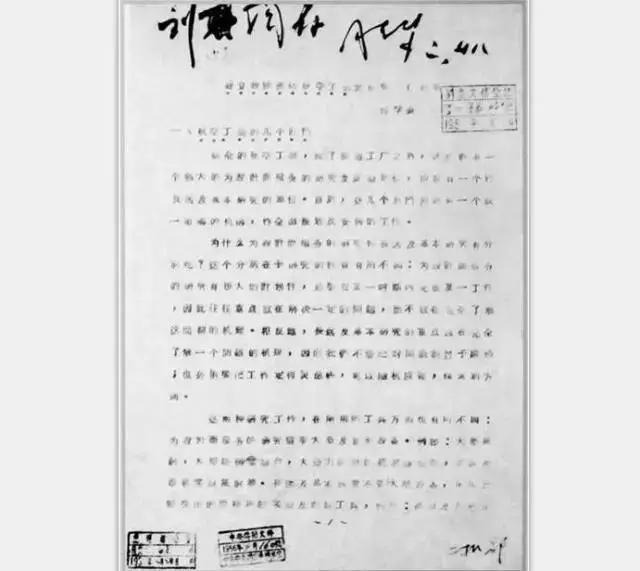
In February 1956, Qian Xuesen submitted to the Central Committee "Opinions on Establishing China’s National Defense Aviation Industry"

However, for a long time after the breakthrough of rocket technology, there was no overall planning for the development of aviation industry, which led to the lack of strategic traction in the independent research and development of aircraft, especially aero-engines.

Political circles are still debating whether the aviation industry belongs to high and new technology. Until 1995, when the Ninth Five-Year Plan was released, aviation technology was still not included in high and new technology. Many scientists began to worry. Seven respected and old experts, including Wang Daheng and Shi Changxu, signed a letter to state leaders to express their feelings.

Experts put forward two reasons for vigorously developing aviation technology: First, the Gulf War proved that air power still plays a decisive role in modern wars; Second, the development of aviation industry plays an obvious role in driving the national economy.Experts believe that the gap between China’s aviation technology and advanced countries is widening day by day. If it is not developed vigorously, there will not only be a military crisis, but also the huge domestic civil aviation market will be occupied by foreigners in the future.

For aero-engines, Academician Wang Daheng, the winner of the medal of "two bombs and one satellite", used the word "free" to describe it. Free does not mean nothing, but it is sometimes absent and looming.

"Free" means insufficient investment.China’s first self-designed turbofan -6 with large thrust engine lasted for 20 years, with a total development cost of 150 million RMB, and only 2 million RMB was available in two years at the critical stage of development. At the same time, it cost about $2 billion to develop an engine for an ordinary large and medium-sized aircraft in the United States.

In the 1980s, the United States successively put forward pre-research projects such as IHPTET (Integrated High Performance Turbine Engine Program) and VAATE (Advanced Turbine Engine Program), and invested 5 billion and 3.7 billion US dollars respectively. China also put forward two pre-research plans for high-performance engines in the 1980s, but the total investment in 20 years is only equivalent to that of the United States in one quarter. Even if the purchasing power of money in the same period is taken into account, the gap between them is huge.
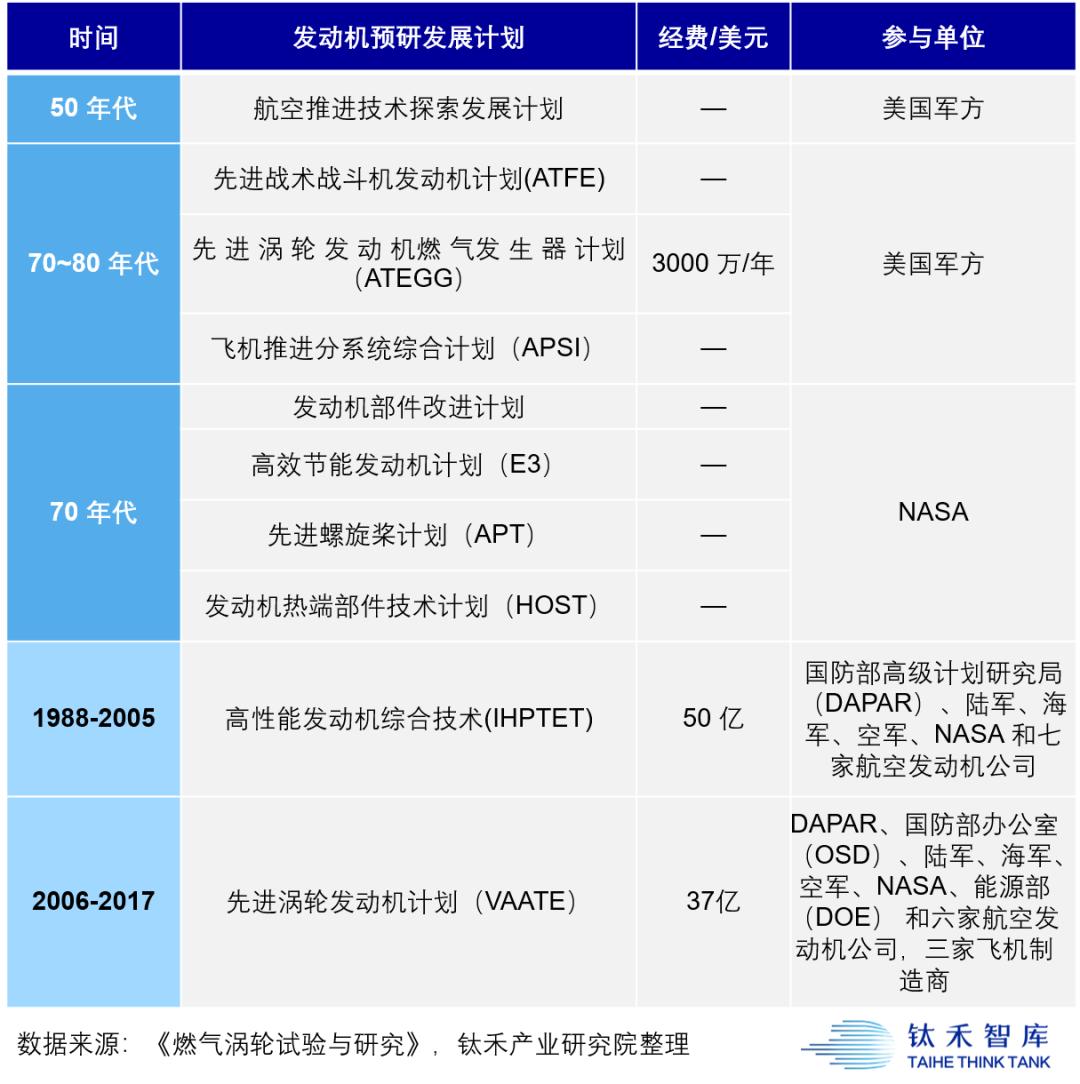
Aeroengine pre-research program in the United States

It was not until more than half a century passed that we had a deeper understanding of the strategic value and complexity of aero-engines. Since 2011, the Ministry of Industry and Information Technology has taken the lead in investigating and demonstrating aero-engines and gas turbines. In 2012, the "two-machine special project" was approved. In March 2016, in the 13th Five-Year National Science and Technology Innovation Plan issued by the State Council, aero-engines and gas turbines ranked first.

The implementation of the "two-engine special project" means that aero-engines as a major national strategic project will receive strong support from policies, funds and resources at present and in the future, and fundamentally solve the problem of insufficient investment.

By the end of 2020, the investment in the "two-machine special project" has reached 300 billion yuan. With the strong support of policies and funds, China’s aero-engine and gas turbine technology is accelerating to catch up with the world’s advanced level and achieve a historic leap.

2

From "Aircraft Dependence" to "Flight Separation"

"There are no planes, what do you need an engine for?"

In 1982, due to the changes in the equipment system of the National Air Force, the J -9 and J -6 planes were planned to be dismounted one after another. As its supporting power, the turbofan -6 engine is also facing dismounting because it suddenly loses its applicable object, and at this time, the turbofan -6 has gone through.18 years of hard development, just passed the 24-hour pre-flight test run. From the beginning of scheme research in 1964 to the end of development in 1984, turbofan -6 lasted for 20 years, which almost condensed the youth of a generation. According to the relevant personnel’s memories afterwards:

"At the moment when the suspension of development was announced, Wu Daguan burst into tears, and he also cried on stage."

The development was terminated due to the dismounting of the plane, and the turbofan -8 was developed by Shanghai Changzheng Machinery Factory. This large thrust civil aviation engine, which was born for Yun -10 aircraft, was successfully tested on Boeing 707 for more than a dozen times, and flew to Lhasa and other places as the heart of Yun -10. The cumulative flight time was 170 hours, and all the performances met the design standards. In 1985, Klebos, vice president of the General Aviation Engine Division of the United States, visited China and once admired the turbofan -8:

It was indeed a great achievement that you could finish such a complicated engine 10 years ago.
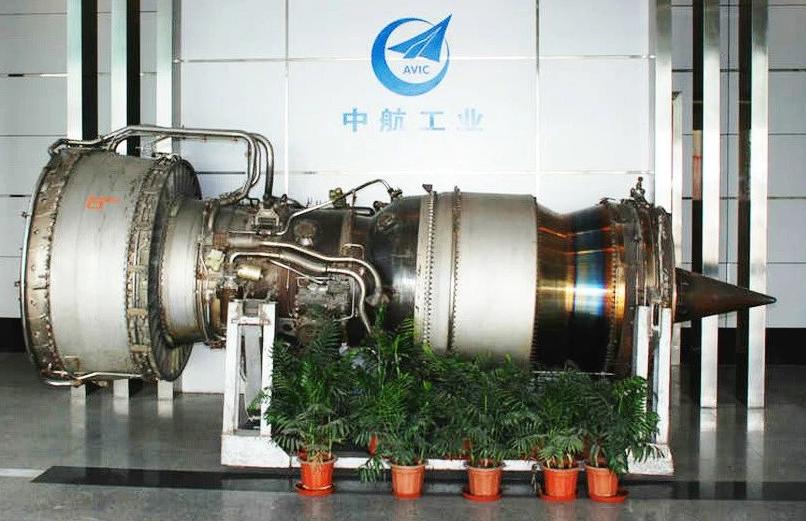
Turbofan -8 stopped production with Yun -10 dismounted.

Frequent dismounting of projects not only discourages the enthusiasm of researchers, but also delays the development opportunity.For a long time, the development path of aero-engines in China was "maintenance-mapping imitation-model improvement-model development-pre-research", which was basically the opposite of the path in the United States. At that time, the United States had established a mature pre-research mechanism and took a steady route of "technical pre-research-core machine-test verification".

In 2001, Wu Daguan pointed out in his article Reflections on Two Major Historical Issues of Aviation Industry,The policy of "scientific research first, power first" formulated by the aviation industry has not been agreed and implemented, and in fact it has become a general slogan.

One of the fundamental reasons why the pre-research could not be carried out was that the development of the engine was subordinate to the aircraft at that time, that is, "one factory, one model". If a factory wants to develop an airplane, there will be a research institute to develop a matching engine.The engine followed the plane, the plane project dismounted, and the engine development stopped.

On the other hand, due to the long-term lack of technical reserves and pre-research, the development cycle of aero-engine is much longer than that of aircraft, and aircraft often can’t afford to wait for the engine, so it is better to buy others’ ready-made products for independent development. Academician Liu Daxiang, an aviation power expert, once reflected on this issue:

"For a long time, too much emphasis has been placed on aircraft with engines and models with pre-research, and insufficient attention has been paid to early technical verification. Many key technologies have not been effectively broken before model establishment, and often model development is synchronized with technical research and component troubleshooting, resulting in repeated model development, which greatly delays the development cycle."

Under the collective reflection of aviation industry experts, the call for "separation of flight and development" continues to rise. In 2009, China Hangfa Commercial Aviation Engine Co., Ltd. (hereinafter referred to as "China Hangfa Commercial Engine") was established, becoming the general contractor of China’s large passenger aircraft engine project, and began to develop China civil aviation engine.

In 2016, China Aviation Engine Group Co., Ltd. (hereinafter referred to as "China Hangfa") was formally established, which was jointly funded by SASAC, Beijing State-owned Capital Management Center, China Aviation Industry Corporation and China Commercial Aircraft Corporation.

Since then, China has owned a national specialized aero-engine enterprise group.It means that, at least institutionally, aviation development has completely got rid of the dependence on aircraft development., towards the independent development of the sea of stars.

three

From "Imitation of Surveying and Mapping" to "Independent Research and Development"

"Buy if you can, and copy if you can’t."

The background of Ren Zhengfei’s story is the 1970s. In fact, the introduction of "Spey" engine from Britain was just an accidental episode. In the early days, most aero-engines in China came from mapping and imitation of Soviet engines. As the core technology of aviation industry, the western countries have always adopted a blockade strategy against China. After the Soviet Union cut off aid, China’s aviation industry once fell into a dilemma of no availability. In 1972, British Rolls-Royce offered to provide Spey MK202 engine to China, and at the same time transferred technology, which was quite unexpected.
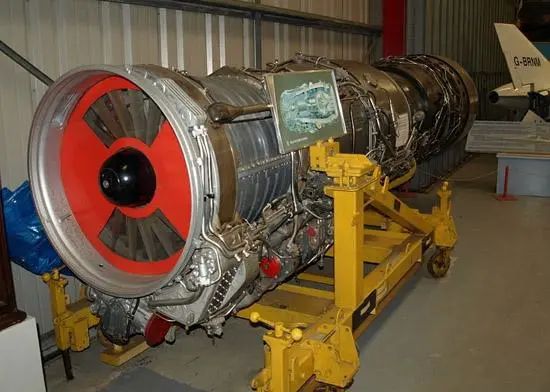
Spey MK202 engine

In December 1975, China and Britain signed a purchase contract of about 77 million pounds.The original plan is divided into two steps. It will take three years to learn how to assemble qualified Speer with imported parts, and then five years to realize localization.. In 1980, the Spey engine developed and assembled according to British wool was tested in Britain. However, in the national economic adjustment in the 1980s, it faced the same reality as turbofan -6, so the localization process was suspended for more than ten years.

It lasted for 30 years before and after the localization of Spey, which is very emotional. Because we couldn’t wait for the engine, in order to ensure the production of the aircraft, we first used the Spey engines stored for 20 years, and then bought a batch of second-hand engines from Britain. Until around 2010, turbofan -9 finally kept up with the progress and realized continuous mass production supply.

The turbofan -9 "Qinling" engine developed from Sibei belongs to "partially independent design". Before that, most of us were "copying and improving" Soviet engines.Long-term measurement and imitation lead to the fact that the technical ability of the institute is even inferior to that of the factory, and the technology cannot be digested and its own research and development system cannot be formed.

It was not until 2002 that the domestic turbojet -14 "Kunlun" engine was finalized that China completed the whole process of self-development for the first time.

In December 2005, the domestic turbofan -10 "Taihang" developed by Shenyang Liming Engine Company passed the life test and became the first large thrust turbofan engine with independent intellectual property rights in China. "Taihang" took 27 years from the pre-research in 1978 to the project establishment in 1987, and then to the completion of the design finalization examination at the end of December 2005. This process can be said to be stumbling, and even the explosion of the testing machine occurred.

Until 2011, the maximum afterburner thrust of turbofan -10 was determined to be 125KN, which means that this "domestic heart" with high hopes has finally entered the mass production state. "Taihang" has finally passed the stage of being criticized by netizens as "not very good", and its performance in recent years can be regarded as disappointing. Up to now, no fighter plane carrying "Taihang" has crashed due to engine failure.

From imitation and improvement, to partial independent research and development, and then to having independent intellectual property rights, China aviation industry people clearly realize that key areas must be self-reliant and core technologies must be mastered by themselves.However, as the most complex industrial field of mankind, the development of aero-engines cannot be done behind closed doors.

The development of turbofan -10 has also learned from others’ strengths. For example, the core engine principle draws lessons from the F-110 commonly used in the United States. In order to meet the actual domestic installation demand, Su -27 was introduced as a flight test platform, and a lot of technical experience of the supporting power system AL-31F of Su -27 was digested and absorbed. Like many domestic equipment technologies in China at present, turbofan -10 does not copy Russian products or blindly follow hairdressing, but absorbs the experience of the United States and Russia at the same time, and then explores a technical route that conforms to China’s reality.
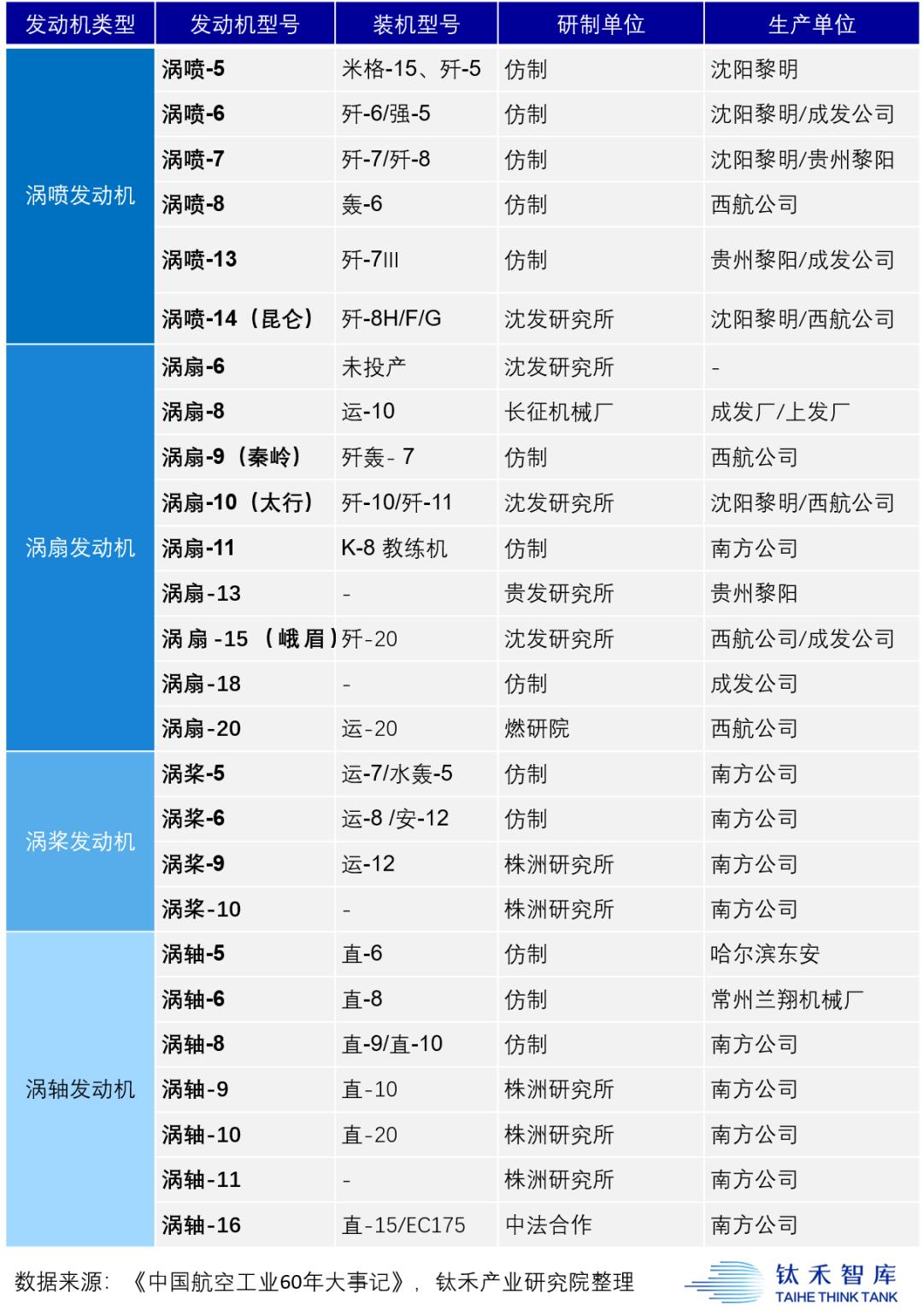
Main military aero-engine models developed in China.

From "filling in the blanks" to "looking back", it is not easy to finally ensure that it is "neck and neck" with developed countries.After the establishment of China Hangfa, a "three-step" road map was established.

The first step is to narrow the gap with the advanced level of foreign aero-engines, initially establish an independent innovation research and development system for aero-engines, and lay a foundation for development;

The second step is to basically build an independent innovation research and development system for aero-engines;

The third step is to complete the independent development process of representative models, build the basic research, product development and industrial system of independent innovation, basically realize the strategic transformation of independent innovation and development, and make China Hangfa an innovative enterprise with international competitiveness.

four

From "Closed Independence" to "Open Integration"

"Small core, great collaboration, specialization and openness."

In the first half century, the development of aero-engines in China was not smooth. From the 1990s to the beginning of this century, there were many reflections on the lagging development of aero-engines in China.The old experts concluded that "our understanding of the development law of aviation technology is insufficient, and we lack long-term planning and stable planning", but the deeper reason lies in the system.

The American military industry model is based on enterprises.Boeing, Loma, Nuoge and other dual-use groups are the main manufacturers, Raytheon, Holwell, Pratt & Whitney, General Motors and other groups provide sub-system support for them, and thousands of dual-use enterprises such as TI and ADI are responsible for supplying materials and parts, forming a pyramid-shaped integration of defense and civilian technologies ecological circle with open cooperation, step-by-step competition and professional subdivision.

During the Cold War, the United States once supported two aviation giants, GE and PW, through the horizontal competition mechanism controlled by the government. In 1968, the US Department of Defense asked Pratt & Whitney and GM to manufacture and test one engine each. This government-led "selecting the best to help the strong" has achieved remarkable results, and finally achieved the famous GM F-110 engine and Pratt & Whitney F-100 engine.
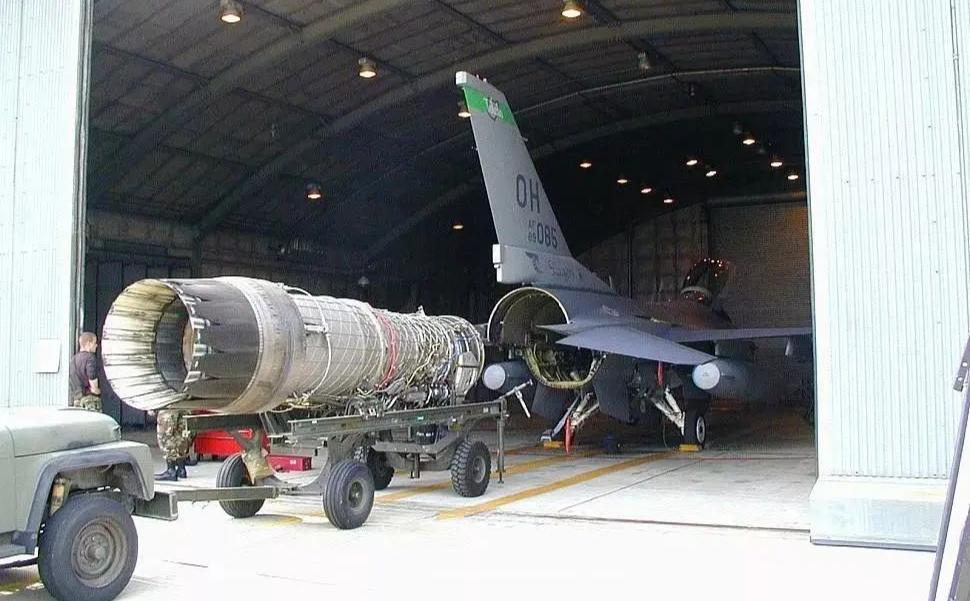
F110-GE engine

Pratt & Whitney initially won the competition and signed the contract first. Although GM was at a disadvantage in the initial competition, it subsequently launched an improved F110-GE-129, and Pratt & Whitney developed an improved F100-PW-229 to compete with it.

In February, 1984, the United States Air Force purchased F100 and F110 in proportion according to the double contractor procurement strategy, and basically they were exposed to rain and dew. It is under such a "horse racing" mechanism and order support that the two companies have grown into the world’s top aero-engine companies.

For a long time, China’s military industrial model is dominated by military industrial groups with strong administrative color, and scientific research tasks are coordinated, coordinated and protected in a highly planned way. The general research institute to the assembly plant, and the supporting research institute to the supporting plant are mostlyIn the state of "vertical cooperation and fragmentation", military and civilian lines are separated, forming a closed monopoly system with separation of research and development, lack of competition and self-protection.

The establishment of the "Two-Aircraft Project" and China Aviation Development Co., Ltd. is escorted by the in-depth promotion of the national integration of defense and civilian technologies strategy. In 2016, the Opinions on the Integrated Development of Economic Construction and National Defense Construction issued by the Central Committee of the Communist Party of China, the State Council and the Central Military Commission clearly proposed to deepen the reform of the national defense science, technology and industry system, further break the industry closure, expand the introduction of social capital, highlight core capabilities, liberalize general capabilities, promote socialized cooperation, and promote the professional reorganization of military enterprises.

Breaking the binary separation of military and civilian and promoting open integration are not only institutional breakthroughs, but also the reshaping and integration of the industrial chain.Taking the aviation industry as an example, the "main manufacturer-supplier" model that the United States has been pursuing is being followed by global aviation manufacturing enterprises. In this mode, the development of an aircraft requires the early intervention of suppliers and joint participation in research and development.

The main manufacturer splits its subordinate manufacturing units and becomes a system integrated manufacturing role, getting rid of the "heavy-load" link of "manufacturing production", which requires high load to produce benefits, and enhancing its ability to cope with market changes; Suppliers can focus on the research and development and technical strength reserve of a certain subsystem, so as to be more professional and efficient.

As the core system of an aircraft, aero-engine open cooperation can also greatly improve the development efficiency. For example, since 2004, Rolls-Royce Company has only produced 30% of the core components and the highest added value, and subcontracted the remaining 70%, thus reducing the manufacturing and purchasing costs of all engine parts as much as possible under the premise of controllable risks.

On this basis, China Hangfa has further determined the development mode of "small core, large cooperation, specialization and openness", which means that the development of China aero-engine can attract more extensive external forces to participate in the cooperation nationwide and even globally, and enterprises can concentrate on improving key core capabilities. According to the disclosed information, there are currently more than 350 suppliers participating in the "Yangtze River" series of engines, initially forming a global supply chain. At the same time, 69 suppliers from 16 countries are willing to participate in the commercial engine project in China.

Historical lessons have proved that you can’t build an engine behind closed doors.

Aeroengine is composed of tens of thousands of precision parts, which has a long development cycle and involves a wide range of fields. Independent research and development of aero-engines is an arduous challenge to the current basic disciplines, design, materials and technology. China has a complete range of manufacturing industries and abundant resources, but the support provided by basic industries is far from enough. Through open integration, the standards and data barriers in the upstream industrial chain (such as materials, machining, measurement and testing, etc.) can accelerate the integration of manufacturing resources, enrich and improve the industrial chain, and maximize the cost reduction and efficiency improvement of the whole industry.

Due to the historical debts and the current technical blockade, it is doomed that the breakthrough road of China aero-engine is still bumpy, which requires great determination, patience and wisdom. But the first light on this road has shown us the way.

References:

[1] Wu Daguan, thinking about two major historical issues of aviation industry, 2001.

[2] Yang Kemin, 100 people who moved China since the founding of New China: Wu Daguan, 2012.

[3] Zhao Yining, Great Country Project, 2018

[4] Liu Daxiang Jinjie Peng Youmei Hu Xiaoyu, Development Status and Key Technology Analysis of Large Aircraft Engines, 2008.

[5] Liu Daxiang, a historic opportunity for the development of aviation power, 2005.

[6] Han Xinwei, Chen Liangyou, Wu Hao, Countermeasures for Accelerating the Development of Aero-engines in China, 2003.

[7] Wen Junfeng, Brief Introduction and Thinking of Aeroengine Development, World Passenger Aircraft Research and Development, 1998.

[8] Han Rui, Lilac, Brief Introduction and Thinking on the Development of Aeroengines, 2012

[9] Pei Yu, further progress in the "domestic heart" of large aircraft, commissioning of CR929 engine verification machine, 2020

[10] Liu Zhenmin, China aero-engine industry development from the perspective of system innovation, 2019.
Original title: "At the moment of announcing the suspension of research and development, the audience cried" … Now China is no longer afraid of sniping! 》

Read the original text
Ensure the "May 1" holiday to carry out special safety supervision inspections for high-risk industries in a safe and stable manner.

CCTV News:In order to further compact the responsibility of production safety and ensure the safety and stability of the May 1 holiday. Recently, emergency management departments in many places have carried out special inspections on safety supervision for high-risk industries in this area. In Shenyang, Liaoning Province, inspectors conducted comprehensive inspections on safety production and fire protection of local food and drug enterprises, and found many hidden problems.

Liaoning: It is found that there are many safety hazards in the gas boiler room of the enterprise.

In xinmin city, Liaoning Province, when the local emergency management department inspected a food enterprise, it was found that the alarm in the gas boiler workshop of the enterprise was not installed at the specified distance, and there was a hidden danger of delaying the alarm when combustible gas leaked.

In addition, in this gas-fired boiler workshop, inspectors also found that some key electrical appliances do not have explosion-proof function and are prone to electric sparks.

In a pharmaceutical enterprise in xinmin city, inspectors walked into the gas-fired boiler room and found that a fire station was temporarily built inside, which did not comply with the relevant regulations.

In view of the problems detected, the local emergency management department requires enterprises to rectify immediately as required, and conduct a major risk investigation by analogy. According to the work arrangements of the the State Council Safety Committee Office and Liaoning Province, the Liaoning Provincial Safety Committee has set up a number of comprehensive inspection teams for production safety, and rushed to many places in Liaoning to carry out comprehensive inspection work on production safety and fire protection during the May Day holiday to comprehensively investigate and rectify various potential risks.

Luzhou, Sichuan: Centralized management of safety hazards in key industries such as dangerous chemicals.

In the past few days, Luzhou, Sichuan, Fuzhou, Fujian and other places have carried out special treatment of hidden dangers of safety risks in key industries, and really investigated and corrected outstanding problems such as failure to implement the responsibility for safety production and inadequate safety risk identification and control.

On April 21st, law enforcement inspectors of Luzhou Emergency Management Bureau came to a dangerous chemical enterprise to carry out law enforcement inspection activities of safety production supervision, and found that the installation method of pressure gauge valves on the pipeline was not standardized, and there was a risk of toxic and harmful gas leakage.

For the security risks found, the law enforcement inspectors ordered the enterprises to establish and reform, and comprehensively investigated all kinds of hidden dangers of the enterprises by analogy. It is reported that the centralized management of safety risks in key industries in Luzhou involves 17 industries, including dangerous chemicals, mines and road traffic. Through supervision and inspection, all parties’ responsibilities are promoted to the end, and all kinds of risks are effectively controlled.

Fuzhou, Fujian: Carry out special rectification of maritime safety to prevent and resolve major security risks.

In order to further promote the sustained and stable maritime safety situation, the Fuzhou Municipal Safety Production Committee has launched a one-month special rectification campaign for maritime safety since the end of March. At Huang Qi Central Fishing Port in Lianjiang County, Fuzhou, law enforcement inspectors boarded the ship one by one to check the hidden dangers, check the relevant documents of fishing boat operation and the status of fire fighting equipment, and found that many fire extinguishers of a fishing boat had failed to work normally, and urged the owner to make immediate rectification.

In this special rectification of maritime safety, the Fuzhou Municipal Safety Committee set up a working group for supervision and assistance on maritime safety and a special class for guidance and service at the stagnation point. The city has carried out 1,595 law enforcement inspections, boarded 2,269 ships, and found 487 hidden dangers. Through joint law enforcement, training and inspection, the loopholes in ship safety management have been filled, creating a high-pressure situation of maritime safety production supervision.

70 reservoirs in 16 cities and counties in Hainan have dried up and become "grassland"

Daxian Reservoir with a total storage capacity of 2.08 million cubic meters has dried up.

  Affected by the El Ni? o phenomenon, there is a serious drought in Hainan. Yesterday, the reporter saw in Daxian Reservoir in Haiwei Town, Changjiang Li Autonomous County, southwest of Hainan Province that the reservoir has dried up to the bottom, most of the bottom of the reservoir has turned into grassland, and some of the ground in the middle has cracked due to drought. Up to now, 16 cities and counties in Hainan Province have been affected by drought successively. There are 164 small and medium-sized reservoirs in the province whose water storage is lower than the outlet of drainage culvert, of which 70 have dried up, and the affected area of crops has reached 181,200 mu, and 28,000 people have difficulty drinking water temporarily. Hainan has invested 30 million yuan in drought relief to increase the intensity of artificial precipitation enhancement.

  site

  Both reservoirs have "bottomed out" and "island in the middle of the lake" with exposed loess and long grass.

  The reporter recently visited the largest reservoir in Hainan Province — — Songtao Reservoir and the second largest reservoir in the province — — Daguangba Reservoir found that the water storage capacity of these two reservoirs has been greatly reduced, and both have "bottomed out". The reporter went to Songtao Reservoir, located in the south of Danzhou City, and saw that the vastness before the reservoir no longer existed. A large area of loess was exposed in the reservoir, and some fishing boats docked on the shore.

  Luo Feng, secretary of the Party branch of Songtao Reservoir Area, stood in front of the stone carving with the characters "Songtao Reservoir" and "overlooked" the water. "If it is a normal water level, the water can reach where I stand." Luo Feng said, "The water level has dropped more than 20 meters than normal, and it has also dropped by about 10 meters compared with the same period last year."

  According to Fu Dongxuan, director of the dispatching center of Songtao Irrigation District Management Branch of Hainan Water Conservancy Irrigation District Administration, Songtao Reservoir has a total storage capacity of 3.345 billion cubic meters, and its main task is to solve the problems of irrigation water, industrial and domestic water use in Danzhou, Lingao, Chengmai and Haikou. But at present, the storage capacity of the reservoir is less than 1 billion cubic meters, and the water discharge capacity is less than 500 million cubic meters. Some towns farthest from the irrigation area in Danzhou once had difficulty drinking water for people and livestock.

  The reporter drove all the way to Dongfang City, and the magnificent Daguangba Reservoir has also "bottomed out". Large areas of loess have been exposed at the bottom of the reservoir, forming an "island in the middle of the lake", which is covered with grass. On the other side of the dam, the rugged rocks are not moistened by water and are roasted by the scorching sun.

  It is understood that the existing storage capacity of Daguangba Reservoir is only 400 million cubic meters, which is more than 1 billion cubic meters lower than the normal storage capacity and more than 400 million cubic meters lower than the same period last year.

  Confucian Village: All the wells in the village have dried up.

  3 villages drink water by water tankers.

  Following in the footsteps of Zhang Shucheng, director of Rucun Village, the reporter came to a melon field. The vines and leaves of watermelons in the melon field were listless, some leaves were yellow and faded, and several big watermelons were not seen in the whole melon field. "According to the abundant rain in previous years, there should be big watermelons everywhere in the field, and it is not unusual to weigh seven or eight pounds." Zhang Shucheng said that this year’s drought is serious, melon farmers are short of water when sowing, and they are short of water for irrigation at ordinary times, and they are still short of water when flowering and fruiting. At this time in the past, melon merchants came to the village to talk about acquisitions. "This year, the output of watermelons has been reduced by at least 3/5. Watermelons are poor in growth, ugly in shape and low in quality, and no one has come to buy them. It can be said that melon farmers have lost their blood this year."

  When you come to the Confucian village, you can see the bottom of the well in the village. "All the wells in the village have dried up." Zhang Shucheng said that people and animals in the village have difficulty drinking water. In March, the villagers reported the situation to the town. In order to solve the problem of drinking water for the villagers, Guangcun Town arranged a car to deliver water to the village the next day. "The water sent is only enough for people and animals to drink, and bathing and washing is a luxury." "Our village is relatively remote and it is difficult to lay a tap water pipeline, so the town invested to help us drill a 100-meter deep water well." Zhang Shucheng said that the deep water well has now been completed and can be put into use immediately.

  "The drought is more serious this year, especially in Liuxing Village and Dalao Village in the town. From December 2015 to now, drinking water for people and livestock has been solved by sending water by car in the town. " Sun Zhannan, secretary of the town Committee of Eman Town, Danzhou City, said. Compared with Confucian villages in Guangcun town, the situation in Liuxing and Dalao villages in Eman town is more serious. According to Sun Zhannan, secretary of the town Committee of Eman Town, only 44 mu of rice is in the field because of the lack of irrigation and drought this year. "Not only is agriculture short of water, but drinking water for people and livestock is also a problem." Sun Zhannan said that it is very difficult for people and animals to drink water now. There are 29 households with 113 people in Liuxing Village, a multi-industry village committee, and 50 households with 204 people in Dalao Village. "Although the water pipeline has been laid, it has not yet been put into use." He said that in order to solve the drinking water problem in these two villages, the town government will arrange water trucks to transport water to the villages every day, once in the morning and once in the evening.

  interpret

  El Nino’s over-age "El Nino" shows its power.

  This round of El Nino phenomenon was named "Bruce Lee" by American meteorologists, because its duration, cumulative intensity and peak intensity all reached the highest level in 65 years. Although it has peaked since the beginning of this year, the El Nino "Bruce Lee" is still powerful. Affected by this, hot and dry weather has been going on in Southeast Asia and South Asia for quite some time.

  According to the detection of China National Climate Center, the current El Ni? o phenomenon has lasted for 19 months since its development in September 2014, exceeding the cycle of 14 months and 13 months of the previous two super El Ni? o phenomena and becoming an over-aged "El Ni? o". From May 1997 to May 1998, the super-strong El Ni? o phenomenon caused a total of 21,000 deaths and caused a global economic loss of $36 billion.

  (Comprehensive Xinhua News Agency People’s Network Southern Metropolis Daily)

The movie "body double Paper Man 2" set sail heavily, and all the actors joined forces to continue the frontier.

Body double Paper Man 2 is directed by Xu Jun. Liu Mingliang, Xu Jun, Yiya and Gao Wuxiang are screenwriters, and He Yuchen, Ren Zihao, Shan Mingkai, Zhang Yutong, Liu Shuo and Tian Feng lead the thriller, suspense and horror film. The film tells the story of the bizarre death of Wu Dade, a rich gentleman in wujia town, during the Republic of China, and the Wu family courtyard began to suffer bizarre tragedies frequently. The tomb was invaded by strange snakes, but the two sons were frightened by the neon mulberry in their dreams. The youngest daughter Wu Yue mediated among them, and even the housekeeper Lin Chuyi was harassed by the strange actor neon mulberry. With the development of many strange and scary events, the human nature, good and evil and ugliness of the Wu family courtyard will be vividly displayed. The film is expected to land in the national cinema to meet the audience on May 18th, 2024.

The film tells the story of the sudden death of the rich gentry, the children fighting for money, the Wu family courtyard, and frequent mysterious cases!

During the Republic of China, Wu Dade, a rich gentleman in wujia town, suddenly died suddenly at home. Wu Shengcai, the eldest son, and Wu Youdao, the second son, began to compete for family property, and the younger daughter was among them. Because of Wu Dade’s strange and ominous death, the Wu family chose to go to the funeral in the middle of the night, but unexpectedly, the tomb had already been invaded by snakes. The third daughter also saw the infiltration scene of "female ghosts pressing coffins", but at the suggestion of the housekeeper Lin Chuyi, she chose acupoints again and was buried on the seventh day.

But on the seventh day, the Wu compound began to be weird frequently, and one by one, the infiltration and terror incidents occurred one after another. The second son, Wu Youdao, had a dream of encountering a neon mulberry. The eldest son, Wu Shengcai, bumped into his father’s death and came back to life, and was troubled by the terrible love love love. The housekeeper Lin Chuyi was hit by a ghost and woke up to be trapped in Wu Dade’s coffin and went crazy. ……

The snowy night is silent, ghosts are prominent, and paper men drift above the mourning hall. Whether it’s an ulterior motive, or a death wish. Terror, terror and infiltration have always shrouded in the Wu compound, which has become a "haunted house" …

He Yuchen (played by Wu Yue), Ren Zihao (played by Wu Youdao), Shan Mingkai (played by Wu Shengcai), Liu Shuo (played by Lin Chuyi), Tian Feng (played by Wu Dade), Zhang Yutong (played by Nisang female ghost) and many other actors joined in the film.

The film was produced by Zhejiang Liangxiao Wucai Film Co., Ltd., jointly produced by Beijing Qitou Group Co., Ltd., Beijing Liangxiao Wucai Century Film Co., Ltd. and Beijing Weiying Capital Management Co., Ltd., and specially sponsored by Yu Zhangmen and Liu Xiaoli. Ye Jiao, Xu Dongbo, Zhang Zhiyue, Song Ling and Gan Lifeng are the producers. Ye Jiao is the chief producer, Zhang Zhiyue and Huang Jiaxuan are producers, Zhu Ziwen, Niu Xinyun and An Yalong are executive producers, and Li Pengfei is the production director. Xu Jun is the general director, co-director, screenwriter Liu Mingliang, Xu Jun, Yiyi and Gao Wuxiang, executive director Li Xiaobo, photography director Li Jun and Aring Zhang, lighting director Li Fei and production designer Liu Ruifeng, modeling director Li Jing, later director Tu Chenjun, recording director Zhang Lin, actor coordinator Gao Henan and live producer Xiao Xizi. The film was filmed in Hengdian, China Film and Television City, and will land in the national cinema to meet the audience on May 18th next year.

The film was surveyed many times in Hengdian Film and Television City of China and finally filmed. Xu Jun, the early director, led the screenwriter team to carefully construct, polish and perfect the whole story. During the reading period, the main actors and the creative team conducted in-depth study and discussion on the script for many times and made amendments to ensure that the plot was promoted reasonably and the roles were three-dimensional. The director has conducted many technical discussions and studies with the creative departments such as modeling, photography, lighting and post-production, striving to improve the story and texture of the film. The film involves a lot of thrillers, suspense and horror scenes, all of which are carefully completed by the staff of various departments with concerted efforts. Build this sentimental film with more wonderful stories and the most textured pictures.

The Ministry of Finance defines the ecological protection of the Yangtze River Economic Belt: protecting the environment from losses.

  BEIJING, Feb. 24 (Xinhua) According to the website of the Ministry of Finance, the Ministry of Finance recently issued the Guiding Opinions on Establishing and Improving the Long-term Mechanism of Ecological Compensation and Protection in the Yangtze River Economic Belt. The guiding opinions are clear, so that places that protect the environment will not suffer, benefit and gain more, fully mobilize the enthusiasm, initiative and creativity of city and county governments to strengthen ecological construction, and protect the ecological environment with the system.

  The guiding opinions are clear. The central government will strengthen the design of ecological compensation and protection system in the Yangtze River basin, improve the transfer payment method, increase support, and establish and improve the incentive and guidance mechanism. Local governments should take effective measures to actively promote the establishment of a long-term mechanism for ecological compensation and protection in neighboring provinces and the Yangtze River Basin within the province.

  The guidance is clear, focusing on the improvement of ecological environment quality, implementing accurate assessment according to the types and importance of ecological functions, and strengthening the linkage mechanism between fund allocation and ecological protection effectiveness. Let the places that protect the environment not suffer, benefit and gain more, fully mobilize the enthusiasm, initiative and creativity of city and county governments to strengthen ecological construction, and protect the ecological environment with the system.

  The guiding opinions put forward that by coordinating general transfer payments and related special transfer payments, an incentive and guidance mechanism should be established, and the financial investment in ecological compensation and protection in the Yangtze River Economic Belt should be significantly increased.

  By 2020, the diversified investment mechanism for the protection and governance of the Yangtze River Basin will be more perfect, the working pattern of coordinated governance will be more perfect, and the central government’s ecological compensation benefits between local and upstream and downstream basins will be more prominent, providing important financial support and institutional guarantee for the ecological civilization construction and regional coordinated development of the Yangtze River Economic Belt.

  The guidance proposes to increase special support for the Yangtze River Economic Belt. In terms of supporting the development of forest resources, natural forest cutting and management, wetland protection, ecological migration, energy conservation and environmental protection, the central government will focus on the Yangtze River Economic Belt through forestry reform and development funds, forestry ecological protection and restoration funds, and energy conservation and emission reduction subsidies.

  Taking the implementation of major ecological restoration projects as a priority option to promote the development of the Yangtze River Economic Belt, the central government will increase its support for the construction of shelter forest system, soil erosion and rocky desertification control in karst areas.

  The guidance requires local finance to do a good job in implementation. Provincial financial departments should improve the management methods of general transfer payment funds such as provincial balance and key ecological function areas, and continuously increase support for the Yangtze River, runoff areas and key water source areas.

  Financial departments at all levels below the provincial level should strengthen the management of special transfer payment funds related to ecological and environmental protection, guide all responsible departments to coordinate policy objectives, clarify tasks and responsibilities, coordinate management methods, standardize performance appraisal, and form a joint force to significantly increase investment in ecological protection of the Yangtze River Economic Belt.

  The guidance requires that local finance explore the establishment of a special transfer payment fund integration mechanism for ecological protection and governance in the Yangtze River Basin. For the carry-over funds of relevant central special transfer payments, local governments can formulate stricter measures for fund pooling and effectively improve the efficiency in the use of financial funds.

The latest list of top 100 counties in China: Jiangsu and Zhejiang lead the way, with strong consumption and strong industrial strength.

  On July 28th, "Research on Top 100 Counties Economy in China in 2020" was released online, and the latest list of top 100 counties in China was released. Research shows that among the top 10 top 100 counties, Jiangsu Province dominates half, and Jiangsu, Zhejiang and Shandong provinces lead the national county economy. At the same time, the income and consumption power of residents in the top 100 counties are much higher than the national average, and they are generally in the late stage of industrialization.

  It is reported that the study was compiled by CCID Consulting County Economic Research Center and has been released continuously since 2016. The list of the top 100 counties takes "the regional GDP is more than 40 billion yuan, and the general public budget revenue is more than 2 billion yuan" as the two thresholds for data storage, and establishes an evaluation index system for the high-quality development of county economy, including 4 first-level indicators, 8 second-level indicators and 22 third-level indicators.

  County is an important space for China to promote industrialization and urbanization, and county economy also plays an important role in the national economy. The Paper (www.thepaper.cn) reporter combed and found that among the top 100 counties in recent years, the seats in the central and western regions increased significantly.

  In this year’s list of the top 100 counties, the eastern region accounts for 68 seats, the central region accounts for 21 seats, the western region accounts for 8 seats, and the northeast region accounts for 3 seats. Compared with 2019, the number of seats in the eastern region decreased by 3 seats, the central region increased by 2 seats, the western region increased by 1 seat, and the northeast region remained unchanged. This means that from the perspective of county economy, the strategy of the rise of China’s central and western regions has achieved initial results.

  Rank distribution of provinces (regions) in the top 100 counties of CCID in 2020

  "Strong province and strong county, leading Jiangsu" is the outstanding feature of this year’s list of top 100 counties. Among the top 10 of the top 100 counties, Jiangsu Province occupies half of the total and takes the top 3. Jiangsu, Zhejiang and Shandong provinces performed well, accounting for 25 seats, 18 seats and 15 seats respectively.

  Ma Chengen, director of CCID Consulting County Economic Research Center, said that the overall strength of the top 100 counties is outstanding. Among the top 100 counties, the number of counties with GDP exceeding 100 billion reached 33, an increase of 3 over the previous year. The GDP of Kunshan City and Jiangyin City in Jiangsu Province has exceeded 400 billion yuan, which is equivalent to that of provincial capitals such as Taiyuan City and Guiyang City. The top 100 counties account for less than 2% of the country’s land and 7% of the population, creating one-tenth of the country’s GDP;; With less than 3% of the county’s land and 11% of the population, it has created about a quarter of the county’s GDP.

  Consumption is strong, and the per capita GDP reaches the level of high-income countries.

  Research shows that in 2019, the per capita GDP of the top 100 counties reached 110,900 yuan, far exceeding the national average, second only to Jiangsu Province. According to the World Bank’s classification criteria for low, middle and high-income countries, the per capita GDP of the top 100 counties has reached the level of high-income countries.

  Comparison of economic scale between the top 100 counties and the four provinces of Guangdong, Jiangsu, Zhejiang and Shandong in 2019

  Compared with some major economic provinces, in 2019, the GDP and general public budget revenue of the top 100 counties were slightly lower than those of Guangdong and Jiangsu provinces, and higher than those of Zhejiang and Shandong provinces. The dimension of industrial added value above designated size exceeds the four provinces of "Guangdong, Jiangsu, Zhejiang and Shandong", which shows the strong industrial strength of the top 100 counties.

  Ma Chengen said that the income and consumption power of residents in the top 100 counties are much higher than the national average. In 2019, the per capita disposable income of top 100 counties was 38,700 yuan, the per capita disposable income of urban residents reached 48,000 yuan, and the per capita disposable income of rural residents reached 25,400 yuan, which was 26%, 13% and 59% higher than the national level in that year.

  In terms of consumption, the per capita retail sales of consumer goods in Baiqiang County in 2019 was 36,900 yuan, which was 25.5% higher than the national average of 29,400 yuan. The research shows that the county provides a space to undertake the transfer of industrial resources. At the same time, the county has a large population base, and the consumption needs to be further developed, with huge consumption potential.

  At the same time, the top 100 counties have significantly improved their ability to attract funds and population. In 2019, the balance of local and foreign currency deposits of financial institutions in Baiqiang County was 10.92 trillion yuan, equivalent to that of Shandong Province. The research shows that the higher the population density of the counties ranked in the top 100 counties, the stronger the ability to gather population.

  Overall, it is in the late stage of industrialization, and it has initially got rid of investment dependence.

  From the perspective of industrial structure, industry is a strong engine for the development of the top 100 counties, the pulling effect of fixed assets investment on development is declining, and economic kinetic energy is in the process of transformation.

  Comparison of industrial values between the top 100 counties and the four provinces of Guangdong, Jiangsu, Zhejiang and Shandong in 2019

  In 2019, the added value of industrial enterprises above designated size and the added value and growth rate of the secondary industry in the top 100 counties far exceeded those in developed provinces such as Jiangsu, Zhejiang and Guangdong. It can be seen that the secondary industry is the main driving force for the development of the top 100 counties.

  CCID said that according to the stages of Chenery’s industrialization process, the top 100 counties are in the late stage of industrialization. From the level of industrial structure, the tertiary industrial structure of the top 100 counties is that the added value of the primary industry is less than 10%, and the proportion of the secondary industry is greater than that of the tertiary industry, which is also in the late stage of industrialization.

  CCID Consultant suggested that in the next development of the top 100 counties, we should improve the quality of the overall supply system of the secondary industry and improve the adaptability of the supply structure to the demand structure. "The most important thing is to reduce the ineffective supply of the secondary industry and expand the effective supply."

  Comparison of the growth rate of total fixed investment between the top 100 counties and the whole country and some provinces in 2019

  In 2019, the average growth rate of total fixed assets investment in the top 100 counties was 6.79%, still higher than the national level of 5.4%. Among them, the fixed assets investment in four counties accounts for more than 100% of GDP, and 42 counties are between 50% and 100%.

  It is worth noting that in the latest list of the top 100 counties, the counties with fixed assets investment accounting for less than 50% of GDP exceeded half for the first time. At the same time, the total fixed assets investment of the top 100 counties in 2019 was 4.59 trillion yuan, accounting for 45.6% of the regional GDP, which was lower than the national average (56.6%).

  CCID explained that this shows that the role of fixed assets investment in the top 100 counties is declining, indicating that the top 100 counties have initially bid farewell to investment dependence and turned to an economic structure that pays equal attention to investment, consumption and export, and the economic kinetic energy is in the process of transformation.

  However, it can not be ignored that fixed assets investment is still an important force to stimulate economic growth for the whole county. In addition, the role of export in promoting the economic development of the top 100 counties is limited at present. In 2019, the total import and export volume of the top 100 counties was 3.51 trillion yuan, which is still far from Guangdong Province with the same economic volume.

  Comparison chart of total import and export volume between top 100 counties and some provinces in 2019

  At the same time, it is worth noting that there are great differences within the top 100 counties in terms of import and export. Take the proportion of total import and export to GDP as an example. Yiwu, the highest city, has reached more than 200%, showing the development achievements of opening to the outside world, while 70% of counties are below the national average (31.8%), and the proportion of some top 100 counties is even less than 1%.

  The tertiary industry has strong development potential, and scientific and technological innovation is the support for development.

  The research shows that the tertiary industry accounts for only 43.4% of the three industrial structures in the top 100 counties, which is far below the national level and the level of economically developed provinces such as "Guangdong, Jiangsu, Zhejiang and Shandong" in the same period. At the same time, the growth rate of the tertiary industry is slower than that of the secondary industry.

  Comparison chart of three industrial structures between the top 100 counties and the whole country and some provinces in 2019

  Therefore, CCID believes that the development of the tertiary industry can effectively improve the urbanization level, industrial added value and scientific and technological innovation vitality of the top 100 counties, and the development of the tertiary industry will become the focus that cannot be ignored in the economic development of the top 100 counties in the future.

  The research points out that the county should focus on promoting scientific and technological innovation and shaping new advantages with new technologies, new products and new services as the core; Counties should accelerate new urbanization, promote urban-rural coordination, and actively integrate into the new regional pattern with urban agglomerations as the main body.

  In June this year, the National Development and Reform Commission also issued a notice, pointing out that it is necessary to promote the upgrading of municipal public facilities in county towns and accelerate the work of urbanization in county towns to make up for shortcomings.

  CCID believes that in this respect, it is necessary to promote the construction of public service facilities in the county, promote the balanced allocation of public resources in urban and rural areas, and at the same time, focus on improving the level of modern service industry, tap the advantages of characteristic resources, culture and location, and actively expand the production and service capacity while meeting the production and living needs of county residents.

  CCID Consulting also released a report earlier, pointing out that, first, the manufacturing mode has changed to intelligent and green, and service-oriented manufacturing has become an important direction for manufacturing upgrading; Second, emerging economic forms such as digital economy, platform economy, sharing economy and creative economy are constantly emerging; Third, new technologies are changing the value chain of global industries and changing the layout of international productive forces.

  Under this background, the next development of county economy should seize the opportunity of scientific and technological revolution and industrial transformation, promote the industry to leap to the middle and high end, and at the same time, rely on the advantages of county resources and the foundation of industrial development to accelerate the formation of new advantages of county economy.

  (This article is from The Paper, please download the "The Paper" APP for more original information)