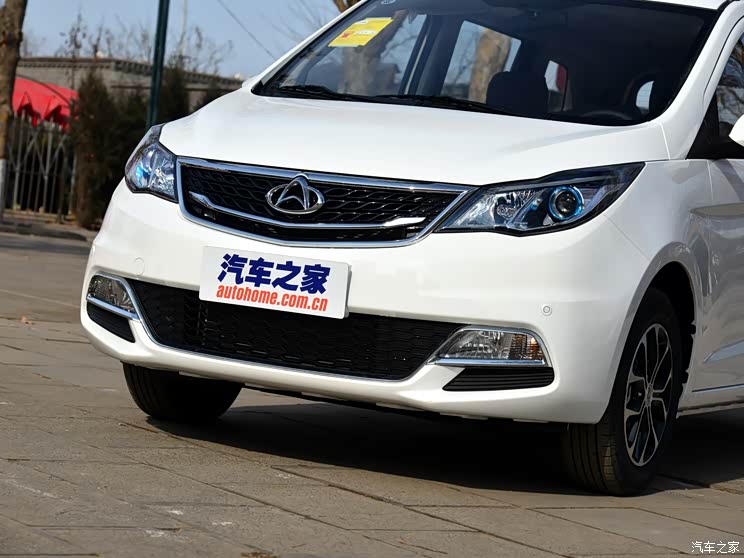
The price is 56,900-70,900 yuan, and the 2017 Changan Auchan is listed.
[New car on the market] A few days ago, we learned from relevant channels that the 2017 model was officially listed.The new car has five configurations, and the price range is 56,900-70,900 yuan.The guide price of some models has increased by 1000 yuan.

In terms of appearance, the biggest change of the 2017 model also comes from the appearance, mainly the adjustment of the front air intake grille style. The interior of the front grille adopts a black mesh style, and the chrome-plated bright bars that used to run through the middle mesh are moved below the LOGO, which makes the visual effect more exaggerated.


Blue decoration is added inside the headlight group, which makes the visual effect more exquisite, and the appearance is basically the same as that of the current model in other aspects.


There is no change in the interior, and it still enhances the overall feeling of the car for the embracing shape. In addition, the dual screen is still the biggest highlight in the car, which has improved the sense of grade in the car. The seats of the real-shot vehicle are still in the 7-seat layout of 2+3+2, and the second row can form a complete plane after being laid down, and the space utilization rate is still relatively high.


In terms of configuration, the 2017 model has improved slightly. Among them, the roof rack appears as standard, and the main driver’s seat and mobile phone mapping function are added to other models except the standard one. The latest distinguished model is equipped with keyless entry, one-button start, online navigation, reversing image follow-up line, right image, green glass of the whole car, lumbar support and heating of the main driver’s seat, etc., and the configuration is more abundant.


In terms of power, it is still equipped with the model DAM15B 1.5L, with a maximum of 114 horsepower and a peak value of 148 Nm, and the transmission system is matched with the fifth gear. (Text/car home Dong Liu)
Surrogate twins lost their father, grandparents and foster mothers competed for custody, and the second trial was rejected.
The couple who failed to conceive after marriage are eager to have children, and try their best to find eggs and then "borrow the abdomen" to give birth to a pair of twins. However, something unexpected happened. A pair of children were only three years old, but the father of the child suddenly fell ill and died. For this reason, a lawsuit "war" broke out between in-laws and daughter-in-law for custody of the child.Mothers who have raised their children for many years are not related by blood, grandparents who are related by blood are too old to bear the heavy responsibility of raising, and the identity relationship between the two "mothers" who provided eggs and gave birth to children behind the case, and the inheritance of the father of the child …This lawsuit, which is entangled with family, blood and ethics, is doomed to be not simple.
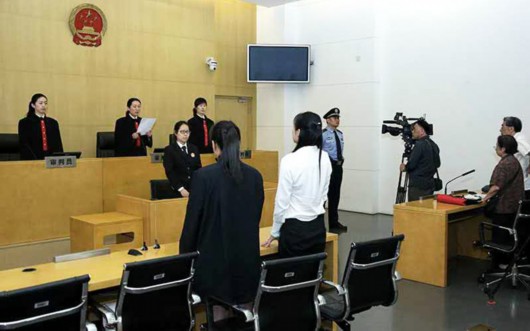
On the morning of June 17, the Shanghai No.1 Intermediate People’s Court made a final judgment on this case, and rejected the grandparents’ claim to be guardians of their children and raise them.

After the verdict, the mother who raised the child for many years shed tears on the spot with her attorney.
Remarried couples "customize" surrogate twins
Jun Gao is the only son of Lao Gao and his wife. On April 28th, 2007, after two failed marriages, Jun Gao married lin li, who was also divorced. After marriage, lin li revealed to her husband that she was suffering from infertility and offered to raise children related to her husband. After discussion, the two decided to find someone to surrogate.
They found a surrogacy company online, bought other people’s eggs, provided sperm by Jun Gao, and entrusted another woman to give birth by in vitro fertilization combined with embryo transfer technology. Although it cost hundreds of thousands of yuan before and after, Jun Gao lin li finally got a pair of lovely dragon and phoenix twins Xiao Qing and Xiao Shi on February 13th, 2011.
The man died of illness, and his in-laws and daughters-in-law sued for "taking treasure"
In February 2014, Jun Gao died suddenly because of acute pancreatitis. The sudden change not only made the two children lose their father, but also caused irreconcilable contradictions between Jun Gao’s parents and wife because of their children.
On December 29th of the same year, Lao Gao and his wife brought lin li to court, and the two sides went to court for the custody and support of their children. Lao Gao and his wife claimed that their son Jun Gao was the biological father of the two children, but lin li was not related to the children by birth, so they asked him and his wife to obtain custody of the two children.In order to prove their parenting ability, Lao Gao and his wife also produced a promise from their daughter who lives in the United States, proving that her daughter is willing to help them raise two children.. Lilin firmly disagreed with the old man’s petition, saying that "I have been raising the two children, and they should be presumed to be the legitimate children of Jun Gao and me. If they can’t be identified as legitimate children, then they will live with me from the date of birth and form a de facto adoption relationship. " Lin li’s agent ad litem also argued that if the court could not identify Xiaoqing and Xiaoshi as legitimate children of Jun Gao and lin li or actually adopted children, the plaintiff Lao Gao and his wife’s claim to be guardians should also be rejected if they could not determine whether their biological mother died or lost their guardianship.
In the trial of the first instance, the court entrusted an authoritative organization to carry out DNA identification, and the conclusion was: Jun Gao’s parents, Xiao Qing and Xiao Shi were not excluded from the genetic relationship, but lin li could be excluded as the biological mother of Xiao Qing and Xiao Shi. On July 29th, 2015, the first instance ruled that Xiaoqing and Xiaoshi were under the custody of the plaintiff Lao Gao and his wife, while lin li entrusted Xiaoqing and Xiaoshi to the custody of two plaintiffs, on the grounds that the legal adoption relationship was not established due to the lack of statutory essential elements between lin li and Xiaoqing and Xiaoshi, and the surrogacy itself was not legal, and lin li and Xiaoqing and Xiaoshi did not constitute a fictitious blood relationship.
The second trial found that custody belongs to the foster mother.
After the judgment of the first instance, lin li refused to accept it and appealed to the Shanghai No.1 Middle School. On November 16th, 2015, the Shanghai No.1 Intermediate People’s Court held a public hearing to hear the appeal case. During the hearing, the two sides had a heated debate on the legal status of the children born by surrogacy, whether lin li and Xiaoqing and Xiaoshi established a fictitious blood relationship, and the custody of Xiaoqing and Xiaoshi.
Because Jun Gao ran the company before his death and left a lot of legacy after his death, lin li said in court: "If I get custody of the children, I will raise them by my own ability, and I agree that the court will freeze the property inherited by the two children until the children reach the age of 18." Lin li also said that if she obtained the custody of her two children, she would allow her parents-in-law to visit them. However, this statement was not accepted by Lao Gao and his wife, who always insisted on obtaining custody of their two children.
After hearing the case, Shanghai No.1 Intermediate People’s Court held that Xiaoqing and Xiaoshi were the children born by Jun Gao and other women through surrogacy after lin li and Jun Gao got married, and they belonged to the illegitimate children of one of the spouses after the marriage. After their birth, the two children lived with Jun Gao and lin li for nearly three years, and Jun Gao lived with lin li for two years after his death.Lin li, Xiao Qing and Xiao Shi have formed a stepparent-child relationship, and their rights and obligations are governed by the provisions of the Marriage Law on the relationship between parents and children.As grandparents, Lao Gao and his wife are in the custody order after lin li, so their claim for custody does not meet the conditions stipulated by law. At the same time, considering the principle of children’s best interests, it is more conducive to the healthy growth of children to obtain custody from lin li, so the appellee Lao Gao and his wife’s original claim was rejected.

The second trial found that custody belongs to the foster mother.
[Judge Wired] The legal relationship of surrogacy derivatives needs to be clarified
Hou Weiqing, the presiding judge and presiding judge of the collegiate bench in this case, said that the determination of paternity of the children born by surrogacy is complicated, which is related to the realization of the purpose of surrogacy, the interests of all parties, the protection of the rights and interests of the children born by surrogacy, and the public’s acceptance based on traditional ethical concepts and cultural background. At present, China’s laws lack relevant provisions on this. Theoretically, there are four theories: consanguinity theory, childbirth theory, contract theory (or artificial reproduction purpose theory) and children’s best interests theory. The court held that the "childbirth theory" conforms to the principle of "the parturient is the mother" in the traditional civil law, and is also the same as the standard of paternity in the other two artificial reproduction methods, and conforms to the traditional ethical principles and values of our country. In addition, the principle of "the parturient is the mother" is also consistent with the current position of prohibiting surrogacy in China. Therefore, it is concluded that the legal biological mother of the child born as a surrogate in this case should be recognized as a surrogate according to the principle of "the parturient is the mother"; The legal biological father is Jun Gao who is related by blood. Because there is no legal marriage relationship between Jun Gao and the surrogate, the children born are illegitimate children.
In this case, the foster relationship between stepparents and children was formed.
Hou Weiqing said that the scope of stepparents’ children should not be limited to children born in wedlock, but also include children born out of wedlock. However, when the Marriage Law distinguishes the stepparents-children relationship between lineal in-laws and fictitious blood relatives, it is based on the fact that there is upbringing education. As for whether the birth time of children is before or after the marriage, it is not the essential element to identify the stepparents-children relationship with dependency. In the past five years, lin li has completely regarded the two children as her own children, and has fulfilled the obligations of raising, protecting, educating and caring for the children as a mother. Therefore, it should be considered that the relationship between the two sides has been formed. Once the stepparents-children relationship of this fictitious consanguinity is formed, it will not be dissolved by the death of the parent of the husband and wife. Therefore, the death of Jun Gao cannot naturally terminate the existing stepparents-children relationship with lin li and his two children.
Surrogacy is illegal, but the interests of children are great.
Hou Weiqing also said that no matter how to deny and condemn illegal surrogacy, the children born by surrogacy should be innocent and their legitimate rights and interests should be protected by law. Therefore, children born in or out of wedlock, children born naturally or children born by artificial reproduction, including surrogacy, should be given equal protection. According to the principle of children’s best interests, considering the guardianship ability of both parties, children’s needs for living environment and emotion, and the influence of family structure integrity on children, it is more conducive to the healthy growth of children to have custody in lin li. Therefore, the custody of Xiaoqing and Xiaoshi should belong to lin li. (The characters in the text are all pseudonyms)
Provisions of the Supreme Law on Several Issues Concerning the Trial of Independent Letter of Guarantee Disputes (full text)
CCTV News:According to the website of the Supreme People’s Court, the Supreme Law issued the Provisions of the Supreme People’s Court on Several Issues Concerning the Trial of Independent Letter of Guarantee Disputes. The full text is as follows:
Provisions of the Supreme People’s Court on Several Issues Concerning the Trial of Independent Letter of Guarantee Disputes were adopted at the 1688th meeting of the Judicial Committee of the Supreme People’s Court on July 11, 2016, and are hereby promulgated and shall come into force as of December 1, 2016.
the Supreme People’s Court
November 18, 2016
Fa Shi [2016] No.24
The Supreme People’s Court about
Provisions on Several Issues Concerning the Trial of Independent Letter of Guarantee Disputes
(July 11, 2016, the 1688th the Supreme People’s Court Judicial Committee.
Adopted at the meeting and implemented as of December 1, 2016)
In order to correctly hear disputes over independent letters of guarantee, earnestly safeguard the legitimate rights and interests of the parties, serve and guarantee the construction of the Belt and Road, and promote opening up, these Provisions are formulated in accordance with the General Principles of the Civil Law of People’s Republic of China (PRC), the Contract Law of People’s Republic of China (PRC), the Guarantee Law of People’s Republic of China (PRC), the Law on the Application of Laws in Foreign-related Civil Relations in People’s Republic of China (PRC), the Civil Procedure Law of People’s Republic of China (PRC) and other laws, and in combination with the actual trial:
Article 1 The term "independent letter of guarantee" as mentioned in these Provisions refers to a written promise issued by a bank or a non-bank financial institution as an issuer to the beneficiary, agreeing to pay a specific amount or within the maximum amount of the letter of guarantee when the beneficiary requests payment and submits documents that meet the requirements of the letter of guarantee.
The documents mentioned in the preceding paragraph refer to the payment request, breach of contract statement, documents issued by a third party, court decisions, arbitral awards, bills of exchange, invoices and other written documents that indicate the occurrence of payment due events as stated in the independent guarantee.
An independent letter of guarantee may be issued at the request of the applicant of the letter of guarantee or at the instruction of another financial institution. Where the issuer issues an independent letter of guarantee as instructed, it may require the instructing person to issue an independent letter of guarantee to guarantee the right of recourse.
Article 2 The independent letter of guarantee disputes mentioned in these Provisions refer to disputes arising from the opening, cancellation, modification, transfer, payment and recovery of independent letters of guarantee.
Article 3 If a letter of guarantee is in any of the following circumstances, the people’s court shall support it if the parties claim that it is an independent letter of guarantee, except that the letter of guarantee does not specify the documents on which payment is made and the maximum amount:
(1) The letter of guarantee states that payment shall be made on demand;
(2) The letter of guarantee specifies that the Uniform Rules for Demand Guarantees of the International Chamber of Commerce and other model rules for independent letter of guarantee transactions shall apply;
(3) According to the text of the letter of guarantee, the issuer’s payment obligation is independent of the basic transaction relationship and the legal relationship of the letter of guarantee application, and it only bears the payment responsibility of conforming documents.
The people’s court will not support the claim that the independent guarantee is a general guarantee or a joint guarantee on the grounds that the corresponding basic transaction is recorded.
The people’s court does not support the claim that the independent guarantee is applicable to the provisions of the security law on general guarantee or joint guarantee.
Article 4 The opening time of an independent guarantee is the time when the issuer issues an independent guarantee.
An independent letter of guarantee shall take effect immediately upon issuance, unless the effective date or event is specified in the independent letter of guarantee.
The people’s court shall support an independent letter of guarantee that is not stated to be revocable and the parties claim that it is irrevocable after it is issued.
Article 5 If an independent letter of guarantee states that the Uniform Rules for Demand Guarantees and other model rules for independent letter of guarantee transactions are applicable, or the issuer and the beneficiary unanimously cite them before the end of the debate in the court of first instance, the people’s court shall consider that the contents of the model rules for transactions constitute an integral part of the terms of the independent letter of guarantee.
Without the circumstances mentioned in the preceding paragraph, the people’s court shall not support the claim that the independent guarantee is applicable to the relevant model trading rules.
Article 6 The people’s court shall support the beneficiary’s request that the issuer bear the responsibility for payment according to the independent letter of guarantee, because the documents submitted by the beneficiary are apparently consistent with the terms of the independent letter of guarantee and between documents.
The people’s court shall not support the issuer’s defense against the payment obligation by the basic transaction relationship or the independent guarantee application relationship, except in the case of Article 12 of these Provisions.
Article 7 The people’s court shall, when determining whether it constitutes apparent conformity, conduct an examination according to the standards for examining documents specified in the independent letter of guarantee; If the independent guarantee is not specified, it may refer to the relevant document examination standards determined by the International Chamber of Commerce.
If the documents are not completely consistent with the terms of the independent letter of guarantee, or between documents, but it does not lead to ambiguity between them, the people’s court shall consider that they are superficially consistent.
Article 8 The issuer has the right and obligation to independently examine the documents, and has the right to decide whether the documents are in apparent conformity with the terms of the independent letter of guarantee or not, and to decide whether to accept or reject the discrepancies.
If the issuer has clearly indicated to the beneficiary that it accepts the discrepancy, and the beneficiary requests the issuer to bear the responsibility for payment, the people’s court shall support it.
If the issuer refuses to accept the discrepancy, and the beneficiary requests the issuer to bear the payment responsibility on the grounds that the applicant of the letter of guarantee has accepted the discrepancy, the people’s court will not support it.
Article 9 The people’s court shall support the issuer’s recourse against the applicant of the guarantee after payment based on the independent guarantee, unless there are discrepancies in the documents submitted by the beneficiary.
Article 10 If an independent letter of guarantee does not specify both the negotiable documents and the documents on which the new beneficiary is determined, and the issuer claims that the transfer of the beneficiary’s right of claim for payment is not valid for it, the people’s court shall support it. Where an independent guarantee has special provisions on the transfer of the beneficiary’s right to claim payment, such provisions shall prevail.
Article 11 If an independent letter of guarantee has one of the following circumstances, and the parties claim that the rights and obligations of the independent letter of guarantee are terminated, the people’s court shall support it:
(1) The beneficiary fails to submit the documents that meet the requirements of the independent guarantee when the expiration date or event specified in the independent guarantee expires;
(2) All the payables under the independent guarantee have been paid;
(3) The amount of the independent guarantee has been reduced to zero;
(4) The issuer receives a document issued by the beneficiary exempting the payment obligation under the independent guarantee;
(five) other circumstances stipulated by law or agreed by the parties to terminate.
The people’s court shall not support an independent letter of guarantee where the rights and obligations mentioned in the preceding paragraph are terminated and the beneficiary claims the right to claim payment on the grounds that he holds the text of the independent letter of guarantee.
Article 12 In any of the following circumstances, the people’s court shall determine that it constitutes an independent letter of guarantee fraud:
(1) The beneficiary colludes with the applicant for the letter of guarantee or others to fabricate the underlying transaction;
(2) The third-party documents submitted by the beneficiary are forged or have false contents;
(3) The court judgment or arbitral award determines that the debtor of the underlying transaction has no liability for payment or compensation;
(4) The beneficiary confirms that the debt of the underlying transaction has been fully fulfilled or that the payment due event specified in the independent guarantee has not occurred;
(5) Other circumstances in which the beneficiary abuses the right of claim for payment knowing that he has no right.
Article 13 Where an applicant, issuer or indicator of an independent letter of guarantee finds any of the circumstances mentioned in Article 12 of these Provisions, he may apply to the issuer’s domicile or other people’s court with jurisdiction over the fraud dispute case of independent letter of guarantee for suspension of payment, or apply during the litigation or arbitration.
Article 14 When a people’s court decides to suspend the payment under an independent guarantee, it must meet the following conditions at the same time:
(a) the evidence submitted by the applicant to stop payment proves that the existence of Article 12 of these Provisions is highly probable;
(2) In case of emergency, failure to take immediate measures to stop payment will cause irreparable damage to the legitimate rights and interests of the applicant for stopping payment;
(3) The applicant for stopping payment has provided a guarantee sufficient to make up for the losses that the respondent may suffer due to stopping payment.
The people’s court shall not support the request of the applicant to stop payment on the grounds that the beneficiary has breached the contract in the basic transaction.
If the issuer has paid in good faith under the independent guarantee issued in accordance with the instructions, the people’s court shall not order the payment of the independent guarantee that guarantees the issuer’s right of recourse.
Fifteenth losses caused by the wrong application for stopping payment, the people’s court shall support the request for compensation from the applicant for stopping payment.
Article 16 The people’s court shall make a written ruling within 48 hours after accepting the application for stopping payment. The ruling shall specify the applicant, the respondent and the third party, and include the facts preliminarily ascertained and the reasons for whether to approve the application for stopping payment.
If an order is made to suspend payment, it shall be executed immediately.
If the applicant for stopping payment fails to bring an independent letter of guarantee fraud dispute lawsuit or apply for arbitration according to law within 30 days after the order for stopping payment is made, the people’s court shall lift the order for stopping payment.
Article 17 If a party disagrees with the ruling made by the people’s court on the application for stopping payment, it may apply to the people’s court that made the ruling for reconsideration within 10 days from the date when the ruling is served. The execution of the ruling shall not be suspended during the reconsideration period.
The people’s court shall, within ten days after receiving the application for reconsideration, examine it and ask the parties concerned.
Article 18 The people’s court may examine and determine the relevant facts of the basic transaction according to the specific circumstances of Article 12 of the present Provisions advocated by the parties when trying the case of fraud disputes over independent letters of guarantee or handling the application for stopping payment.
Article 19 If an applicant for a letter of guarantee only sues the beneficiary in an independent letter of guarantee fraud lawsuit, the issuer and the indicator of the independent letter of guarantee may apply for participation as a third party, or be notified by the people’s court.
Article 20 If the people’s court, after hearing a dispute over the fraud of an independent letter of guarantee, can find that it constitutes fraud of an independent letter of guarantee beyond a reasonable doubt, and the third paragraph of Article 14 of these Provisions does not exist, it shall order the issuer to stop paying the requested amount under the independent letter of guarantee.
Article 21 Disputes between the beneficiary and the issuer arising from the independent letter of guarantee shall be under the jurisdiction of the people’s court at the domicile of the issuer or the defendant, unless the independent letter of guarantee states that it shall be under the jurisdiction of other courts or submitted for arbitration. If the parties claim to determine the competent court or submit it to arbitration according to the dispute settlement clause of the basic transaction contract, the people’s court will not support it.
Cases of fraud disputes over independent letters of guarantee shall be under the jurisdiction of the people’s court in the place where the issuer of the independent letter of guarantee whose payment is requested to be stopped or the defendant’s place of residence, unless the parties have agreed in writing to be under the jurisdiction of other courts or submitted to arbitration. If the parties claim to determine the competent court or submit it to arbitration according to the dispute settlement clause of the basic transaction contract or independent guarantee, the people’s court will not support it.
Article 22 If the applicable law is not specified in the foreign-related independent guarantee, and the issuer and the beneficiary have not reached an agreement on the applicable law before the conclusion of the debate in the court of first instance, the law of the issuer’s habitual residence shall apply to the disputes arising from the foreign-related independent guarantee between the issuer and the beneficiary; Where an independent letter of guarantee is issued by a legally registered branch of a financial institution, the laws of the place where the branch is registered shall apply.
If the parties fail to reach an agreement on the applicable law in the fraud dispute of foreign-related independent guarantee, the law of the issuer of the independent guarantee whose payment is requested to be stopped shall apply; Where an independent letter of guarantee is issued by a legally registered branch of a financial institution, the laws of the place where the branch is registered shall apply; If the parties have a common habitual residence, the law of the common habitual residence shall apply.
The procedures for stopping payment and preserving foreign-related independent letters of guarantee shall be governed by the laws of People’s Republic of China (PRC).
Article 23 If the parties agree to apply an independent letter of guarantee in domestic transactions, and one party claims that the agreement on the independence of the letter of guarantee is invalid on the grounds that the independent letter of guarantee has no foreign factors, the people’s court will not support it.
Article 24 The people’s court may take measures to freeze the deposit issued in accordance with the independent guarantee managed by the special account and handed over to the issuer, but it may not deduct it. When the money in the deposit account loses the function of opening a deposit, the people’s court may take deduction measures according to law.
If the issuer has fulfilled its external payment obligations, the people’s court shall, upon the application of the issuer, lift the freezing measures for the corresponding part of the deposit.
Twenty-fifth cases that have not been finalized after the implementation of these Provisions shall be applicable to these Provisions; These Provisions shall not apply to cases that have been finalized before the implementation of these Provisions, where the parties apply for retrial or the people’s court retries in accordance with the procedure of trial supervision.
Article 26 These Provisions shall come into force as of December 1, 2016.

There is "evidence" to check-8 scientific data sharing platforms serve teachers and students
Under the background of digital scientific research and big data, global scientific research will increasingly rely on the sharing and utilization of massive data, and scientific data has become an important scientific asset and public information resource. At present, the scientific data of government departments, data centers and other public sectors in China are mainly concentrated in the fields of land, geography, meteorology, transportation, public health, agriculture and so on, which are generally generated by state investment. Governments and organizations all over the world have given strong support to the management and sharing of scientific data, and UNESCO has also designated scientific data as open access information resources. In fact, scientific data has indeed become an indispensable resource type in scientific research.
In order to further promote the development of "Double First-class Discipline" in our university, and at the same time, make the scientific research work of our university available, the library has collected and sorted out the following eight scientific data sharing platforms through various channels. They are professional data websites that have been built by authoritative organizations in related fields in China for several years, which are very convenient for teachers and students with relevant needs to visit, consult and consult, and are welcome to use.
(1) National Basic Science Data Sharing Service Platform (http://www.nsdata.cn/)
The national basic scientific data sharing service platform belongs to the scientific data sharing platform project under the national basic conditions of science and technology. It is organized by computer network information center and jointly built by Chinese Academy of Sciences, domestic universities and other scientific research institutes. The shared service platform aims to combine the superior basic scientific data resources of relevant units in the fields of physics, chemistry, astronomy, space, biology and other basic sciences, and integrate them according to unified standards and specifications, so as to realize the physical distribution, logical integration, unified access and service of data resources, and form a number of subject databases oriented to subject areas and special databases oriented to application scenarios, thus providing social users with one-stop and integrated data resource discovery, retrieval and download functions, supporting content-based associated retrieval, and integrating related data analysis.
(2) Agricultural Science Data Sharing Center (http://www.agridata.cn/)
The center is one of the first batch of 23 national science and technology platforms recognized by the Ministry of Science and Technology. The construction of the center is aimed at meeting the needs of the country and society for agricultural scientific data sharing services, based on the agricultural sector, with data source units as the main body, relying on the data center, collecting domestic and foreign agricultural scientific and technological data resources through integration, integration, introduction, exchange, etc., standardized processing and classified storage, and finally forming a network system covering the whole country, connecting the world and providing rapid sharing services. In this platform, agricultural scientific data refers to the basic data generated by agricultural scientific and technological activities, as well as data products and related information systematically processed according to different needs. Agricultural science data is an important basic resource for agricultural science and technology innovation. The construction of agricultural science data center can provide support and guarantee for agricultural science and technology innovation and agricultural science and technology management decision.
(3) National Forestry Scientific Data Sharing Service Platform (http://www2.forestdata.cn/)
"National Forestry Scientific Data Sharing Service Platform" integrates 12 categories of forestry scientific data, including forest resources, wetland resources, desertification resources, forestry ecological environment, forest protection, forest cultivation, wood science and technology, forestry scientific and technological literature, forestry scientific research topics and forestry industry development, and provides data services. At present, the platform has integrated and established 168 databases, with the total amount of data entities reaching 1111GB, and initially established a comprehensive and systematic forestry scientific data system. At the same time, based on the accumulation of basic data and facing the needs of users, special data products such as national forest land distribution data set, national desertification monitoring data set and national wetland monitoring data set have been studied and produced. Since 2004, online and offline data sharing services have been provided to all kinds of users in society.
(4) National Earth System Scientific Data Sharing Service Platform (http://www.geodata.cn/index.html)
The National Earth System Science Data Sharing Service Platform is led by the Institute of Geographical Sciences and Resources, Chinese Academy of Sciences. Since its construction in 2003, more than 40 units at home and abroad have participated in the construction of the platform. By the end of 2014, the platform had a total of 59.56TB of data resources, involving five first-class and 29 second-class data resources, namely, national-level data on land surface processes and human-land relationship, typical regional data on land surface processes and human-land relationship, global change and regional response integrated data products, solar-terrestrial system and space environment data, and international data resources. There are 94,212 registered real-name users on the platform, and the total number of visitors to the website is 18 million (18,133,243). It has provided 93.53TB of data services to the scientific and technological circles and the public.
(5) China Agricultural Resources and Zoning Information Network (http://www.agrirrp.cn/)
Investigation of agricultural resources and agricultural regionalization are the basic and comprehensive long-term work of agricultural development. This set of data is the only, complete and systematic data about agricultural resources information and regionalization achievements in China at present. It is kept by the Institute of Agricultural Resources and Agricultural Regionalization of China Academy of Agricultural Sciences, and has been engaged in the research, updating and utilization of agricultural resources regionalization for a long time. These agricultural resources information and zoning results provide a large number of scientific basic data in finding out the family background of agricultural resources, rationally utilizing resources, monitoring resource dynamics, studying agricultural development strategies, establishing agricultural commodity bases and developing agricultural areas, adjusting agricultural structure, and rationally distributing productivity according to local conditions, which have played a great role in drawing up and implementing agricultural development plans, protecting agricultural resources, tapping agricultural production potential, rationally distributing and allocating agricultural resources, improving agricultural comprehensive productivity, and promoting sustainable development of agriculture and rural areas. All the data in this data center are developed to the public free of charge, and users can access relevant data and request data processing services. The data center will provide timely and efficient services.
(6) China Meteorological Data Network (http://data.cma.cn)
China Meteorological Data Network is an upgrade system of meteorological science data sharing network, an important part of national science and technology basic platform, a main portal application system of meteorological cloud, an authoritative and unified sharing service platform for China Meteorological Bureau to open meteorological data resources to domestic and global users, and a data support platform for opening China’s meteorological service market, promoting the sharing and efficient application of meteorological information resources, and building a new meteorological service system.
The purpose of China Meteorological Data Network is to meet the needs of national and social development for sharing meteorological data, and it focuses on four aspects: the establishment of standard system, the integration of data resources, the construction of sharing platform and data sharing services. The data service targets are all kinds of social groups and public users, including government departments, public welfare users and commercial users.
The service mode of China Meteorological Data Network can be divided into online data service and offline data service. Online service mainly provides online data download and service through China Meteorological Data Network, while offline data service includes telephone consultation, information consultation and making special data products according to users’ needs.
(7) Data of National Bureau of Statistics of China (http://data.stats.gov.cn/)
The data comes from the National Bureau of Statistics of China, which includes many aspects of China’s economy and people’s livelihood. It was first established in 2008 and newly built in 2013. Provide monthly, quarterly and annual, census regional, departmental and international social and economic statistics. Among them, population data can be directly retrieved or found in annual data. It provides a variety of file output, including tabulation, drawing, indicators, visual charts and geographic information data. Public access, information data can be obtained without registration. The data format is HTML.
(8) Shaanxi Love Network (http://www.sxsdq.cn/)
Shaanxi Geographic Information Network is a geographic information database of Shaanxi Province established by Shaanxi Local Records Compilation Committee and Shaanxi Local Records Office to promote Shaanxi culture. At present, there are Shaanxi provincial chronicles, Shaanxi yearbook, city and county chronicles, city and county yearbooks, geographical information series, Shaanxi keywords and other sections, which introduce the history of Shaanxi for thousands of years in an all-round, three-dimensional and multi-level way. Through the Digital Local Records Museum, people can choose their own fields of interest and search for all kinds of information related to Shaanxi in a short time, which greatly enriches the means and ways of communication of Shaanxi history and culture.
Editor: Zhang Qing
Final review: Xu Hai.
[Two Learning and One Doing] Two village party secretaries led 3,300 villagers to evacuate in the middle of the night.
With a loud bang, at 9: 30 pm on June 30, two dredgers washed down from the upper reaches of Yuanshui River hit the Wulizhou Bridge heavily. Under the heavy night, the rumor that "the bridge is broken" is rampant. Wulizhou is the Jiang Xinzhou in the Yuan River, and Wulizhou Bridge is the only access for villagers in Wulizhou Village, Wuxi Town, Luxi County, Hunan Province. At this moment, the flood that has not passed the calf is still rising, and 3,300 villagers who are urgently transferring have become frightened.
"People don’t panic! Comrade Armed Police, please continue to search and rescue the people who have not been evacuated, and the rest of party member and I will carry the boat to ferry people! " Chen Xiuzhong is the newly elected branch secretary in this year’s general election. He clearly knows that if he can’t hold his ground at this time, the harm caused by anxiety is likely to be more fierce than the flood.
At the same time, Liu Xiantao, an old branch secretary who is over 70 years old, is helping to resettle the affected people who have moved out. Since 6 o’clock in the morning, Liu Xiantao has been busy for 16 hours, without a bite of rice. He shouted at the top of his voice, "Everyone should listen to the greetings of government cadres. Don’t panic! Chen Zhishu and the armed police are organizing the transfer on the continent, and the party and the government will not miss a person. " The appeasement of the old branch secretary played a role, and the turbulent crowd gradually calmed down. Some young people began to help maintain order and joined the rescue team after settling down the old people and children.
Half an hour after the collision, the good news finally came. After emergency investigation by professional departments, the collision did not cause substantial damage to Wulizhou Bridge, and pedestrians can still pass. Chen Xiuzhong’s hanging heart was finally put down. He quickly divided the crowd concentrated in the basketball court into several groups: "Everybody line up now, and then follow me to walk across the bridge in batches. Be sure to remember, don’t follow me, don’t run, don’t squeeze, I Chen Xiuzhong promise to send you out safely! " The scene was silent, and everyone looked at Chen Xiuzhong quietly. Follow him, you may face the danger of bridge collapse; Stay on the continent, and the harm caused by flood peak can’t be predicted. Time goes by bit by bit, and the air seems to solidify. "I listened to Zhong Er, and I watched him grow up. He said that he could definitely take me out!" An elderly villager stood up and said firmly. "Listen to the branch secretary, listen to the cadres, they are not afraid, we are still timid, like it!" More and more villagers stood up and prepared to cross the bridge and evacuate under the leadership of Chen Xiuzhong.
"I’ll go first and everyone will follow." At the bridge of Wulizhou, Chen Xiuzhong boldly took the first step. The weak light of the flashlight fell on the bridge deck, and the ears were filled with the roar of the flood. When walking through the impact, the sharp noise generated by the friction between the two dredgers scared the masses not to move. Chen Xiuzhong turned his head to encourage everyone: "Hold on, we will arrive soon." After that, I took everyone into the huge shadow cast by the dredging boat.
Everyone at both ends of the bridge held their breath. Although it was only 10 seconds, it felt very long. Chen Xiuzhong led everyone out of the huge shadow of the dredging boat. They accelerated their pace and quickly ran towards the bridge. Saved! A villager who just escaped from danger leaned against the armed police, limping all over and crying out loud.
At the end of the bridge, Liu Xiantao also sweated in his hand. When he saw Chen Xiuzhong coming with the first batch of villagers, he quickly caught up and held Chen Xiuzhong’s hand tightly, as if he were in a ceremony. Soon, Chen Xiuzhong turned and turned back, and once again took to the bridge.
That night, all 3,300 villagers escaped from danger, no one was killed or injured, and all of them were properly resettled.
On July 2, the dredger successfully sank into the bottom of the river through drilling and irrigation, and the water level in Yuanjiang fell sharply, and villagers in Wulizhou returned home one after another to participate in post-disaster reconstruction … …
The garbage pollution problem in Zhaotong, Yunnan Province is serious, and the relevant personnel are held accountable for cheating and inspection.
BEIJING, June 15 (Xinhua) According to the official Weibo of the Ministry of Ecology and Environment, there is a problem that domestic garbage is illegally buried in Huangzhulin Community, Taiping Sub-district Office, Zhaoyang District, Zhaotong City, Yunnan Province. In environmental protection inspectors, relevant personnel have deceived inspection, pointed east to west, cheated and deceived inspectors, and have been seriously held accountable. At present, the local authorities have completed the removal of illegal landfill garbage.

Exposed garbage on the edge of Sanshantang temporary living garbage dump. Image source: official Weibo of the Ministry of Ecology and Environment
Since the Sixth Environmental Protection Inspector Group of the Central Committee was stationed in Yunnan, it has received reports from many people, reflecting the problem that the domestic garbage in Huangzhulin Community of Taiping Sub-district Office in Zhaoyang District, Zhaotong City, Yunnan Province was illegally buried with soil and has not been properly disposed of so far. Due to the concentration of complaints, the inspector group decided to inspect and supervise on the spot during the sinking period.
On June 11th, led by team leader Zhu Xiaodan, the inspectors and their party rushed to Huangzhulin Community to inspect the site in the rain. Geng Yi, the general branch secretary of the community, accompanied the inspectors and was responsible for leading the way. However, in the process of leading the way, Geng Yi deceived the inspectors, pointed east to west, cheated and deceived the inspectors, deliberately avoiding the inspectors’ inspection, and took the inspectors to the garbage collection point of Laoganzha in Huangzhulin community, instead of Laoyantou, a garbage burial site where the masses reported and the inspectors needed on-the-spot inspection, which caused the inspectors to fail to inspect and supervise the problems reported by the masses on the spot.
When the inspectors asked whether there was illegal landfill and incineration of garbage, Geng Yi said that there was indeed a problem of random stacking of construction garbage and sludge in the local area before, but now it is gone. Inspectors questioned the authenticity of the place they saw on the spot, while Geng Yi firmly denied the existence of problems in the mass report.
According to the central environmental protection supervision procedure, as early as June 9, the inspector group had transferred the relevant people’s reports to Yunnan Province. According to the requirements of Yunnan Province, Zhaoyang District of Zhaotong City immediately instructed the local Taiping Sub-district Office to conduct investigations within its jurisdiction, but no problems were found. In the process of investigation, Geng Yi also denied the existence of illegal landfill in Huangzhulin community.
Subsequently, under the strict requirements of inspectors, it was found that about 10 tons of construction waste and domestic waste were illegally buried in Laoyantou.
On June 13th, the meeting of the Standing Committee of the Commission for Discipline Inspection of Zhaoyang District decided to give Geng Yi a probation for one year. Admonish (in writing) the leaders linked to Huangzhulin Community, Guo Biyong, the stationmaster of Forest Management Station of Taiping Sub-district Office, and Hu Yun Song, the leader in charge and director of Social Affairs Office of Taiping Sub-district Office; The Party Working Committee of Taiping Sub-district Office was ordered to immediately rectify the problems of ineffective implementation and incomplete rectification of comprehensive environmental sanitation in Huangzhulin community.
At present, the local authorities have organized the removal of the garbage illegally buried in Laoyantou, and the case is still being further processed.
What is soda ash related to?
Soda soda, whose chemical name is sodium carbonate (Na2CO3), is an important chemical raw material, which is widely used in glass manufacturing, detergent production, paper making, textile and other industrial fields. Understanding the correlation of soda ash will not only help us better understand its role in modern industry, but also help investors make more informed decisions in the futures market.
First, soda ash andglass workClosely related. In the process of glass production, soda ash, as one of the main raw materials, is used to reduce the melting temperature and promote the melting of silica sand. Therefore, the demand of glass industry directly affects the market price of soda ash. For example, the recovery of the construction industry or the increase of new construction projects will often lead to an increase in the demand for glass, thus increasing the demand for soda ash.
Secondly, soda ash is inDetergent industryIt also plays an important role. As an alkaline component, it helps to remove grease and stains. With the improvement of people’s requirements for cleanliness and hygiene, the demand for detergents continues to grow, which indirectly promotes the demand for soda ash. Especially in the fast-moving consumer goods market, the change of detergent sales can be used as an index to predict the demand for soda ash.
In addition, soda ash is also related toPaper and textile industryRelated. In the process of papermaking, soda ash is used for pulping and bleaching; In the textile industry, it is used for scouring and bleaching cotton cloth. The level of production activities in these industries directly affects the consumption of soda ash. For example, the growth of global textile trade may increase the demand for soda ash.
In the futures market, the price fluctuation of soda ash futures is influenced by many factors, including raw material cost, production technology progress, environmental protection policy, international trade relations and so on. When investors consider investing in soda ash futures, they need to comprehensively consider these factors and the dynamics of related industries.
In a word, soda ash is a versatile chemical raw material, and its market demand is affected by many industries. Understanding these correlations is very important for futures investors, because it can help them predict market trends more accurately and make more favorable investment decisions.
The number of spotted seals living in Liaodong Bay has increased for three consecutive years.
Xinhua News Agency, Shenyang, March 25th (Reporter Gao Shuang) "According to continuous observation statistics, there were 181 western Pacific spotted seals living in Liaodong Bay in 2021, 253 in 2022 and 302 in 2023, showing an increasing trend year by year. It is estimated that the number this year will increase by about 20% compared with last year. " The staff of the Agriculture and Rural Bureau of Panshan County, Panjin City, Liaoning Province said.
Recently, with the temperature rising and sea ice melting, the western Pacific spotted seal "living" in Liaodong Bay of Panjin City has entered an active period. "In the past week, more than 200 western Pacific spotted seals have been observed sunbathing on the beach every day." Tian Jiguang, director of the Marine Animal Research Office of Panjin Wetland Protection Association, said.
Liaodong Bay, located at the northernmost part of the frozen area in China, is the southernmost of the eight breeding areas of spotted seals in the western Pacific Ocean. As the only pteropod marine mammal that can breed in China’s waters, the "Liaodong Bay Elf" western Pacific spotted seal is listed as a national first-class protected wild animal.
It is reported that the western Pacific spotted seal migrates to Liaodong Bay from November to December every year, and gives birth on the ice from January to February the following year. After supplementing nutrition from April to May, it gradually swims out of the Bohai Sea and embarks on a journey back to the Pacific Ocean.
In recent years, Panjin City has carried out the work of "retiring and returning to humidity", restored 85,900 mu of coastal wetlands and added 17.6 kilometers of natural coastline, creating a good breeding and habitat environment for the western Pacific spotted seals that migrate every year.
Shenzhen’s fiscal revenue fell by about 44%, and the contradiction between fiscal revenue and expenditure increased in April.
Recently, some provinces and cities began to announce the fiscal revenue and expenditure situation in April. Under the influence of unexpected factors such as the epidemic situation, the downward pressure on the economy has increased, and the contradiction between local fiscal revenue and expenditure has been increasing due to the reduction of income brought about by the large-scale tax rebate and tax reduction policy.
On May 11th, the Shenzhen Municipal Finance Bureau disclosed data showing that from January to April this year, the general public budget revenue in Shenzhen reached 130.98 billion yuan, down by 12.6%. In fact, in the first quarter, Shenzhen’s income still increased slightly, but in April, it fell by about 44%.
For the decline in fiscal revenue in the first four months, the Shenzhen Municipal Finance Bureau explained that the main reason was the policy reduction caused by the central government’s implementation of combined tax and fee support policies such as value-added tax refund and tax deferral for small and medium-sized enterprises in manufacturing.
This year’s 1.5 trillion yuan VAT tax refund policy was officially implemented on April 1. Due to the increasing difficulties of enterprises under the impact of the epidemic, the fiscal and taxation departments accelerated the tax refund progress. According to the data of the State Administration of Taxation, the value-added tax rebate in April was as high as 801.5 billion yuan. This is reflected in the local fiscal revenue, that is, the value-added tax revenue of the first major tax category has been greatly reduced. However, this move has increased the cash flow of enterprises and eased the financial pressure of enterprises. In the medium and long term, it is conducive to conserving tax sources and increasing fiscal revenue.
Affected by the new policy of tax refund, tax reduction and tax deferral, many places are similar to Shenzhen, and the fiscal revenue dropped significantly in the first four months, especially in April. This is confirmed in many cities and counties that took the lead in publicly disclosing the fiscal revenue and expenditure in April. For example, in the first four months, the general public budget revenue of Nanning, Guangxi decreased by about 6% year-on-year, Changzhou, Jiangsu decreased by 4.5% and Zhuzhou, Hunan decreased by about 4.9% year-on-year.
In addition, due to the spread of the epidemic in April, many residents were isolated at home, and some enterprises stopped production, which will also have an impact on local fiscal revenue.
At present, there are fewer provinces that disclose the fiscal revenue and expenditure in the first four months. Judging from the fiscal revenue and expenditure data released in various places in the first quarter, there are great differences in the growth rate of local fiscal revenue, among which the fiscal revenue of resource-based provinces such as Inner Mongolia and Shanxi maintained rapid growth due to the rise in commodity prices or high operation.

Yang Yewei, chief fixed-income analyst of Guosheng Securities Research Institute, found that in the first quarter, in addition to economically strong provinces such as Shanghai and Fujian, resource-based provinces such as Shaanxi and Inner Mongolia also began to make the list. In the first quarter, Shanghai and Fujian were still in fiscal surplus, with a surplus scale of more than 40 billion yuan. However, resource-based provinces have also entered the ranks of fiscal surplus provinces due to the sharp increase in income, such as Shaanxi’s fiscal surplus of 80.2 billion yuan in the first quarter and Inner Mongolia’s surplus of 1.6 billion yuan.
However, with the obvious decline in local fiscal revenue in April, the contradiction between local fiscal revenue and expenditure has increased significantly. For example, the Finance Department of Hainan Province recently held an analysis meeting on the financial situation of the whole province. The meeting pointed out that since the beginning of this year, under the triple pressure of shrinking demand, supply shock and expected weakening, combined with the influence of the COVID-19 epidemic and the Ukrainian situation, the complexity, severity and uncertainty of China’s economic development environment have increased, and Hainan’s financial work is facing more severe difficulties and challenges, with the growth of fiscal revenue slowing down obviously, the progress of project capital expenditure being slow, and the task of completing the whole year is under greater pressure.
In order to alleviate local financial difficulties and support the implementation of policies such as tax rebate and tax reduction, at present, 800 billion yuan of transfer payment funds from the central government to support the grassroots to implement tax reduction and fee reduction and key people’s livelihood have all been distributed to local governments in April.
Wang Jianfan, director of the Budget Department of the Ministry of Finance, recently publicly stated that the Ministry of Finance urged and guided provincial financial departments to formulate targeted financial support programs for counties and districts with large tax rebates and relatively difficult finances, especially key counties and districts with tax rebates exceeding their own financial level. Close attention should be paid to them and one-on-one counseling should be carried out to ensure that these counties and districts can achieve stable financial operation while ensuring tax rebate funds, and the "three guarantees" can not be guaranteed.
In order to hedge the downward pressure on the economy, local governments, under the current situation of declining tax revenue, guarantee the construction of major projects by speeding up the issuance of local government bonds to ensure the steady investment and growth of bond funds.
According to the data of GF Securities Development Research Center, local debt increased by 1,681.3 billion yuan in April this year, exceeding the same period in 2019 and 2021, accounting for 38.7% of the annual new local government debt limit of 4,370 billion yuan. Among them, Guangdong’s new local debt issuance is the largest, reaching 172.7 billion yuan; Followed by Shandong, issuing 126.3 billion yuan; The scale of new local debt issuance in Henan, Zhejiang and Sichuan provinces is 100 billion to 120 billion yuan.
As the Ministry of Finance requires local governments to complete most of the new special bond issuance tasks before the end of June, the market expects a small climax of bond issuance in May and June.