Is the first domestic vertical screen cinema movie Fireworks World worth watching?

Special feature of 1905 film network 509 directors co-created and shot in the form of vertical screen. Have you seen such a movie?
The film was officially released last weekend. Although the box office of the film has just reached 277,000 as of press time, for the mainland film market, the "big screen debut" of this "vertical screen cinema" work has achieved an innovation and breakthrough in a sense.
In recent years, with the further development of the Internet, the short video format has risen rapidly, affecting and changing all aspects of our lives. The data shows that at present, the number of short video users in China has exceeded 1 billion, and the number of videos generated and published every day in the whole network has reached more than 30 million.
You can also be the director of your own life with a mobile phone. The release of "Fireworks" seems to make the "movie dream" of 509 ordinary people really come true.
Then put yourself in the other’s shoes: from the audience’s point of view, what is their acceptance of "brushing short videos" on the big screen of the cinema, and what does the cinema think of such "intruders"? We talked to them on the first weekend of Fireworks.
Does the vertical screen fit the big screen?
At the beginning of hearing the concept of "vertical screen cinema", our greatest curiosity and worry about "Fireworks" can be summed up in one sentence: Will the vertical screen video be played on the big screen with horizontal screen ratio, and the visual impression will be good?
This question was quickly answered after the screening began — —
Although the collected material content is in vertical screen format, the film’s picture proportion is kept in "full screen" most of the time through "montage" editing. Sometimes, similar types of clips are presented simultaneously, some of them are scaled and disassembled, and some of the contents as "background" are not difficult to see as post-shooting.
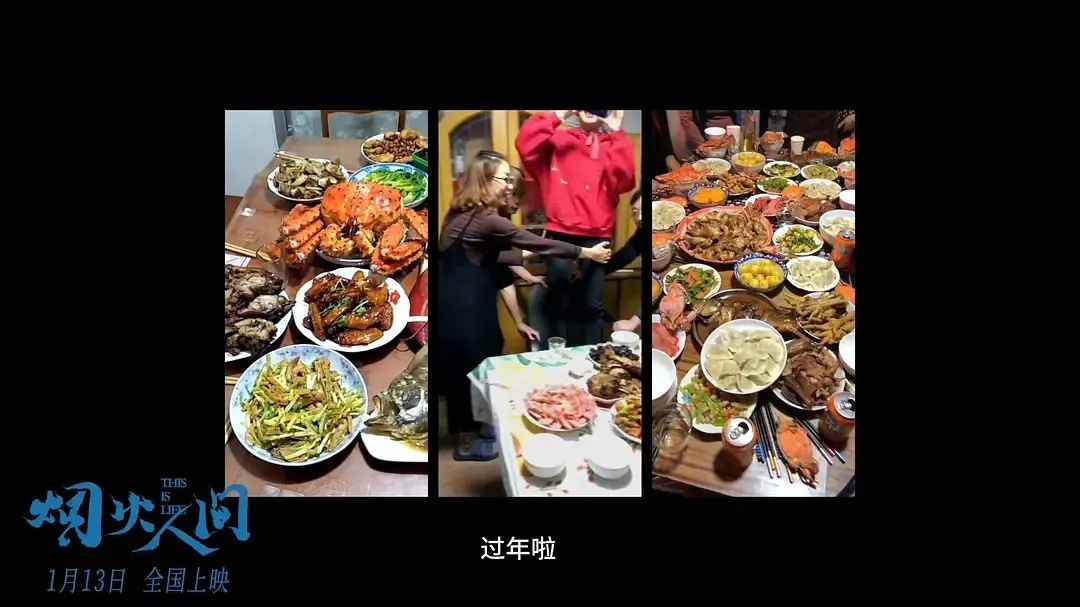
This "vertical screen to horizontal screen" operation has played a positive role in improving the public’s "viewing acceptance". During the interview, most moviegoers did not feel the "vertical screen" on the huge screen.
Ms. Wu said that she was still immersed in the process of watching movies, and she didn’t feel the drama because of "vertical screen and horizontal broadcast": "I think this model is quite novel." The only "targeted bad review" came from Mr. Ma, who bluntly said that he came because of the concept of "vertical screen". "The final presentation of the frame can’t be completely said to be a vertical screen movie."
What surprised the audience miss Li was the picture quality. She revealed that at first, she suspected that the clarity of the material shot by the mobile phone would be greatly reduced after it was put on the big screen, but in the end, the visual experience in the cinema was not bad, including the use of some aerial cameras to cooperate and supplement, which did not have much impact on the viewing experience.

Can "Fragmentation" Creation be Compatible with Cinema?
Compared with the figurative presentation form of "big screen on vertical screen", the audience gave us very polarized feedback on the acceptance of the problem of "fragmented content entering the cinema".
In the movie Fireworks, 887 video clips released on short video platforms at different times are arranged and combined with five themes of "clothing, food, shelter, travel and home" to finally form a documentary-style documentary image.
Miss Wang, the audience, said frankly that the quality of these short videos is not bad: "If it is a year-end summary work of a short video platform, I will think it is very good, but if it is seen as a movie, it is not very coherent." Miss Li feels the same way. Although the five themes selected by the film are close to the audience’s emotions in her opinion, such content (which is not strong in overall story) may not be suitable for viewing in the cinema environment.

Through the film Fireworks, 509 directors showed the joys and sorrows of people’s real life completely with the lens, and many clips also left a deep impression on the audience. For example, the story of the long-distance driver couple who died unexpectedly deeply touched Ms. Wu, and also made Miss Li feel the heavy texture of the documentary image, but at the same time, Miss Li also bluntly said: "But before this period, the theme of clothing and food, I didn’t get to the point and logic I wanted to express."
For such "fragmented" content creation, most viewers said that if there are similar works in the future, they may not make a special trip to buy tickets to watch them, but they are more curious about experimental works. Some people also said that after watching it, they still felt that it was not acceptable, or the real feature film was more suitable for the cinema.

In this regard, Fu Manager, the person in charge of a cinema business in Haidian District, said that as the projection terminal, they are willing to "embrace" different types of works into the cinema: "Just like the’ moldy movie’ during New Year’s Day, we will also think at the beginning when arranging the film, will there be an audience paying for the video of a concert? As a result, there are still quite a few fans, so we will still pay more attention to market feedback. "
However, some studio managers revealed to us that with reference to the discussion of previous observation and the previous evaluation of Fireworks on some viewing platforms, they have predicted that the innovation of this content may not attract too many viewers, which is also directly reflected in their choice of film arrangement: "After all, the content of short videos is still not suitable for cinemas, and viewers still prefer a complete story."

No matter what the final box office results are, Fireworks has left us with an issue worth thinking about — — In the era of fragmented communication, how can a movie tell a good story?