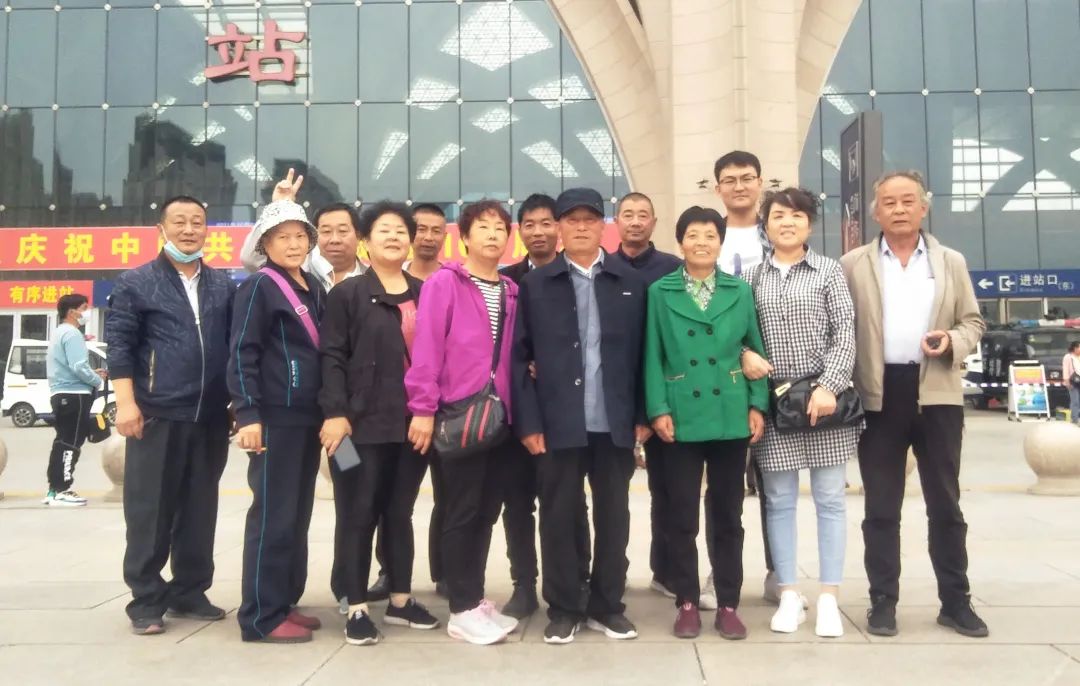
Shandong University, one international student with three opposite sex study partners? Teachers and students: for friendly exchanges

  One international student with three opposite sex study partners? The "Buddy" project of Chinese and foreign students in Shandong University has caused controversy.

  It is questioned that in 2018, Shandong University’s "study partner" program was upgraded to one international student with three on-campus students, and the participating students in the school were mainly girls.

  On July 11th, the staff of the Propaganda Department of Shandong University Party Committee replied to The Paper that they were studying the matter.

  On the afternoon of 11th, a teacher from graduate department of Shandong University told The Paper that the "Learning Companion" program was first implemented in 2016, and it was generally welcomed by students after implementation. "Students registered actively and gave better feedback". Regarding the questioning of online public opinion, the teacher said that it was a malicious misinterpretation.

  Controversial "Learning Companion" Project

  Shandong University’s "Learning Companion" project, which was exposed by netizens in Weibo on July 6th, caused controversy.

  According to the blog post, an international student in Shandong University has three study partners. From one-to-one pairing in 2017, each international student in 2018 has three healthy study partners, forming a three-person study partner group, and the unsuccessful study partners are included in the study partner database.

  The registration form of the student partner and the regulations on the management of the student partner do not evade the problem of the opposite sex student partner. In the application form, the gender of the study partner is particularly emphasized, and "making foreign friends of the opposite sex" is listed as one of the options, and it is marked in red at the head: "Please fill in the details as carefully as possible so as to match your favorite study partner".

  Some netizens commented in the Weibo, "I really don’t understand, what is the intention of introducing those little girls who are not familiar with personnel or even have never talked about love to foreign male students as study companions?"

  The Paper noted that an online document "Description of Shandong University on Holding Chinese and Foreign Students’ Learning Companion Activities" stated that it was legal and proper for Shandong University to hold Chinese and foreign "Learning Companion Activities". The "study partner" activity for Chinese and foreign students is an activity held to promote the study of Chinese and foreign students. Chinese and foreign students are study partners, and all of them are free to register, not to find study partners for international students alone.

  On the morning of July 11th, The Paper asked the International Affairs Department of Shandong University for verification on this document. A staff member of the International Affairs Department told The Paper that the school had noticed the relevant public opinion and needed to contact the Propaganda Department for details.

  The "Learning Partner" project was implemented in 2016.

  The Paper found that the "study partner" program for international students in Shandong University was implemented in 2016.

  In October 2016, the International Affairs Department of Shandong University published the Interim Provisions on the Management of the Student Companion Program of Shandong University (hereinafter referred to as the Provisions), which indicated that the Student Companion Program was an activity to increase the understanding and exchange between China students and international students and promote the internationalization of Shandong University students.

  According to the requirements of the Regulations, the group participating in the "Learning Partner Program" is open to students who are officially registered in the whole school, and undergraduates, master students and doctoral students can participate. Students can participate in the "study partner program" for a maximum of one year, and can submit a written application to continue to participate after the expiration of the validity period.

  In addition, the "Regulations" indicate that if you go out with your school partners, you must report to the relevant person in charge for approval. If you go out for more than one day, you must apply in writing and get approval before implementation.

  On October 29th, 2016, a notice about recruiting foreign students as "study companions" was publicly released at the official website of the Graduate Association of Shandong University. The notice showed that students of study companions must have "a high level of English or Japanese, Korean, Russian and other foreign languages".

  The Paper saw in an application form of Shandong University’s exchange students "study partner" downloaded from his official website that students who signed up should fill in the basic information such as name, gender and nationality, as well as dietary taboos, hobbies and specialties, and students with study partners can freely fill in the "gender of their desired study partner".

  After the announcement of recruiting international students as "study partners", The Paper inquired in official website of Shandong University and found that Qilu Hospital College of Shandong University published the first batch of "college" matching results and the notice of the first meeting of "study partners" activities in official website on December 1, 2016. Official website announced that the activity received a total of 360 application information from 28 colleges of Shandong University, and 122 pairs of friendly "study partners" were successfully selected among 122 international students and 238 China students who registered.

  Official website of Qilu Medical College issued the Notice on Announcing the Group Results of 2018 Students’ Partners and the First Meeting Party of Students’ Partners’ Activities. As of November 15th, 2018, the activities received a total of 270 registration information. Among the registered international students and China students, 141 China students and 47 international students have been successfully selected to form 47 friendly "study partner" groups.

  Teachers and students of Shanda University talk about "study companions": overall evaluation is good, and friendly exchanges are enhanced.

  On July 11th, 2016, the person in charge of Shandong University’s "Student Companion" recruitment plan told The Paper that "one-on-one" and "one-on-three" were maliciously misinterpreted by netizens. He introduced that at the beginning of the establishment of Shandong University’s "study partner" program, the purpose was to promote exchanges between Chinese and foreign students. Students signed up voluntarily, and "there is no ratio of one international student to three girls".

  He said that after the implementation of the "study partner" program, it was welcomed by students. "The registration is positive and the feedback from students is better."

  In response to insulting words such as "pimping" put forward by netizens, he said that in recent days, he has also received feedback from alumni. On the afternoon of July 11th, he contacted the International Affairs Department to inquire about the progress of this matter. He learned from the International Affairs Department that the school is currently discussing this matter and will give a reasonable explanation.

  On the same day, a staff member of the Propaganda Department of Shandong University Party Committee replied to The Paper that he was studying the matter.

  Xiaoyuan (pseudonym), a student of Shandong University School of Management who participated in the 2017 "Learning Companion" program, said that the "Learning Companion" program is mainly for students in the central campus and several nearby campuses. The participating students are distributed in various colleges, and the ratio of male to female is relatively normal. The situation of online transmission is not true.

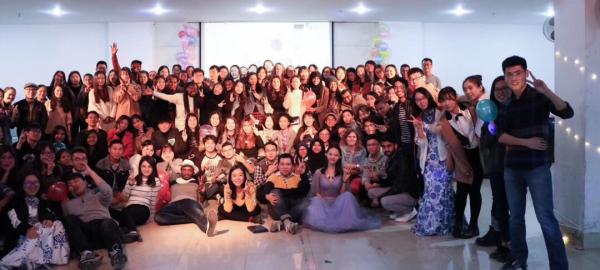
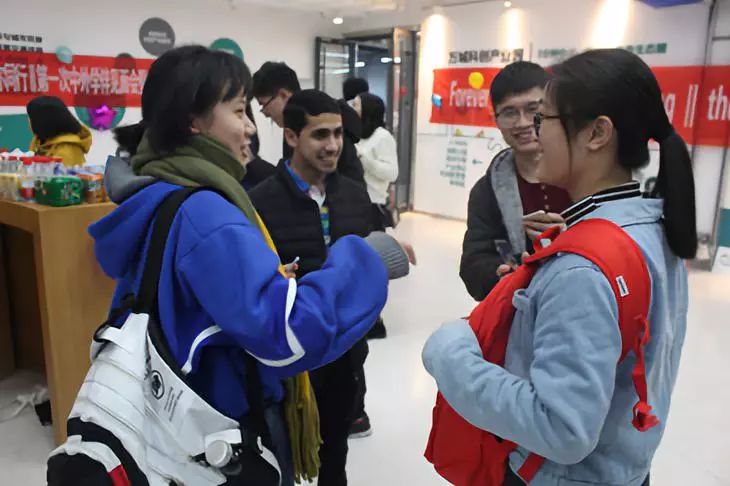
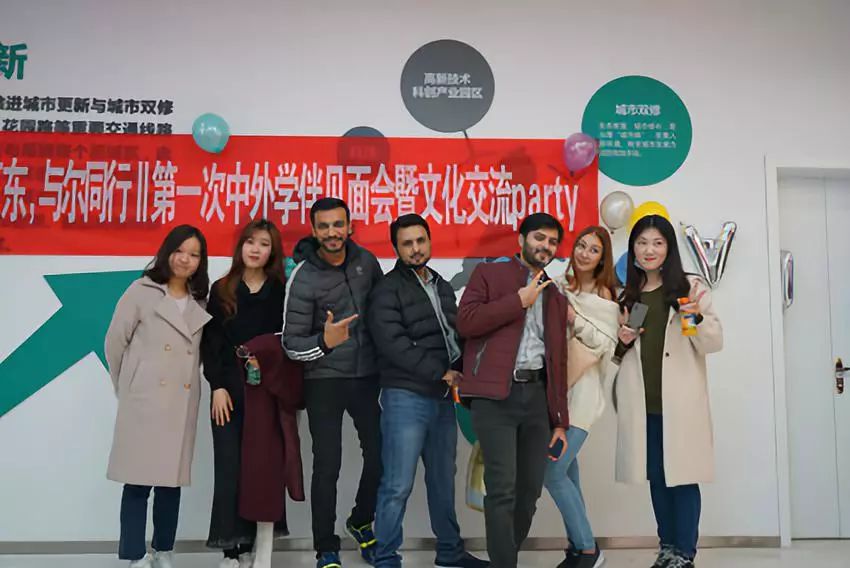
  She said that the "study partner" project includes a get-together. She attended the 2017 school reunion. According to her description, there were many students who participated in the party that night. Everyone came from all corners of the country and the atmosphere was very good. On that night, she met her friends from France, Pakistan, South Korea and other countries.

  After getting to know each other at the party, students can keep in touch with each other. Usually, students in China will take their study partners with them. Most of the activities are to visit famous scenic spots in Jinan together, or to have dinner, drink coffee and play werewolf killing around the school.

  Xiaoyuan said that more students still maintain online communication to help international students answer questions in campus life. "After all, everyone’s cultural backgrounds are completely different, and the probability of becoming international friends immediately is still quite low."

  A 2016 boy from Shandong University said that study companions are a normal learning exchange program, which has been going on for several years.

  The question about the internet changed from "one-on-one" to "one-on-three". The boy explained that the ratio of male to female in Shanda was originally a little more than that of female students, while the number of international students was generally a little more than that of male students. In addition, female students were generally more active than male students in participating in campus activities, so there was a situation of "three companions and one" mentioned in the news.

  The boy said that the "study partner program" requires study partners to do tasks together, such as reading books and watching movies together.

Police "three pairs of shoes" take Spring Festival travel rush Road.

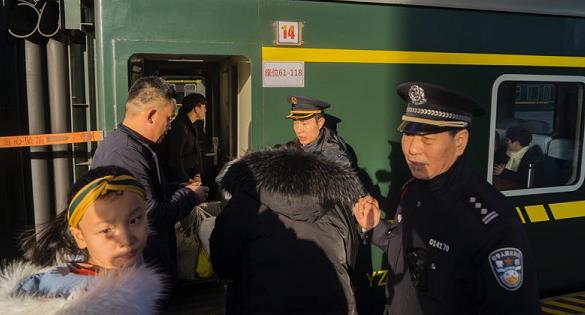
  CCTV News:At 5: 50 at dawn, the train returning from Chengdu slowly pulled into the platform, just shining through the window, and the policeman Zhang Zhenjun patrolled the car body again before retiring with peace of mind. — — Spring Festival travel rush is coming in 2019. In order to catch the bright spots of outstanding representatives in our police team, I approached the police officer Zhang Zhenjun and spent five days in the car with him. What impressed me the most was his "three pairs of shoes".

  Persistence of leather shoes

  When the train started, standing next to the K257/8 train from Tianjin to Chengdu, the first impression that Zhang Zhenjun, a 58-year-old policeman, gave was that he revealed the heroic spirit of the soldiers, which came from years of cultivation and clean leather shoes under his feet.

  He was a soldier at the age of 18 and worked in the army for 18 years. Because of his excellent performance, he worked all the way from the grass-roots company to the headquarters. In the past 18 years, it was this pair of leather shoes that he cherished. "When I was young, I didn’t have the opportunity to wear leather shoes in the country. When I put a pair of leather shoes on my feet in the army, I immediately got refreshed, so I tried to polish my shoes, took off my military uniform and put on police uniforms. The shoes under my feet are still useful. These shoes have become my good comrades in arms."

  "There are times when my shoes are dirty," Lao Zhang said with a little regret. "When I was walking in the car, I heard the abnormal noise in the front carriage when I visited the hard seat carriage. I rushed over and found that a male passenger was standing on the seat with a fruit knife in his right hand, waving back and forth and yelling, and two other slightly injured passengers were lying on the seat not far away and shouting. Upon seeing this, I pounced on the male passenger with a knife in one stride, pressed it tightly under my body and took the fruit knife in one fell swoop. In the process, my right hand was slightly scratched, and then I took it to the dining car with the police team, made a record and handed it over to the station police station, and properly disposed of the injured passenger. When I was all busy, I found three drops of solidified blood on my shoes. "

  After a few days with the car, I found that the policeman Lao Zhang would take out a soft cloth and shoe polish every time he patrolled the hard mat. He said, "My car is overcrowded all the year round, and it is not easy for passengers to go to work from south to north. I am not clean but easy to get along with. I am willing to chat with them more. Don’t underestimate this patrol that is often trampled on. Many things will be solved in the first time, that is, I will come back and wipe it."

  Ethics of cloth shoes

  When there are long intervals and high incidence of travel and wealth cases, the police officer Lao Zhang will arrange the police team members to carry out their daily work and go deep into the carriage to put on cloth shoes and plain clothes to "discover". "This is also a habit that has been maintained by train for 22 years," he said. "When I first arrived in the police force, I was assigned to the plainclothes team. The master taught me how to observe the abnormal passengers’ behavior in the car where the passengers were concentrated, so as to track and find out the current situation. Since then, I have worn cloth shoes, and the crew bag often carries similar clothes for migrant workers in season, which is not easy to be found in the car and is convenient for work. These cloth shoes have been worn for more than 20 years. "

  The same pair of cloth shoes, the policeman Lao Zhang still has wonderful use. When driving at night, he changed into a police uniform and patrolled the sleeping car in cloth shoes. He said, "Although this kind of wearing is a bit against the dress code, compared with my leather shoes, the cloth shoes walk silently, which will not affect the rest of passengers. I will calculate the number of rounds of the patrol and the time of the stop, put the leather shoes in the dining car, and will not delay getting off to meet the passengers after wearing a straight dress."

  Neglect of slippers

  In September this year, on the way home by train, police officer Lao Zhang suddenly felt feverish, and without telling his family, he dragged himself to see a doctor after five days’ fatigue. After the examination, I found that I was suffering from the symptoms of insufficient blood supply to the brain and capillary bleeding. This is the result of long-term accumulation of reasons such as work, diet, sleep and poor ventilation in the working environment. The doctor told me to rest for a long time, otherwise it may recur with high frequency.

  The policeman Lao Zhang only rested for two weeks, but his lover couldn’t beat him, so he had to buy him a pair of slippers and put them in his cabin bag, and repeatedly "nagged" him-"It’s time to patrol in the long interval at night, and when I come back, I will soak my feet with heat, so you can rub your feet yourself like this, which will help blood circulation and save you from getting sick." Police officer Lao Zhang listened to his lover’s words and brought slippers, but he was obsessed with the schedule of the car, and his feet were always soaked in leather shoes and cloth shoes, so he didn’t have time to put on a slipper. Until I got on the bus, my lover was worried that his body could not afford it. At 1 o’clock in the middle of the night, he sent a WeChat saying, "I have calculated the time. You should be able to take a rest in this interval from Guangyuan to Jiangyou. Take a photo for me and see if you are wearing slippers on your feet." The policeman Lao Zhang felt the vibration of WeChat, but at this time he was walking in the carriage wearing cloth shoes. After a good tour, he returned to the camper and put on slippers to take photos, telling his lover that the signal was not good.

  Write it at the end

  Lao Zhang, a policeman, is very ordinary. He has spent 22 years on various trains, crisscrossed the north and south, never handled any big cases, and never made any big mistakes. However, for the police work, it is an honor to be so obscure for so many years by taking a long-distance ordinary train. This honor lies in being down-to-earth, in shoes that strictly enforce the law and shoes that are for the people, and in giving up slippers and measuring the length of the train, the length of the interval journey and the length of life and life in the process of value multiplication step by step.

  Thanks to the police officer Lao Zhang’s three pairs of shoes in size 43, and thanks to so many police officers Lao Zhang, it is because of their solid Spring Festival travel rush Road that this year’s Spring Festival travel rush can truly feel practical! (Text/Chen Sheng)

Named "big, foreign, strange and heavy", 151 communities in Xi ‘an are planned to be renamed.

Recently, many places have released "On the publicity of the list of nonstandard place names that need to be cleaned up and rectified",as mentioned in the publicity, the names of residential areas around the country will be cleaned up and rectified for reasons such as worshipping foreign things and obsessing foreign things, being weird and difficult to understand.

According to the reporter, the rectification of irregular place names will be carried out nationwide. The civil affairs departments, public security departments, housing construction departments and other relevant departments of all provinces, autonomous regions and municipalities directly under the Central Government have received the Notice on Further Cleaning up and Rectifying Non-standard Geographical Names (hereinafter referred to as the Notice) issued by the six departments of the Ministry of Civil Affairs, the Ministry of Public Security, the Ministry of Natural Resources, the Ministry of Housing and Urban-Rural Development, the Ministry of Transport and the State Administration of Market Supervision. In April this year, the Division of Geographical Names of the Ministry of Civil Affairs also held a demonstration training course on cleaning up and rectifying irregular geographical names in Kunming, Yunnan Province. A total of 200 persons in charge of place name management offices and business backbones of all provinces (autonomous regions and municipalities) and Xinjiang Production and Construction Corps participated in the training. Civil affairs departments at all levels have successively issued notices to clean up and rectify irregular place names.

The "Notice" proposes that there are some areas.Irregular place names such as "big, foreign, strange and heavy" violate the core values of socialism, cut off the context of place names, damage the national culture and hinder the people’s production and life activities.The nonstandard place names in residential areas, large buildings, roads, streets and lanes should be standardized and standardized.

The so-called "big, foreign, strange and heavy" refers to:The meaning, type or scale of place names are deliberately exaggerated, and proper names or generic names far exceed the actual "big" place names that refer to geographical entities; "foreign" place names named after foreigners’ names and foreign words and their Chinese translation and writing forms; Blindly pursuing "weird" place names that are grotesque, with nonstandard names, vulgar meanings or strong feudal colors; "Heavy" place names with the same names or homonyms in a certain area.

The annex attached to the Notice lists in detail the principles and standard cases of identifying nonstandard place names.

If you use the words "the universe, the world, the nations, the world" at will without approval, it is a deliberately exaggerated "big" place name;

"Lincoln Apartment, Columbus Square, Manhattan Community, Champs Elysé es Community" and other "foreign" place names that worship foreign things and flatter foreign countries;

Place names such as "99 Building, California 1886" with random numbers and no practical meaning, and places with strong feudal colors such as "Imperial Court and Imperial House" are all "strange" place names.

However, the Notice also specifically pointed out that place names that have existed in history, have commemorative significance or reflect the friendship between Chinese and foreign people do not belong to foreign place names that worship foreign things and flatter foreign countries, such as Bethune International Peace Hospital, Hilton Hotel and Siemens Company. Foreign abbreviations that have specific meanings and are widely known do not belong to "weird" place names with bizarre meanings, such as places with abbreviations such as "APEC, CBD, IT".

The "Notice" requires that all localities should complete the standardization of nonstandard geographical names before the end of June 2019.

In particular, the Notice proposes that the principles of "prudent and prudent implementation according to law" and "people-oriented, facilitating the people and benefiting the people" should be adhered to in cleaning up and rectifying irregular place names, and the list of irregular place names should be determined scientifically and reasonably, and those that can or can not be changed should not be changed, so as to prevent the indiscriminate change of old place names and ensure the overall stability of place names.

Official website, the government of Xi ‘an, also issued a notice on printing and distributing the Measures for the Administration of Building Naming in Xi ‘an, which came into effect in July this year. It is forbidden to use grotesque, boastful and ambiguous words for naming, and to put an end to such irregular place names as "big, foreign, strange and heavy".

The Civil Affairs Bureaus of all districts and counties in Xi ‘an, the County Bureaus of the Municipal Natural Resources Planning Bureau, the Civil Affairs Bureau of Xixian New Area People’s Society, the Natural Resources Bureau and the Planning and Housing Construction Bureau, and the Social Affairs Bureaus of the Development Zones (Social Administration Bureau):

"Xi ‘an building naming management measures" has been approved by the general office of the municipal government and approved by the Municipal Bureau of Justice. It is issued to you, please follow it.

Xi ‘an Civil Affairs Bureau Xi ‘an Resource Planning Bureau

May 28, 2019

On June 19th, the reporter of Huashang Daily was informed that according to the unified deployment of the country to clean up and rectify irregular place names and the requirements of the Notice of the Second National Geographical Names Survey Leading Group of Xi ‘an on Doing a Good Job in Cleaning up and Rectifying Irregular Place Names in Our City (Shi Di Pu [2019] No.1), the irregular place names such as "big, foreign, strange and heavy" in Xi ‘an were thoroughly investigated, and the statistical table of irregular place names is as follows:

Issues that Xi ‘an citizens are generally concerned about:

After the name of the community is changed, will it have an impact on ID cards and real estate licenses?

In this regard, Li Fuan, director of the Division of Geographical Names of Xi ‘an Civil Affairs Bureau, told reporters that according to the current situation, the names of 151 communities in Xi ‘an need to be changed. Now the districts and counties are publicizing, and they will be publicized again after the market is over. There will be no substantive problems in issues such as ID cards and real estate licenses that the masses care about. "The address of ID cards is generally registered in streets and house numbers, and it is rarely specific to communities. It is generally used for travel, so it will not be seen. There is generally no community name on the real estate license, which does not affect the transaction. If an individual has a community name, which has an impact on the later transaction, the public can issue a certificate to the civil affairs department. Whether it is the civil affairs department at the district or county level, it will do a good job of coordination for the citizens. "

Li Fuan said that before this work was carried out, the six departments of Xi ‘an, including public security and housing construction, all discussed it together, and then formulated a unified implementation plan to ensure that it would not have an impact on people’s lives. "Many big, foreign and strange names are not in harmony with the overall image of Xi ‘an."

It is understood that not only Xi’ an, but also the whole province is conducting a thorough investigation. The province has macro requirements for clean-up work, requiring proper information changes to minimize the inconvenience and influence brought to the people by the renaming of place names.

Know more

Measures for the Administration of Building Naming in Xi ‘an

Article 1 In order to strengthen the naming management of buildings with geographical names in our city, clarify the application scope and technical specifications of building names, and build a geographical name management system with ancient city cultural characteristics, these measures are formulated in accordance with the Regulations on the Administration of Geographical Names in the State Council, the Measures for the Implementation of the Regulations on the Administration of Geographical Names in Shaanxi Province and the Detailed Rules for the Implementation of the Administration of Geographical Names in Xi ‘an, combined with the actual situation of our city.

Article 2 The buildings with geographical names mentioned in these Measures (hereinafter referred to as buildings) refer to various independent large-scale production, operation, service, residence, public welfare and memorial buildings.

These Measures shall apply to the naming, renaming, use and related management activities of building names within the administrative area of this Municipality.

Article 3 The naming of buildings shall be subject to the system of declaration and examination. When the project construction unit declares the project, it shall go to the civil affairs department to go through the examination procedures of building name declaration and obtain the standard name of the building according to law. Failing to go through the formalities of building declaration and examination, the resource planning department will inform the place name management department of the name of the building proposed by the project construction unit for examination when going through the relevant examination and approval procedures of the building, and the place name management department will timely feedback the examination opinions to the resource planning department.

Article 4 Building naming declaration shall be under centralized management and graded responsibility. According to the provisions of the first paragraph of Article 12 of the Detailed Rules for the Implementation of Geographical Names Management in Xi ‘an, if the construction project is approved by the municipal department, the building naming procedures shall be reported to the Municipal Civil Affairs Bureau; Approved by the county, the development zone, respectively, to the county civil affairs department, the development zone name management department to declare the building naming procedures. The name of the building approved by the audit is the standard name.

Fifth project construction units to declare the building naming procedures, must hold the construction project application documents and the proposed naming scheme, to declare the naming application to the civil affairs department at the same level. Upon examination, if the building name meets the application scope and technical specifications, the Civil Affairs Department will issue the "Xi ‘an Building Name Use Certificate", whose name has exclusive rights and is protected by the laws and regulations on place names.

Article 6 The naming of buildings shall meet the following specifications:

(a) the name of the building should be composed of proper names and generic names, with proper names in the front and generic names in the back. Proper names should be healthy and concise, with clear meaning, in line with the usage habits of modern Chinese, and generic names should reflect the functional category attributes of buildings. Do not use grotesque, boastful and ambiguous words for naming, put an end to nonstandard place names such as "big, foreign, strange and heavy", and avoid using uncommon words and polyphonic words. Advocate the use of names that have historical and cultural value and are consistent with the historical and cultural features of our city, so as to serve our city in building an international metropolis with historical and cultural characteristics.

(2) The naming of buildings shall not use words that damage national dignity, hinder national unity, violate social morality, have vulgar style and are prone to misunderstanding or ambiguity, and shall not be named after words that promote feudal dignitaries and superstitions.

(3) Except those with historical and cultural origins and brands of foreign enterprises, buildings in this city shall not be named after foreigners’ names, place names, words translated into foreign languages or words written in foreign languages.

(four) except for memorial buildings, the names of party and state leaders and the names of landmark buildings with specific political colors and meanings shall not be used to make buildings.

(five) shall not use the well-known trademarks and brand names owned by the applicant to name the building; If a building is named after a trademark or brand name owned by the applicant, the name should be crowned with words showing its orientation to reflect the referential function of the building name.

(six) the name of the building should be coordinated with its purpose, scale and quality, and avoid using nonstandard names such as "big, foreign, strange and heavy". The identification of nonstandard building names shall be carried out with reference to the principles and standards for the identification of nonstandard place names included in the clean-up and rectification determined by the Provincial Civil Affairs Department, the Provincial Public Security Department and other departments.

(7) The proper names of administrative regions below the county level within the jurisdiction of this Municipality, such as domain names, area names, streets and lanes, shall generally be used within the jurisdiction or along roads.

(eight) the names of buildings in urban areas and counties shall not have the same name or homonym.

Article 7 The generic name of a building shall meet the following specifications:

(a) should be consistent with the building construction level, building scale, functional form and environment.

(two) it is forbidden to use the same generic names overlapping, such as the building square.

(3) Residential areas and commercial and residential buildings (groups) are commonly known as "buildings, mansions, gardens, cities, apartments, villas, courts, houses, residences, mansions, pavilions, courtyards, houses, pavilions, squares, new villages, villas, blocks, etc."

(4) Buildings (groups) for non-residential purposes are commonly called "buildings, mansions, gardens, gardens, cities, palaces, pavilions, squares, centers", etc.

(five) residential areas and buildings shall not use the generic names of administrative areas, and shall not use words that are inconsistent with the name and are easy to cause ambiguity.

(six) large-scale residential areas, buildings can be named by the internal group names, and the internal group names must meet the technical specifications of generic names.

(seven) the use of the following generic names shall conform to its scope of application:

1. Building (building): refers to a comprehensive high-rise or large building.

2. Commercial building: refers to high-rise or large-scale buildings that are all used for business or mainly for business, supplemented by offices and residences.

3. Square: generally speaking, it refers to a city land with a wide and open outdoor public space, surrounded by multi-functional large buildings such as business, office, entertainment and residence, which can be used for people’s activities, leisure and sightseeing. Buildings dominated by high-rise buildings are not allowed to be named after squares. If "Square" is used as a generic name, words indicating dominant use can be used in the name, such as "XX Commercial Plaza".

4. Center: generally refers to a non-residential building (group) with a large floor area or building area and a special function. With "Center" as the generic name, words indicating the dominant use can be used in the name, such as "XX Business Center".

5. City: refers to a closed or semi-closed large-scale building complex with functions of residence, commerce, office and entertainment.

6. Villa (villa): generally refers to a residential area approved by the planning department as a villa project or with low plot ratio, high greening rate, certain garden landscape and elegant environment. The naming of villas should be strictly controlled.

7. Garden, Garden: Generally, it refers to a residential area with a certain artificial scenic spot and green area, elegant and beautiful, with a greening rate of more than 35%.

8. Villa: generally speaking, it refers to a low-density high-grade residential area built on the mountain, with a greening rate of over 35%, a certain garden landscape and elegant environment.

9. Block: generally speaking, it refers to an open and comprehensive large-scale building complex with service functions such as business and residence.

10. Village (new village): generally refers to a residential area with a large floor area and a large building scale, which is suitable for the newly-built independent residential area with perfect living facilities after urban relocation and transformation.

11. Apartment (new apartment): generally refers to a residential area composed of high-rise residential buildings or multiple residential buildings.

12. Residential quarter: generally refers to an independent residential quarter with a large floor area and large building scale and relatively complete living facilities, with no less than two main residential buildings.

13. Museums and palaces: generally refers to buildings (groups) with functions such as culture, education, science and technology, art, entertainment and sports.

14. Pavilion and porch: generally speaking, it refers to single office, cultural, commercial and residential buildings with no more than 7 floors above ground.

15. Fang, Li, Fu, Xie, Di, Lu, Zhu, Ting, Yuan, Ju, Zhai: generally refers to commercial buildings, residential buildings or residential areas with small floor space and construction scale.

16. Hotels, restaurants and hotels: generally speaking, they refer to relatively independent buildings and buildings with the functions of accommodation, catering, entertainment and shopping of a certain building scale.

Article 8 A generic name that is not included in Article 7 of these Measures shall be demonstrated by experts organized by the place name management department, and it can only be used after it has been demonstrated and its application scope and technical specifications have been formulated.

Article 9 The name of a building that does not meet the specifications in Articles 6 and 7 of these Measures shall be renamed.

Article 10 To declare the name of a building, the following materials shall be submitted: an application report for the examination of the name of the building and an application document for the establishment of a construction project.

Eleventh building names should remain relatively stable, generally not renamed. If it is really necessary to change its name, it shall meet one of the following conditions:

(a) the main owner of the building has changed.

(two) the main function of the building has changed.

Twelfth residential areas and buildings to declare the name change, in addition to submitting the application report of building name audit, it should also submit the original "Xi ‘an Building Name Use Certificate" and the relevant certification materials that the owners’ committee or property rights unit agreed to rename. After the place name management department agrees to change its name, it will cancel the original name and issue a new "Xi ‘an Building Name Use Certificate".

Thirteenth names of buildings shall not be used in official documents, news reports and advertisements without the examination and determination of the place name management department. All kinds of place name signs and real estate advertisements must strictly use the names of buildings that have been examined and determined, and no words may be added, deleted or changed. Building property units, property management departments or other users should use the name of the building as determined by the place name management department when handling the relevant administrative examination and approval procedures.

Fourteenth buildings to apply for a house number, must provide the relevant procedures for the use of the name of the building as determined by the place name management department.

Fifteenth in violation of the provisions of these measures, unauthorized naming and renaming of buildings, place name management departments should inform them to stop using non-standard names, and make corrections within a time limit.

Article 16 These Measures shall come into force as of July 1, 2019 and shall be valid for five years.

(The original title is "Full List Announced! These 151 communities in Xi ‘an will be renamed [with description of irregular situation]].
May the world no longer be "orphaned" and the "reunion" action in Ningxia reunite 46 separated families.

After Guo Gangtang, the prototype of the movie "Lost Orphan", successfully recognized his relatives in July this year, Sun Haiyang, the prototype of the movie "Dear", also achieved a reunion on December 6, and met Sun Zhuo, his son who had been abducted for 14 years. The unexpected reunion in the movie has come true in reality, and such a touching story is also happening in Ningxia …

Since January this year, the Ministry of Public Security has deployed a nationwide "reunion" campaign. Ningxia Public Security Department, in combination with the study and education of Party history and the education and rectification of the political and legal team, clearly requires that the work of helping parents find their children’s "reunion" be a political task, so as to make the road of recognizing relatives shorter. As of December 13th, 46 separated families have been reunited, and 17 abducted or lost children in Ningxia have been recovered.

Ge Minsheng (fourth from the right in the first row) was reunited with his family after 61 years. (Source: Provided by the interviewee)

After 61 years of reunion.

"I’m so happy. I’ve been listening to my parents for a lifetime since I was a child, and I finally found it. Thanks to the comrades of the public security police, the parents’ wishes have finally been realized. " In June this year, 61-year-old Ge Jianchun, accompanied by the police of the Criminal Investigation Detachment of Yinchuan Public Security Bureau in Ningxia, and his family drove more than 640 kilometers from Yinchuan to Taibai County, Baoji City, Shaanxi Province, to reunite with his second brother Ge Minsheng who had been separated for 61 years.

This time, the road for brothers to meet each other has gone for 61 years.

Ge Jianchun recalled that in 1960, due to the work of his father Ge Yangqing, his parents separated the two places. The pregnant mother Tang Lanying took the eldest son Ge Ansheng and the second son Ge Minsheng and took the train from Lanzhou, Gansu Province to Xi’ an, Shaanxi Province. At that time, the environment on the train was noisy and there was a large flow of people. Tang Lanying had to be distracted to take care of two children. At that time, he accidentally lost Ge Minsheng. For 61 years, the family has never given up looking. This year, finally found it.

"Take off your socks and let me see." Ge Jianchun said this when the two brothers just met at the scene. Seeing that Ge Minsheng’s little toe exposed after taking off his socks has two petals of nails, he immediately choked and hugged him and said, "Yes, you are my brother, and our family’s nails are like this."

Ge Minsheng came to Yinchuan with his family during the "Eleventh" holiday this year. "Before my parents died, I was obsessed with my second brother, and my greatest wish was to find him. Now that our family is reunited, I believe they must be very pleased. " Ge Jianchun said. "After the holidays, our big family has become more lively."

Zhou Dong, the second-level director of police technology in the Criminal Technology Department of Ningxia Public Security Department, is conducting DNA testing. (Source: Ningxia Public Security Department)

Recognizing the "gold standard" is the final word.

Ge Minsheng, an old man who has been lost for 61 years, recognizes relatives with his family, which is the longest successful case of finding relatives in Ningxia since the reunion operation. DNA test, known as the "gold standard" for identifying kinship, is the decisive factor for the success of this search.

In the centralized comparison battle of criminal technology in the "Reunion" operation, through the sharing of national data resources, Zhou Dong, the second-level director of police technology in the Criminal Technology Department of Ningxia Public Security Department, found an important clue: Zhang Moumou (44 years old), a man in Taibai County, Baoji City, Shaanxi Province, was highly suspicious compared with Ge Shengyang, who was looking for relatives, and needed further verification. After learning this important clue, the police of Yinchuan Public Security Bureau immediately contacted Baoji Public Security Bureau of Shaanxi Province. With the help of local police, after some work, they successfully compared Zhang Cheng (66 years old), the father of Zhang Moumou, and identified him as Ge Minsheng, a child who disappeared 61 years ago.

"The comparison process is really tortuous. Although I keep failing, I always cheer myself up and try again. I am very excited at the moment of success." Zhou Dong explained that in theory, if there are DNA samples of parents and children in the abduction database, the system can automatically conduct accurate comparison. However, the reality is often complicated, which requires technicians to manually screen and compare from massive data.

After witnessing the recognition scene of the Ge brothers, Zhou Dong was deeply touched. "For a family, the loss of children and their relatives have a great influence. I am proud that my work can help make up for their regrets." Zhou Dong said.

In May this year, in order to carry out the "Reunion" operation in depth, the criminal investigation department of Ningxia Public Security Bureau set up 25 free blood sampling points for the "Reunion" operation in the whole region, and at the same time collected blood samples of unidentified persons and lost persons, tested DNA and entered them into the national abduction database.

"Thanks to the continuous expansion of the abduction database and the progress of DNA detection technology, the accuracy and efficiency of DNA comparison have improved, providing technical support for the’ Reunion’ action in Ningxia." Wang Yuru, the second-level director of police technology at the Criminal Technology Department of Ningxia Public Security Department, said.

Wu Haiyang, deputy head of the Criminal Investigation Brigade of the Public Security Bureau of shapotou district, zhongwei, waited in the rain for Zhang, a missing person, to appear. (Source: Provided by the interviewee)

Looking for clues in the world

In the process of finding relatives, the work of criminal investigation police is also very important. In the case of insufficient conditions for DNA identification samples, they need to look for clues in massive information; It is also necessary to organize family recognition, and cooperate with civil affairs, women’s federations and other relevant departments after family recognition to help abducted and missing persons integrate into their families and society.

In 2007, Zhang, who lives in Zhongwei, left home because of employment pressure and inner confusion, and has not heard from him since then. In the past 14 years, the Public Security Bureau of shapotou district, zhongwei attached great importance to it, and was responsible for the police to look for clues from the massive information and go to many provinces, cities and counties to check the clues.

On September 20th this year, when the "Reunion" special class of the Criminal Investigation Brigade of shapotou district Public Security Bureau combed the relevant information, it was found that the ID number of the missing person Zhang was the same as that of a man registered by the Shanghai Public Security Bureau in December 2020. After learning this information, Wu Haiyang, deputy head of the Criminal Investigation Brigade of the Bureau, actively docked with the Shanghai public security organs to find the blood card collected by the man during registration for DNA identification. After identification, the man and the Zhang couple are in line with the parent-child genetic relationship. Wu Haiyang and his colleagues immediately went to Shanghai to look for Zhang.

After arriving in Shanghai, with the support of the Criminal Investigation Bureau of Shanghai Public Security Bureau and Yangpu Branch, Zhang’s whereabouts were found. Wu Haiyang took out the photos and videos of his family life taken in advance, which were compared and confirmed by Zhang, and told him about the recent situation at home, and finally successfully persuaded Zhang to return to his family.

"As a policeman, it is commonplace to run around, but I feel that it is worthwhile to see their family reunited again." Wu Haiyang said.

It is understood that this year, the Ningxia Public Security System comprehensively sorted out the cases of local children being abducted since the reform and opening up, filed cases by case, re-examined the papers and found the families of abducted children to understand the situation, deeply searched for clues to solve the case, used new means of investigation, and used big data resources to tap the breakthrough point of solving the case. Check the incident one by one, re-study the nature, re-sort and judge the relevant information of suspicious persons suspected of trafficking crimes, and carry out the work of merging cases and digging deep into the remaining crimes. Among them, in February this year, the abduction case of Lin Mohao in zhongwei, which was supervised by the Ministry of Public Security, was successfully detected, the abducted child Lin Mohao was rescued, and three suspects were arrested, which achieved good social effects.

"We organized a number of police types to simultaneously file cases and work in the same direction, carried out joint consultation and judgment, and integrated technologies such as big data judgment and DNA testing and identification, actively explored, summarized and refined a series of effective technical warfare methods." Wang Cheng, the detachment leader of the Ningxia Criminal Investigation Corps and the head of the "Reunion" action class, said.

In the next step, the criminal investigation department of Ningxia will thoroughly practice the people-centered development thought, continue to carry out the practical activities of "I do practical things for the masses", use traditional and new media propaganda methods to deeply mobilize the support and participation of all sectors of society and the masses, and make in-depth use of data screening and comparison, criminal technology inspection and identification and other measures to let more missing abducted children, suspected abducted people and unidentified people go home for reunion.

Original title: "I hope that the world will no longer be" orphaned ".Ningxia" Reunion "Action reunites 46 separated families"

Read the original text

Last year, Jiangsu implemented 1,363 renovation projects with a total investment of over 200 billion yuan.

    Original title: Last year, the province implemented 1363 renovation projects with a total investment of over 200 billion yuan.

    Why can Jiangsu "do it with a heavy load" when traditional industries are rejuvenated?

    Traditional industries are the pillar and basic component of China’s national economy, the main force of economic growth and the main battlefield for solving employment in our province, accounting for half of the 14 national advanced manufacturing clusters and the "1650" industrial system in Jiangsu. Among the top 100 manufacturing enterprises in Jiangsu, enterprises related to traditional industries account for 80%.

    In the critical period of the deep adjustment and transformation of the current global economic structure, the rejuvenation and upgrading of traditional industries is not only an inevitable choice to break through the external shackles and stabilize the global industrial position, but also a key to promote the high-quality development of the domestic economy and build a new development pattern.

    In the past year, our province implemented 1,363 renovation projects with a total investment of 209.833 billion yuan, voluntarily withdrew 3,396 sets of old equipment, shut down and withdrew 73 low-quality and inefficient enterprises, introduced 337 key innovative products, built 34 traditional industrial characteristic parks, and added 27 enterprises to meet the national Standard Conditions for Foundry Enterprises, thus creating 51 national-level green parks, ranking first in the country.

    Jiangsu, which has a huge traditional industry, has a heavy burden and is difficult to transform. So, how did Jiangsu realize the "load-bearing transformation"?

    Background: With policies as the key link, funds as the wing and evaluation as the yardstick, traditional industries are rejuvenating and entering the fast lane.

    At the key node of the transformation of old and new kinetic energy, the rejuvenation and upgrading of traditional industries has become an important engine to promote high-quality economic development. From the central government to the local government, the policy dividend has been continuously released, and the revitalization and upgrading of traditional industries is timely and promising.

    On the one hand, the top-level design is the anchor direction for the rejuvenation of traditional industries.

    In December 2023, the Ministry of Industry and Information Technology and other eight departments jointly issued the Guiding Opinions on Accelerating the Transformation and Upgrading of Traditional Manufacturing Industry, which clarified the transformation path of traditional manufacturing industry to "high-end, intelligent, green and integrated" from six dimensions, such as innovation drive and digital empowerment. In this year’s government work report, we further made systematic arrangements for the transformation and upgrading of traditional industries from five aspects, such as industrial base reconstruction and technological transformation, and released a strong policy signal.

    On the other hand, Jiangsu has followed the national strategy and accelerated the construction of a local policy matrix.

    In 2023, Jiangsu issued the "Implementation Plan for Revitalizing Traditional Industries", and deployed the "five major actions" of eliminating backwardness, updating equipment, green transformation, product upgrading and layout optimization. Wuxi, Nantong, Yancheng and other cities also immediately issued implementation opinions to plan the industrial transformation path as a whole; Taizhou set up a special working class to refine the tasks to enterprises and projects, and promote the upgrading of advantageous industries such as ships and automobiles … All localities followed suit and built a linkage mechanism among provinces, cities, districts and counties. At the same time, six major industries, such as textile, printing and dyeing, simultaneously launched high-quality development plans, forming a policy system of "unification and separation" to achieve accurate guidance for industrial transformation.

    The investment of real money and silver is a solid backing for industrial rejuvenation and injects "living water" into industrial rejuvenation.

    In 2024, Jiangsu selected 90 traditional industrial transformation and upgrading projects for key support, recommended 83 equipment renewal projects to obtain 2.346 billion yuan of ultra-long-term special national debt funds, and issued 150 million yuan of financial discount funds for manufacturing loans in advance, bringing "timely rain" to industrial development.

    In terms of financial innovation, Jiangsu is also constantly exploring. The Provincial Department of Industry and Information Technology and Nanjing Bank jointly launched the "Traditional Industry Revitalization Loan", which provided loans of 2.178 billion yuan for 54 key projects; Together with Jiangsu Bank, it launched the "Green Factory Loan", granted credit to 601 enterprises and issued loans of 60.8 billion yuan. These customized financial products have effectively alleviated the financing problems of enterprises and reduced the cost of transformation.

    The scientific evaluation system provides "weights and measures" for industrial rejuvenation.

    A scientific and reasonable evaluation system is an important yardstick to test the effectiveness of industrial rejuvenation. According to the principle of science and comparability, Jiangsu has established the evaluation index system for the rejuvenation of six traditional industries in the province and the evaluation index system for the rejuvenation of industries in districts and cities, and quantified the transformation effect from two dimensions of industries and regions.

    Over the past year or so, the revitalization of traditional industries in our province has taken policies as the key link, funds as the wing and evaluation as the yardstick, accelerated the breakthrough of development bottlenecks, and vigorously promoted the continuous transformation of old and new kinetic energy.

    Path: "breaking, giving up and leaving" breaks structural contradictions, and "five major actions" promote the upgrading of industrial energy level.

    The revitalization project of traditional industries in Jiangsu involves many industries and fields, and the development quality is different. How to highlight the key points and achieve results?

    "Our province has anchored the’ breaking away’ mode of extensive development mode, abandoning low-end backward production capacity and leaving the old road of high energy consumption and low price competition, and promoted the’ five major actions’ of eliminating backwardness, equipment renewal, green transformation, product upgrading and layout optimization, and made efforts to crack the structural contradictions in the transformation of traditional industries." Zhu Aixun, director of the Provincial Department of Industry and Information Technology, showed his development ideas.

    Over the past year or so, the "five major actions" have worked together to become the core kinetic energy driving the high-quality development of traditional industries.

    Backward production capacity is cleared to speed up. In 2024, three levels of linkage between provinces and cities will accurately identify and repel 47 sets (items) of backward technology and equipment. Xuzhou, the old industrial base, has led to the withdrawal of more than 1,300 sets of low-quality production equipment; Jiangyan, where heavy chemical industry is concentrated, has implemented "two breaks and three cleanings" for 87 furnace-related enterprises, vacating more than 500 mu of land and releasing factor space for industrial upgrading.

    Equipment renewal and construction of new industrial productivity. Over the past year or so, relevant provincial departments have issued a list of equipment renewal requirements covering more than 3,000 enterprises, a list of supply for more than 2,000 enterprises, and financing requirements for 1,420 projects. Through 101 supply-demand and bank-enterprise docking activities, nearly 9,000 sub-enterprises were accurately matched in resources, which effectively promoted the process of equipment intelligence and laid a solid hardware foundation for industrial modernization.

    Green transformation shapes new competitive advantages. Suzhou took the lead in carrying out the pilot project of "near-zero carbon factory" construction, and built 40 benchmark enterprises. There were 95 new green factories, 18 green parks and 14 green supply chain enterprises in the province, ranking first in the country … Last year, the national green manufacturing system in our province achieved remarkable results, which provided a demonstration for the green development of traditional industries.

    The added value of product upgrading industry has increased. In the whole year, 1,483 new technologies and products were promoted, and 278 items were selected into the catalogue of independent innovation products. From new technologies to famous brands, the "excellent products" of traditional manufacturing industries have emerged one after another: last year, 12 brands in the province were selected as the first batch of "famous consumer products in China", ranking first in the country; Thirty-six products were selected into the national promotion catalogue of elderly products, accounting for 13%.

    Optimization of industrial layout releases agglomeration effect. Looking at Jiangsu, through the evaluation of intensive utilization of industrial enterprises’ resources, all localities have further promoted "changing cages for birds"-three chemical parks in Wuxi have been selected into the national "list of smart chemical parks"; Liyang has revitalized more than 700 mu of land to undertake emerging industries through the renovation of village-level industrial parks; Wujiang has upgraded 45,000 mu of inefficient industrial land, and the average tax revenue per mu has doubled compared with 2020, and the trend of industrial agglomeration and intensive development has become more and more obvious …

    The "five major actions" from production capacity clearing to technological innovation, from green development to industrial restructuring, form a joint development force, promote the transformation of traditional industries from factor-driven to innovation-driven, and help traditional industries in our province achieve energy level jump.

    Results: Six traditional industries have been transformed vigorously, and they have seized the opportunity in the global industrial chain reconstruction.

    From Kunshan, the "international coffee industry capital" that undertakes nearly 60% of the baking amount of raw beans in China, to Sunan special steel material cluster that ranks among the only advanced manufacturing clusters in the steel field in China; From the textile industry, which has become the second billion-dollar industry in Suqian, to the excavator industry in Jiangsu, which accounts for 40% of the country’s output … The transformation and upgrading of six traditional industries in Jiangsu, such as food, textile, chemical industry, metallurgy, building materials and machinery, is strong, which has become a powerful proof of the remarkable achievements of transformation and rejuvenation in our province.

    Food processing industry is the foundation of people’s livelihood. A Kunshan has gathered more than 40 coffee head enterprises such as Starbucks and Ruixing, forming a 100 billion-level industrial chain from raw coffee beans to finished products. This achievement benefited from strengthening local quality and safety supervision, promoting the application of intelligent equipment and traceability of raw materials safety, and comprehensively promoting the upgrading of coffee industry.

    According to my humble opinion, our province has held special activities such as collaborative innovation and development of new food clusters and cold chain logistics docking of prefabricated vegetable industry chain, released innovative achievements and demand for technology, talents, financing and equipment, and cooperated with many parties to promote the upgrading of the whole industry chain.

    There are many similar changes. Based on the logic of "green and low-carbon" development, Changshu, as the "hometown of traditional textiles", classified and reorganized the existing 136 printing and dyeing enterprises and optimized them to 64. Previously, Jiangsu multi-departments jointly issued the "Implementation Opinions on Promoting the High-quality Development of Printing and Dyeing Industry", promoted the implementation of 11 printing and dyeing reconstruction projects in Taihu Lake Basin, and conducted service-oriented manufacturing rounds for 20 enterprises to accelerate the integration of traditional manufacturing and modern service industries.

    In the past year, our province’s chemical industry galloped along a higher and greener development channel, and promoted the renovation of old chemical devices, with 281 sets completed, with a completion rate of 97.2%. The provincial government issued the Opinions on Accelerating the High-quality Development of Chemical Industry, and implemented the Measures for the Administration of Chemical Industry Parks in Jiangsu Province, serving the construction of tongzhou bay Chemical Industry Development Zone, guiding the expansion of chemical industry parks in Yangzhou, Lianyungang and Zhenjiang, and promoting the high-quality development of chemical industry in the whole province more systematically.

    In the field of metallurgical industry, the Sunan special steel material cluster led by Nanjing won the national advanced manufacturing cluster competition, and a number of low-carbon demonstration application cases such as "steel+transportation" and "steel+construction" continued to emerge; The building materials industry has launched a series of green building the countryside activities by compiling and publishing the implementation guidelines for high-end intelligent digital transformation of cement products, so as to tap the consumption potential of new products under the background of downward demand; The machinery industry is more high-end, with the output of excavators accounting for 40% of the country’s total, tractors and grain harvesters ranking second in the country, and the annual output of new energy vehicles is 1.226 million, accounting for 55.7% of the province’s automobile output …

    The phased results achieved by the revitalization of six traditional industries in Jiangsu not only significantly enhanced the core competitiveness of industries, but also reshaped the industrial development pattern, and played an important supporting role in stabilizing economic growth, ensuring employment and people’s livelihood, and promoting green and low-carbon transformation.

    Transformation is still on the road. The person in charge of the Industrial Transformation and Upgrading Department of the Provincial Department of Industry and Information Technology said that in the next step, policy measures should focus on more subdivided areas, including those that are limited by the current environmental protection and safety production policies and need to be upgraded by "using new technologies"; There are still "extensive development" fields such as casting, forging, cement and flat glass; The field of "low-end backward production capacity" that cannot meet the current bottom line policies such as environmental protection and safe production. Continuous exploration will help these areas seize the opportunity in the reconstruction of the global industrial chain. (Fu Qi)

Interesting talk about "New Year’s Day": How to determine the dates of Spring Festival and New Year?

  Beijing, January 1st (Reporter Shangguan Yun) Today is January 1st, and many countries call it New Year’s Day. It represents the beginning of a new year and is a cheerful festival in people’s minds.

  Interestingly, in ancient China, "New Year’s Day" originally referred to the current Lunar New Year, and there were other names such as "Duanri" and "Yuanzheng". The determination of names and dates such as "Spring Festival", "New Year" and "New Year’s Day" has also gone through a long evolution process.

  What is the meaning of the word "New Year’s Day" in ancient times?

  Speaking of New Year’s Day, if interpreted literally, it can be understood as "the first day".

  Data Map: On December 31, 2019, Chengdu Tianfu Square was decorated with various flowers to welcome the arrival of New Year’s Day in 2020. Zhang wave photo

  The "yuan" of "New Year’s Day" means beginning and first, and the beginning of every number is called "yuan"; "Dan" is an pictograph, with the upper "Sun" representing the sun and the lower "One" representing the horizon. Together, it symbolizes that the sun rises from the horizon in Ran Ran and a new day begins.

  Therefore, people combine the words "Yuan" and "Dan", which means the first day of the new year. It is said that New Year’s Day is also called "three yuan", that is, the yuan of the year, the yuan of the month and the yuan of the time.

  One yuan initial, Vientiane update. In ancient times, New Year’s Day was highly valued. In the Jin Dynasty, there was a poet named Xin Lan who wrote a poem "Yuan Zheng": "Yuan Zheng opens the ceremony, and Jiaqing celebrates itself. Xian played for thousands of years, and Xiao Datong was happy. " It is the lively scene of New Year’s Day at that time.

  When did the ancient "New Year’s Day" originate?

  In fact, the "New Year’s Day" in ancient China is said to have originated in Zhuan Xu, one of the three emperors and five emperors, with a history of several thousand years. It is recorded in the Book of Jin: "Zhuan Di took the first month of Meng Xia as the yuan, which actually coincided with the Spring of New Year’s Day".

  Although the meaning of "New Year’s Day" means the first day of the year has never changed, due to calendar reasons, the calculation method of the first day of the first month was not very unified before Emperor Wu of the Western Han Dynasty, and the months and days of New Year’s Day in previous dynasties were also inconsistent.

  Data map. Photo by Meng Delong

  For example, the Xia Dynasty in ancient times used the Xia calendar, which took Meng Xiyue (January) as the first month, but in Shang Dynasty, the Yin calendar used in Shang Dynasty took the twelfth month (December) as the first month, and the Zhou Dynasty’s weekly calendar took the winter month (November) as the first month.

  After Qin Shihuang unified China, he decided to take Yangchunyue (October) as the first month, that is to say, the "New Year’s Day" at this time became "the first day of October".

  It was not until the period of Emperor Wu of the Han Dynasty that the state of "changing and changing" basically ended: in the first year of Emperor Wu of the Han Dynasty, Deng Ping and others founded the "taichu calendar", redetermining Meng Xiyue (January) in the summer calendar as the first month, and calling the first day of Meng Xiyue (the first day of the first month in the summer calendar) New Year’s Day, which remained in use until the end of the Qing Dynasty.

  The origin of the name "Spring Festival"

  Time came to 1912, and in January of that year, Sun Yat-sen issued the Order of the Provisional President on Promulgating the Almanac, requiring the Ministry of Internal Affairs to compile a new almanac, and then stipulated that January 1st of the Gregorian calendar was "New Year’s Day", but it was not called "New Year’s Day".

  As a result, there are two calendar systems in China: one is the official "solar calendar" as the time standard for public administration and international communication; One is the "lunar calendar" used in traditional society, which serves agricultural time and daily life.

  Data Map: A desert bonfire party celebrating New Year’s Day was held in Yueyaquan Town, Dunhuang. Photo by Wang Binyin

  In January 1914, the Ministry of Internal Affairs of the then government put forward in a submission to the President: "It is proposed to designate Lunar New Year’s Day as the Spring Festival, Dragon Boat Festival as the Summer Festival, Mid-Autumn Festival as the Autumn Festival, and Winter Solstice as the Winter Festival … …” Later, only "New Year’s Day is the Spring Festival" was approved, so the traditional Chinese New Year was renamed "Spring Festival", and the traditional name of "New Year’s Day" was put aside on January 1 of the Gregorian calendar.

  However, Xiao Fang, a folklore expert, said that although the government at that time had been promoting the Gregorian calendar, it even forced people not to celebrate the old calendar and prohibit folk activities such as posting Spring Festival couplets, but the people did not buy it, and their daily lives continued according to the old calendar.

  On September 27th, 1949, the first plenary session of the China People’s Political Consultative Conference passed the "People’s Republic of China (PRC) calendar adopts the AD calendar method", and the first day of the first lunar month is called the Spring Festival, and January 1st of the Gregorian calendar is designated as the New Year’s Day. At this point, "New Year’s Day" has become a festival celebrated by people, and the traditional annual festival has also received due attention.

  What did you eat on New Year’s Day in ancient times?

  "New Year’s Day in Four Seasons, Long Life in Early Spring" always brings people new expectations, and the ancient New Year’s Day court has a grand New Year’s greeting ceremony. In the Three Kingdoms period, Cao Zhi wrote a poem in Yuan Hui: "At first, Yuan You, in ancient times, was only good, and it was a good meeting, so I gave a banquet here."

  Data Map: New Year’s Day activities were held in Kunming Jindian Scenic Area, the bell tower rang the bell for blessing in the New Year, and hundreds of children wrote Spring Festival couplets, camellia exhibitions and other activities to wish happiness and well-being in the new year. China News Service reporter Li Jinhong photo

  There is a saying that similar activities such as celebrating ceremonies and praying for sacrifices in the past dynasties originated from the "wax sacrifice" in ancient society, which mainly sacrificed crops and harvested gods, such as the god of agriculture. In the era of low social productivity, people should thank the "gods" and ancestors for their protection at the beginning of the new year and pray for a good weather in the coming year.

  At this time, the diet is also rich and colorful, which is clearly described in "Jingchu Age". For example, when New Year’s Day arrived, the worship of congratulations in Jingchu area was completed in the Southern Dynasties, followed by the introduction of pepper and cypress wine, peach soup, Tu Su wine, gum tooth jar and spiced dish. Apply it to powder, take the ghost pill, and eat an egg each … …

  Count carefully, including drinks, food and drugs, each with its own meaning. In ancient times, on New Year’s Day, people performed a set of customs step by step and were very busy.

  Chen Xianzhang, a poet in the Ming Dynasty, mentioned in his New Year’s Day Trial Pen: "The neighboring wall whirls to entertain guests, and the children sing songs and enjoy the New Year’s poems." Like a "Happy New Year Picture", it depicts the scene of people celebrating the traditional New Year. (End)

In 2018, the total import and export value exceeded 30 trillion yuan, and China’s foreign trade once again led the world.

On January 14th, Li Kuiwen, spokesman of the General Administration of Customs, said at the press conference of the State Council Office that in 2018, China’s foreign trade was generally stable, with steady progress, and the import and export scale reached a record high, exceeding 30 trillion yuan, which is expected to continue to maintain its position as the largest country in the world trade in goods. In 2019, it is expected that China’s foreign trade development will be improved steadily, and the quality and efficiency will be further improved.

There are 470,000 enterprises with import and export achievements.

According to the data released by the General Administration of Customs on January 14th, in 2018, the total import and export value of China’s foreign trade was 30.51 trillion yuan, an increase of 9.7% over 2017. Among them, the export was 16.42 trillion yuan, up by 7.1%; Imports reached 14.09 trillion yuan, up by 12.9%; The trade surplus was 2.33 trillion yuan, narrowing by 18.3%.

"In 2018, China’s foreign trade achieved steady growth, which led to a new historical high in import and export scale and further improved quality and efficiency." Li Kuiwen introduced.

Specifically, China’s foreign trade development showed five highlights last year.

The business environment is "good" Last year, China successively introduced a series of policies and measures to reduce taxes and fees and optimize the business environment at ports, and the level of trade facilitation was significantly improved. According to the "Business Environment Report 2019" released by the World Bank, China’s state-owned business environment has improved by 32 places as a whole.

There are many foreign trade enterprises. In 2018, the number of enterprises with import and export performance increased from 436,000 in 2017 to 470,000, and the vitality of market players was further enhanced.

Trading partners are "wide". In 2018, the diversification of China’s foreign trade market made positive progress. The growth rate of China’s imports and exports with countries along the Belt and Road, Africa and Latin America was 3.6, 6.7 and 6 percentage points higher than the overall.

The growth momentum is "strong". According to the preliminary calculation of the customs, China’s import quantity index is 106.4, and the export quantity index is 103.6, and the contribution of quantity to imports and exports exceeds 50%, so the growth momentum of foreign trade import and export is more solid.

Quality and benefit are "excellent". Mainly reflected in the more balanced import and export, more coordinated regional development, and more optimized product structure. From the product point of view, the export of some high value-added mechanical and electrical products and equipment manufacturing products maintained a good growth trend, such as metal processing machine tools increased by 19.2%, mobile phones increased by 9.8% and automobiles increased by 8.3%; Imports of high-quality consumer goods of some important equipment and key components also maintained rapid growth, such as integrated circuits increased by 16.9% and consumer goods increased by 10.9%, among which aquatic products increased by 39.9%.

Private enterprises contribute more than 50% to foreign trade growth.

With the steady growth of foreign trade, the contribution of private enterprises can not be ignored. Li Kuiwen introduced that in 2018, there were 372,000 private enterprises with import and export performance in China, an increase of 10.7% over 2017, and more private enterprises participated in import and export activities. In terms of scale, the contribution of private enterprises to China’s foreign trade growth in that year exceeded 50%, and the pulling effect on foreign trade development was more prominent.

According to data from the General Administration of Customs, in 2018, the import and export of private enterprises in China was 12.1 trillion yuan, up 12.9%, accounting for 39.7% of China’s total import and export value, up 1.1 percentage points from 2017. Among them, exports amounted to 7.87 trillion yuan, up by 10.4%, accounting for 48% of the total export value, and the proportion increased by 1.4 percentage points, maintaining its position as the largest export subject; Imports reached 4.23 trillion yuan, up by 18.1%.

In terms of regional distribution, private enterprises have achieved echelon development. In 2018, the import and export growth rate of private enterprises in the central, western and northeastern regions reached 20.3%, 18.9% and 16.7%, respectively, which was higher than that in the eastern region (12.1%), showing a step-by-step development trend and achieving double-digit growth.

Li Kuiwen said that in supporting private enterprises, the customs has successively introduced a series of measures: First, it has launched a pilot program of tariff guarantee insurance. Encourage small and medium-sized enterprises to innovate, and exempt import tax on qualified public service demonstration platforms for small and medium-sized enterprises and related scientific research and technological development supplies. The second is to promote the reform of "multi-reporting in one". The third is to serve private enterprises to "go global". At present, China Customs has achieved mutual recognition of "AEO" with 36 countries and regions, and supported private enterprises to enjoy various convenient measures provided by local customs.

The development of foreign trade is expected to improve quality steadily this year.

What are the hidden worries in foreign trade in 2019? What is the trend of China’s import and export?

Li Kuiwen believes that the biggest worry of China’s foreign trade development in 2019 is that the external environment is complex and severe, and there are still many uncertain and unstable factors. Some countries are on the rise of protectionism and unilateralism, world economic growth may slow down, and cross-border trade and investment may be dragged down.

"Generally speaking, the long-term stable and positive development momentum of China’s domestic economy has not changed. The central government has also introduced a series of policies and measures to stabilize foreign investment and foreign trade, and its effects are gradually emerging, laying a solid policy foundation for the development of foreign trade this year. At the same time, the external environment is still complicated and severe, and there are still many uncertain and unstable factors. Coupled with objective factors such as the increase in the base, the growth rate of foreign trade may slow down. " Li Kuiwen said.

Zhong Shan, Minister of Commerce, pointed out a few days ago that this year, in the face of the complicated and ever-changing international environment, we should conscientiously implement the action plan of strengthening trade countries and promote the "stability and quality improvement" of foreign trade: First, we should further promote the "five optimizations". Optimize the international market layout, domestic regional layout, commodity structure, business entities and trade methods. The second is to do a good job in the "three constructions", build a foreign trade transformation and upgrading base, support the construction of international marketing service networks, and promote the construction of trade promotion platforms such as overseas brand exhibitions. The third is to develop service trade, popularize 29 experiences of pilot innovation and development of service trade, build export bases of special services such as digital services and traditional Chinese medicine, and improve the development level of service trade.

"We believe that with China’s further opening up and the deepening of supply-side structural reforms, it is expected that China’s foreign trade development will be steadily improved this year, and its quality and efficiency will be further improved." Li Kuiwen said. (Reporter Qiu Haifeng)

How to adjust the limit of bank-securities transfer?

Detailed explanation of the adjustment method of bank-securities transfer limit

In the financial field, bank-securities transfer is one of the important ways for investors to exchange funds. However, different banks have different limits for bank-securities transfer, which may not meet the needs of investors sometimes. The following will introduce the adjustment method of bank-securities transfer limit for you in detail.

First of all, one of the common adjustment methods is to operate through online banking or mobile banking of banks. Log in to your bank’s online banking or mobile banking client, and look for the function of limit adjustment in the related bank-securities transfer settings or security settings.

Taking the online banking of a bank as an example, you may need to follow the following steps:

1. Log in to online banking and enter the user name, password and verification code.

2. Enter the "personal business" or "investment and wealth management" section.

3. Find the related option of "Bank-Securities Transfer".

4. Click "Quota Setting" or "Modify Quota".

5. Enter the limit value you want to adjust according to the prompt, and verify your identity, such as SMS verification code and dynamic password.

Another way is to go to the bank counter. You need to bring your valid ID card and bank card to the bank outlet, ask the counter staff to adjust the transfer limit of bank-securities and fill out relevant forms and provide necessary identity verification information according to the staff’s instructions.

It should be noted that different banks may have different regulations and requirements for the adjustment of bank-securities transfer limit. Some banks may determine the limit range that you can adjust according to your account type, risk assessment results, historical transaction records and other factors.

In addition, the adjustment of bank-securities transfer limit may also be restricted by the relevant regulations of stock exchanges and regulatory authorities. When adjusting the quota, it is recommended that you know the relevant regulations and policies in advance to ensure the legality and effectiveness of the adjustment operation.

The following is a comparison table of bank-securities transfer limits of some banks:

Bank name Default limit Maximum adjustable limit Bank a 500,000 yuan/day 2 million yuan/day Bank b 1 million yuan/day 5 million yuan/day Bank c 200,000 yuan/day 1 million yuan/day

In short, when adjusting the bank-securities transfer limit, we should set the limit reasonably according to our own investment needs and risk tolerance. At the same time, pay close attention to the relevant regulations and policy changes of banks and securities markets to ensure the safety of funds and the smooth progress of transactions.

(Editor in charge: difference extension)

[Disclaimer] This article only represents the author’s own views and has nothing to do with Hexun. Hexun.com is neutral about the statements and opinions in this article, and does not provide any express or implied guarantee for the accuracy, reliability or completeness of the contents. Readers are requested for reference only, and please take full responsibility. Email: news_center@staff.hexun.com.

Causes and countermeasures of low influent concentration in urban sewage treatment plants

The influent quality is an important basis for determining the process flow of sewage treatment plant, and is the main parameter for accounting the actual emission reduction, which directly affects the construction cost and operation cost. till/extremely2014A sewage plant was built in the urban area of a city in, with a designed treatment capacity ofeightten thousandm3,And equipped withfiveA lifting pumping station;The main purpose of the sewage treatment plant is to play an important role in reducing the total emission of major pollutants in the region. However, with the official operation of the sewage treatment plant, a series of problems are gradually exposed.,One of the most important problems is water inflow.CODThe concentration is generally low. In view of this situation,The author makes an investigation and analysis.,The following results are obtained.

oneMethods and contents of investigation

Collect information.Contact relevant units to collect relevant information and understand the relevant situation.,Including the design and completion drawings of drainage pipe network in the service scope of sewage plant, urban population, meteorological climate and other information.;Drainage system adopted by the city, groundwater situation and pipe network maintenance, etc. Analyze the pipe network diagram in detail,Determine the sampling point in combination with field investigation.

Carry out major pollutants on each drainage unit, including domestic sewage raw water, sewage interception head, branch pipes at all levels, sewage pumping station, etc.CODSampling monitoring of concentration.Select representative residential areas to investigate the treatment efficiency of septic tanks and the situation of residents’ own water.

Investigate and analyze the regional drainage pipe network, including sewage pumping station and sewage interception engineering pipe network.According to the population and water consumption units in the service range of the pipe network, the theoretical displacement is estimated and compared with the actual displacement in the measured range to determine the pollution acceptance rate of the drainage pipe network.

Find out the specific location where the external water source enters the pipe network, and record its flow andCODConcentration, and continuous monitoring for many days.

According to the experimental results and collected data, the causes of low influent concentration in sewage plants are analyzed and summarized, and targeted suggestions and rectification measures are put forward.

2Present situation of actual inlet water quality of water supply and drainage and sewage plant in a city

According to the survey, the average water consumption of urban residents in this city is8.91ten thousandm3,The peak period of water use can reach near9.7ten thousandm3. Its drainage system is mainly intercepting combined system. The sewage treatment plant reflects the basic situation of the water quality of the sewage treatment plant on that day with the mixed samples of the early, middle and late inflow. Through the mixed inlet water of the sewage treatment plant in the morning, the middle and the eveningCODMonitoring the concentration, and obtaining the change diagram of the inlet water quality, as shown in the figure.l.

pictureoneVariation diagram of influent concentration of sewage treatment plant

Youtuoneknowable,The influent concentration of sewage treatment plant is mainly concentrated in80~100mg/L,In a long-term low state, far from reaching the design value.300mg/L.

threeInvestigation on background value of municipal domestic sewage

The residential areas with concentrated residents, administrative center areas, representative commercial dining areas, hotel-intensive areas and hospital sewage were selected as the investigation objects of urban domestic sewage background value. The monitoring results are shown in the table.one.

tableoneMonitoring results of background value of municipal domestic sewage

YoubiaooneAccording to the monitoring results in.,The concentration of sewage in residential areas and commercial dining areas is relatively high, while the concentration of sewage in hospitals is low, and the concentration of sewage in municipal central areas is similar to that in hotel-intensive areas. Calculate the domestic sewage according to the proportion of various domestic sewage.CODThe weighted average concentration is189.34mg/L.

fourcause analysis

4.1Problems of drainage system

The new urban area of this city adopts the complete rain and sewage diversion system.,However, the main sewage pipe has not yet been built.,Sewage can only be combined with rainwater pipes and discharged into the nearest river channel.,Polluted water environment;The drainage system in this city is mainly the combined system of rain and sewage. At present, the old city is still using the way of collecting sewage by culvert instead of pipeline. In addition, the city has a subtropical monsoon humid climate, with frequent rain and heavy rainfall in the rainy season. In recent years, the average annual rainfall in this city is about1800mm,This greatly increases the dilution effect of rainwater on sewage concentration. It can be seen that the rainwater and sewage confluence system has a great influence on the influent concentration of sewage plants.

4.2Exogenous lowCODInfluence of concentrated water source entering sewage pipeline

During the investigation, it was found that there were many foreign water sources entering the sewage pipe network in the whole sewage pipe network collection system. These foreign countries are lowCODConcentrated water sources include river water, swimming pool water, construction water and groundwater. The survey results show that the average amount of water flowing from the inner river into the pumping station reaches2.
2
ten thousandm3,About the total sewage volume1/4,thatCODThe average concentration is60mg/L; There are small and medium-sized swimming pools in many communities in the city, and the water replaced by them is basically discharged into the urban sewage pipeline, just like the water used for construction.,These all feed the sewage plant.CODThe concentration has a certain impact.;Located in the south bank of the middle reaches of the Yangtze River, the city is rich in water resources and has a high groundwater level.,However, most drainage pipes are made of concrete pipes, even rigid joints in the old city. Therefore, groundwater and surface water can easily penetrate or flow into the drainage pipe network.,The concentration of sewage is dilute.

4.3Problems of septic tank setting

Septic tank is a simple decentralized facility for primary sewage treatment, which can play a certain role in sewage treatment. Therefore, when there is no sewage treatment plant in the urban area, septic tanks are built in many residential areas to treat domestic sewage.,To some extent, it can reduce the pollution of water. But after the sewage treatment plant was established,,The pipe network collected the sewage pretreated by septic tanks.,It also directly reduces the amount of sewage entering the sewage treatment plant.CODConcentration. The survey results show that the septic tank treatment efficiency of the whole residential area in this city is as follows35%about,Finally, the supernatant of septic tank is discharged into the sewage pipe network.

4.4Low pollution acceptance rate

Since the establishment of sewage treatment plant in this city,The laying of urban drainage pipe network is relatively backward.,Domestic sewage in many areas can’t be effectively collected to the main sewage pipe and discharged to the sewage treatment plant. In the urban area, some main pipes are still idle and not connected to the main pipe, and sewage collection pipes are not laid in many areas, thus reducing the effective collection area of the drainage pipe network and the low pollution acceptance rate. In some areas of the city, the main sewage is directly discharged into the nearby water body, so the amount of sewage to be treated cannot be reached.,The phenomenon of pumping river water to pretend to be treated, which not only leads to the low pollution acceptance rate of sewage plants and the low influent concentration, but also causes the pollution of environmental water bodies, which does not reflect the value of building sewage plants at all.

4.5Residents’ water use habits

With the continuous improvement of the city’s water supply system and the continuous improvement of residents’ living standards, the city’s water price is low and local residents’ awareness of saving water is not strong.,As a result, the per capita water consumption has increased year by year. According to the survey, the increase of residents’ water consumption is mainly reflected in the increase of water consumption for bathing and washing.,The organic matter concentration of these domestic sewage is low, which will inevitably lead to the low influent concentration after entering the sewage plant.

fivecounter-measure

5.1Pay attention to the preliminary investigation and planning and design of urban drainage system construction

The basic data of urban drainage system planning and design is the decisive factor to evaluate the planning and design quality and social and environmental impact. The main basic data include the overall urban planning, existing urban drainage systems and facilities, local sewage irrigation, and the status quo of sewage reuse. If the sewage plant does not adjust the sewage quality in the collection area, the current sewage pipe network in the collection area, the population and water consumption in the sewage collection area, etc.

Check and design, which will lead to the uncertainty of the quantity and quality of water entering the sewage plant after its completion.

5.2Improve the drainage system

According to the national drainage code, "different drainage systems are allowed in the same town", the intercepting combined drainage system can be used for transition in the near future, and the separated drainage system can be gradually transformed with the urban construction in the long term, and the original rainwater and sewage combined pipe can be changed into a single rainwater pipe.,No longer connected to the intercepting main pipe, at the same time, the intercepting main pipe is used as the sewage main pipe and its overflow port is closed, and the sewage branch pipe is paved again to connect to the sewage main pipe, so that in the long run,

The rain and sewage are completely separated. The building density in the old city of this city is high.,The laying of pipe network is also complicated, and it is difficult to transform. Therefore, areas that are easy to transform, such as areas with low building density and low pipe network density, can be transformed into a complete rain and sewage separation system first, and then combined with the planning department.,For the old city which is difficult to transform, the drainage system is gradually changed to the rain and sewage complete separation system.

5.3Reduce external water sources entering the pipe network

During the investigation, it is found that the external water sources entering the pipe network in this city mainly include rainwater, river water (including a large number of internal rivers entering the collection pool of pumping stations) and groundwater. Therefore, measures should be taken as far as possible to reduce the entry of foreign water sources into the sewage pipe network, and even to prevent river water from entering the pipe network. In this regard, the following measures are proposed:①The main measure to prevent rainwater from entering the sewage pipe network is to gradually change the drainage system into the rain and sewage complete separation system.; ②For several drainage outlets connecting the sewage pipe network and rivers in the urban area, as well as culverts serving as sewage main pipes to collect domestic sewage, under the condition of not affecting flood discharge,,It can be blocked to prevent rainwater and other low-concentration external water sources from entering the pipe network.;For the overflow port where river water is easy to flow backward, a suitable flap can be installed to prevent it from flowing backward. (3) do a good job of leakage prevention and impermeability. When designing urban drainage network, we should investigate the groundwater and surface water conditions in various areas of the city.,In order to do a better job of leakage prevention and impermeability, so as to achieve the purpose that the influent concentration of sewage plant is least affected by the infiltration of groundwater and surface water.

5.4Gradually transform septic tanks

If there is no septic tank, feces and other debris will directly enter the sewage pipeline, which will easily cause pipeline blockage, so it is not recommended to completely dismantle the septic tank.,Considering the influence of septic tank on the influent concentration of sewage plant, it can be reformed. Most communities or buildings in this city are equipped with three-stage septic tanks, which have many stages and long sewage retention time.,To reduce the ability of septic tank to treat organic matter, the number of stages can be reduced, and the retention time of sewage and anaerobic digestion time can be shortened.,A simple precipitation effect can be achieved. Corresponding measures can be taken to reduce the number of septic tanks and reduce the volume of septic tanks.

5.5Improve the construction of sewage pipe network and improve the pollution acceptance rate

The problem that often exists in urban sewage plants is that although the sewage plants are completed and put into operation as planned, only part of the sewage main pipes and branch pipes are built in the sewage pipe network.,Not all the sewage in the planned area is collected, resulting in insufficient actual treatment capacity of the sewage plant and the phenomenon that the uncollected sewage is directly discharged into the river to pollute the environment. The sewage treatment plant in this city also has similar problems, so it is necessary to re-plan the drainage pipe network to fully connect with the old drainage system.,Try to ensure that all sewage in the planned area will eventually be discharged into the sewage plant.

5.6Strengthen residents’ awareness of water saving,Improve water use efficiency

The city is rich in water resources, the water price is not high, the residents’ water consumption is increasing year by year, and the habit of wasting water is also formed, so it is particularly important to strengthen the residents’ awareness of water saving. It is suggested to start from the following two aspects.:①Do a good job in publicity, encourage residents to save water, and encourage residents to use more water, such as collecting water for washing vegetables and bathing as toilet water. (2) adjust the water fee or the planned water consumption is the same as the fixed water supply, and control the water consumption of residents, so that residents can gradually form the habit of saving water.

2024 Video conference on comprehensive transportation in Spring Festival travel rush was held.

On January 24th, 2024, the video conference on comprehensive transportation in Spring Festival travel rush was held in the Ministry of Transport. Li Xiaopeng, the team leader of Spring Festival travel rush Comprehensive Transportation and Minister of Transportation, presided over the meeting and stressed that it is necessary to thoroughly study and implement the spirit of the important instructions of General Secretary of the Supreme Leader, resolutely implement the decision-making arrangements of the CPC Central Committee and the State Council, take "Safe Spring Festival travel rush, Convenient Spring Festival travel rush and Warm Spring Festival travel rush" as the goal, and do our best to do a good job in service guarantee and safety production with the greatest ability, the most practical measures, the best state and the best service, so as to ensure the people’s safe, convenient and warm travel and the smooth and efficient operation of transportation and logistics.

Li Xiaopeng pointed out that this year, Spring Festival travel rush is the first Spring Festival travel rush where people’s willingness to travel has been fully released after the smooth transition of epidemic prevention and control. It is estimated that the flow of people across regions in the whole society will be about 9 billion, which will reach a record high. At the same time, the service guarantee of self-driving travel is facing greater pressure, the travel demand is more diverse, the demand for energy and material transportation is strong, and the weather uncertainty factors superimposed by large passenger flow will bring greater challenges. It is necessary to further enhance the sense of responsibility, strengthen the concept of the masses, strengthen safety supervision and implement service measures, and make every effort to fight the tough battle of comprehensive transportation in Spring Festival travel rush.

Li Xiaopeng demanded that the deployment arrangement of the special class for comprehensive transportation in Spring Festival travel rush should be earnestly implemented and all the work should be done with all one’s strength. First, people first and life first should be emphasized, and Spring Festival travel rush’s production safety and industrial stability should be ensured with the strictest requirements. Strictly implement the responsibility for production safety, carry out in-depth investigation and rectification of hidden dangers, carry out safety supervision and inspection in a down-to-earth manner, conscientiously do a good job in preventing and responding to bad weather, and fully guide the public to travel safely and orderly. Second, it is necessary to highlight the smoothness of the road network and improve the road travel service experience to the greatest extent. Strengthen road network operation monitoring, service area operation service guarantee, strengthen emergency response, and scientifically and accurately ensure highway travel service guarantee. Third, we must highlight the comprehensive transportation organization and take the most practical measures to ensure the diversified travel of the people. Make overall plans to strengthen organization and dispatch, focus on strengthening the connection of transportation services, do a good job in the outflow service of migrant students, and effectively protect the public’s demand for tourism and leisure travel. Fourth, we must highlight the quality and warm service and do our best to meet the people’s beautiful travel needs. Comprehensively improve the self-driving travel service experience, comprehensively improve the ticketing service quality, effectively improve the waiting and transfer service experience, do a good job in ensuring the travel of key groups, conscientiously implement various measures for healthy travel, and actively unblock social supervision channels. Fifth, we must highlight the precise docking of supply and demand, and ensure the smooth and orderly transportation and logistics with the greatest efforts. Give full play to the role of the working mechanism of traffic and logistics, and make every effort to ensure the smooth and orderly traffic network, the transportation demand of people’s livelihood materials, the efficient operation of logistics terminals and the smooth transportation of energy materials. Sixth, we must highlight the synergy between departments.Do a good job of organizing and ensuring the comprehensive transportation in Spring Festival travel rush in the best condition. Establish and improve the organization and leadership mechanism, strengthen duty and emergency response, strengthen public opinion propaganda and guidance, and increase efforts to care for employees.

Li Yang, deputy head of the special class and vice minister of the Ministry of Transport, briefed Spring Festival travel rush on the work preparation. Fan Bo, Vice Governor of Shandong Province, made an exchange speech with the main responsible comrades of the Transportation Departments of Hebei, Heilongjiang, Henan, Guangdong and Sichuan.

Zou Tianjing, Xu Chengguang, Fu Xuyin and Wang Gang, leaders of the Ministry of Transport, attended the meeting, and responsible comrades of the Ministry of Public Security, the Emergency Management Department, the China Meteorological Bureau, the State Railway Administration, the Civil Aviation Administration of China, the State Post Bureau and China State Railway Group Co.,Ltd. made speeches. Responsible comrades from relevant departments of provinces (autonomous regions and municipalities) and Xinjiang Production and Construction Corps in Spring Festival travel rush attended the meeting at the sub-meeting.